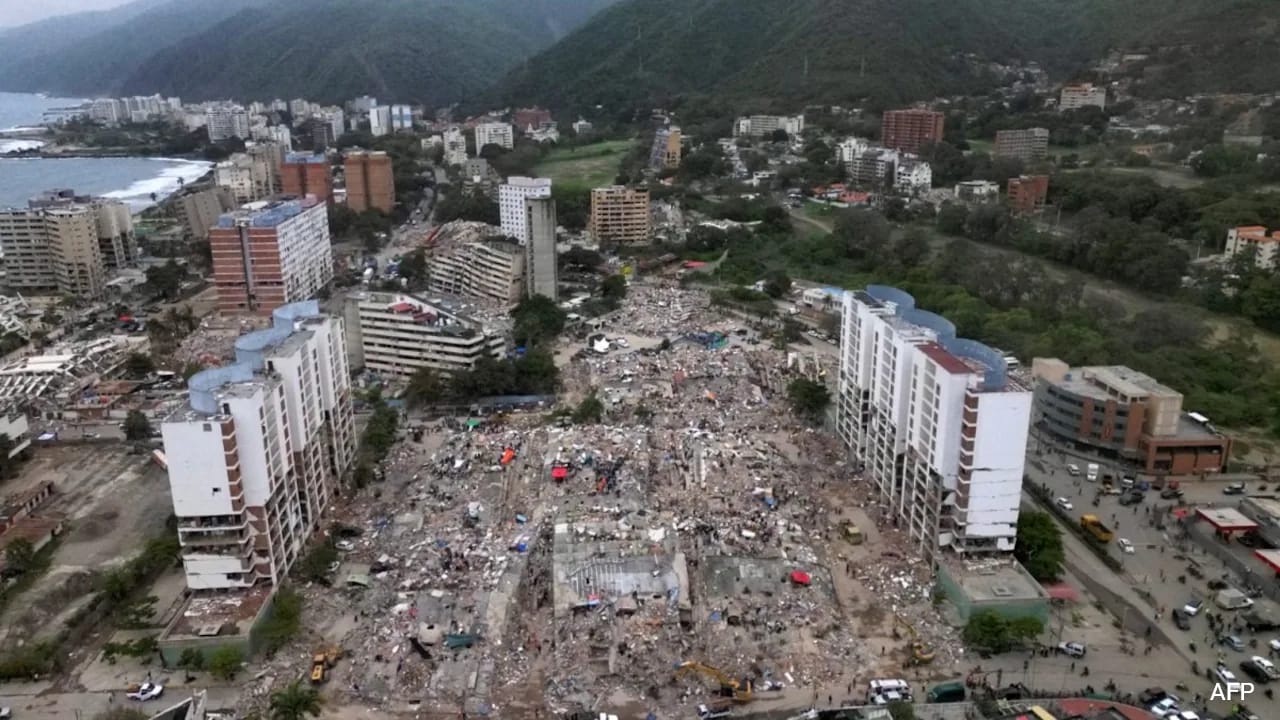
Venezuela is reeling. The numbers coming out of Caracas right now are staggering, and honestly, they're only getting worse. On Friday, the country's Ministry of Communications and Information updated the grim tally from the twin earthquakes that tore through the northern region. We're now looking at 2,645 confirmed dead and more than 12,666 injured.
When two massive tremors strike just 39 seconds apart, no infrastructure on earth is completely safe. But what happened on June 24 wasn't just a natural disaster. It was an institutional collapse. The twin shocks, measuring 7.2 and 7.5 magnitude respectively, shredded a region already weakened by years of economic neglect. If you think your city is ready for a major seismic event, look closely at Venezuela. You might want to think again.
The Brutal Reality of 39 Seconds of Terror
The earth broke open at 18:04 local time in Yaracuy state. The first shock hit near San Felipe. It was a massive 7.2 magnitude strike-slip fault rupture. Before anyone could even scramble out of shaking buildings, the mainshock hit 39 seconds later. That one was a 7.5 magnitude monster centered near Yumare.
Imagine the chaos. The first quake compromises the walls, cracks the pillars, and panics the public. Then, the second one hits before people can even run into the streets. It's a worst-case scenario for structural engineering.
Official reports state that at least 189 buildings completely collapsed. Another 885 structures suffered severe damage. The destruction concentrated heavily around La Guaira and the capital city of Caracas. Hospitals quickly became overwhelmed. Doctors had to treat thousands of bleeding patients on sidewalks under the dim light of smartphones.
Why the Initial Casualties are Just the Tip of the Iceberg
Right now, over 3,300 international emergency workers are on the ground trying to find survivors. They're working alongside roughly 30,000 local Venezuelan personnel. They have pulled 6,462 people alive from the rubble so far. That's a heroic effort. But the real crisis is shifting from immediate trauma to long-term survival.
More than 15,800 people have completely lost their homes. Another 28,300 homes are now officially uninhabitable. When you displace that many people overnight, you get a secondary humanitarian crisis.
- Clean water access has completely vanished in heavily hit sectors of Yaracuy.
- The electrical grid in central Venezuela is offline, leaving hospitals dependent on failing generators.
- Sanitation systems are broken, raising immediate risks of waterborne diseases.
The United States Geological Survey used its PAGER system to analyze the event. Their models suggest the final death toll could climb well past 10,000 once remote villages are finally reached.
The Fault Lines in Modern Crisis Response
This disaster exposes a massive flaw in how nations prepare for emergencies. Most city building codes assume a single major shock followed by smaller aftershocks. They don't adequately account for a rapid-fire double punch. The San Sebastián fault system didn't just slip once. It unloaded two distinct, massive energy packets almost simultaneously.
We see this mistake globally. Cities build thick concrete structures that can survive a big shake. But those same structures lose their structural integrity during a long, sustained double event. When the second quake hits a structure that's already leaning, gravity wins instantly.
The Venezuelan government says it has assisted 86,117 families. But local activists report that aid distribution remains highly uneven. Food and medical supplies are bottlenecked in Caracas while coastal towns in La Guaira wait for basic tools to dig out their dead.
What Needs to Change Immediately
If you're tracking this tragedy, don't just look at the rising numbers. Look at the systemic failures. Waiting for a disaster to happen before upgrading concrete infrastructure is a recipe for mass casualties.
Nations in seismically active zones need to re-evaluate their emergency stockpiles immediately. You need decentralized medical supplies that don't rely on central highways remaining open. You need communication networks that survive when cell towers collapse.
Demand accountability from local urban planners. Force local governments to audit older concrete housing blocks. Invest in personal emergency kits with at least 72 hours of water and filtration tools. The earth isn't going to stop moving, and assuming the next disaster will only bring a single shock is a deadly gamble.