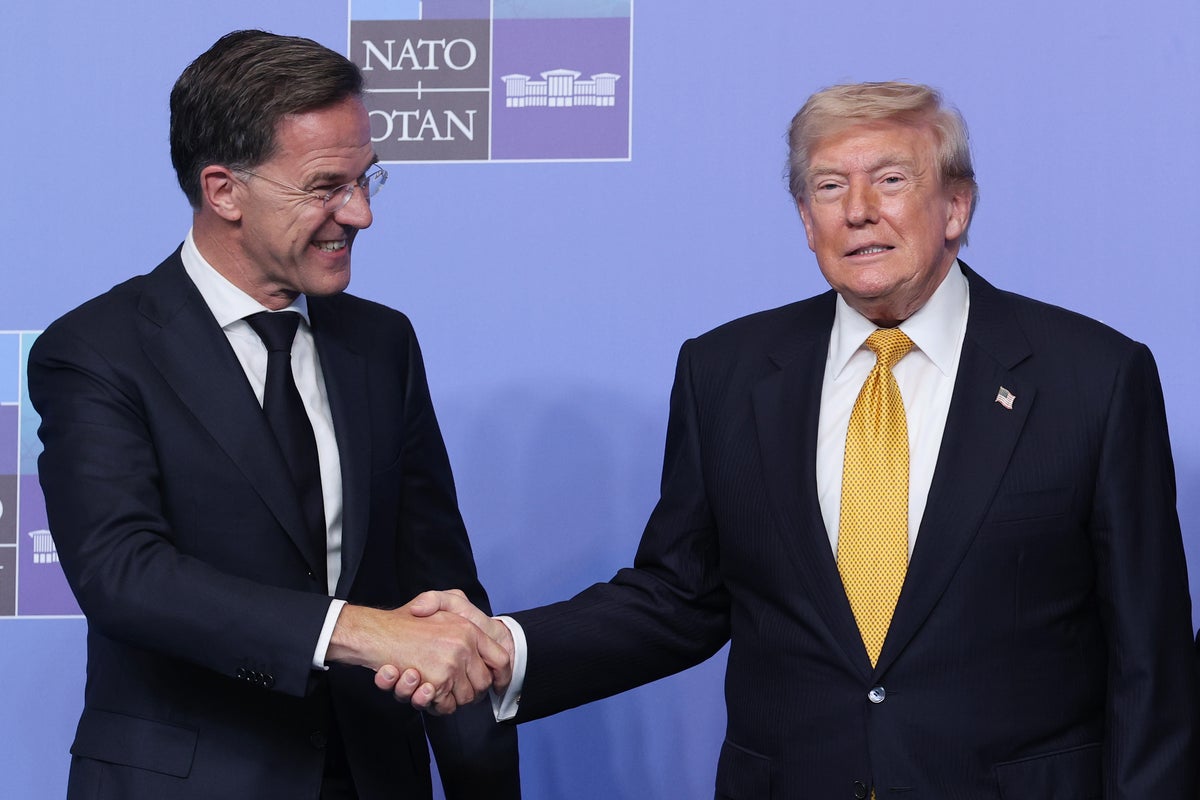
Donald Trump just lost another round in his battle to keep his name on the nation’s premier performing arts venue. A federal appeals court firmly rejected a bid to restore his name to the Kennedy Center while a larger legal fight plays out.
The U.S. Court of Appeals for the District of Columbia Circuit handed down the decision, dealing a sharp blow to the Trump administration's efforts to leave a lasting physical imprint on Washington, D.C. It is a messy, highly unusual saga involving executive overreach, fundraising threats, and a literal giant tarp obscuring the building’s marble facade.
If you have been tracking this story, you know it isn’t just about a sign on a building. It represents a deeper conflict over who controls federal memorials and how presidential legacies are cemented in the capital. Here is the real story behind the court's decision, why the administration's legal strategy fell apart, and what happens next.
The Legal Breakdown of the D.C. Circuit Court Decision
A three-judge panel for the D.C. Circuit took a look at the administration's emergency request and essentially found it empty. The board of trustees, which Trump chairs, wanted a stay. They wanted the court to pause a lower court order that stripped Trump’s name from the building.
The judges did not buy the emergency pitch. Judges Patricia Millett and Robert Wilkins, both appointed by Barack Obama, were joined by Gregory Katsas, a Trump appointee. The decision was unanimous.
To get an emergency stay, you have to prove that waiting for a full appeal will cause your side irreparable injury. The court noted that the board completely failed to show how keeping Trump's name off the building right now would cause such damage.
Lawyers for the Justice Department tried a few different angles. They argued that removing the name would hurt fundraising. They claimed it would hasten a financial decline for the center. The judges called these assertions completely conclusory. They pointed out that the executive director's declaration lacked any specific facts or evidence to back it up.
The court also shut down a brand-new argument regarding a separate entity called the Trump Kennedy Center for the Performing Arts Foundation. The government claimed this foundation would have to return millions of dollars in donations if Trump's name remained off the building. The judges brushed this aside because the government never bothered to bring it up in the lower district court. You cannot just invent new factual arguments on appeal without a great explanation for why you skipped them the first time.
The Backstory of the Presidential Name Change
How did we even get to a point where the Kennedy Center was briefly renamed to include Donald Trump? It started when Trump took office for his latest term in 2025.
He lost no time in replacing the members of the Kennedy Center’s board of trustees. This is a standard presidential privilege, but the new board took things a step further. They quickly voted to name Trump as their chairman.
By December, the board pushed through a radical rebranding. The institution officially became "The Donald J. Trump and The John F. Kennedy Memorial Center for the Performing Arts." Letters went up on the building. Marketing materials changed.
This move triggered immediate outrage. The Kennedy Center is not a corporate stadium. It was created by an act of Congress as a living memorial to President John F. Kennedy after his assassination.
Representative Joyce Beatty, a Democrat from Ohio and an ex officio board member, filed a lawsuit to stop it. She argued that the board lacked the legal authority to rewrite history. U.S. District Judge Christopher Cooper agreed with her.
Judge Cooper made it clear that federal law leaves no room for ambiguity. Congress gave the Kennedy Center its name. Only Congress possesses the power to alter it. The board simply overstepped its bounds.
Why Irreparable Harm Claims Failed in Court
The administration's legal team ran into a wall because of the timeline. Judge Cooper's initial ruling forced the center to strip Trump's name by a mid-June deadline. The center actually complied with the order. They removed the physical letters.
Because the name was already gone, the appeals court pointed out an obvious logistical flaw. Granting a stay cannot prevent harm that has already occurred. The time and money required to take down the letters had already been spent. Putting them back up just to potentially take them down again later makes little sense.
The argument about fundraising also fell flat because it relied on pure speculation. The board claimed donors would flee if Trump's name disappeared. Yet they provided no data, no internal memos, and no donor statements to prove it.
Matt Floca, the center’s current executive director, submitted a declaration to support the government's stance. The problem is that Floca’s background lies heavily in physical plant management rather than high-level donor relations. The court noticed this gap. A vague warning from an operations manager does not meet the strict legal standard required for emergency court interventions.
What Happens Next to the Building and the Tarps
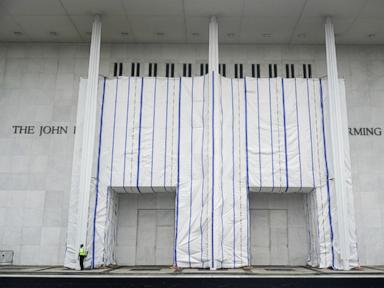
Walk past the Kennedy Center today and you will see a bizarre sight. Scaffolding lines the front portico. A massive white tarp hangs over the spot where the signage sits.
The administration removed the Trump lettering to comply with the court deadline, but they immediately covered the space. They have kept the facade veiled for weeks. It is an awkward visual compromise that has drawn plenty of criticism.
Representative Beatty has publicly demanded that the administration accept the legal reality and pull the tarps down. She argues that the building belongs to the American people and should not be treated as a blocked-out construction zone out of spite.
Judge Cooper is also losing patience with the aesthetic standoff. He ordered the federal government to supply a detailed status report explaining exactly why the tarp and scaffolding remain in place.
That report is tied to the upcoming mid-July Board of Trustees meeting. The government has until the end of July to explain itself. The judge also wants a clear update on the center's programming and operations.
The Broader Impact on the Kennedy Center
The legal drama has distracted from some harsh operational realities at the venue. Earlier, Trump had proposed a drastic plan to shut down the center entirely for a two-year renovation period.
Judge Cooper blocked that total shutdown, though he allowed necessary structural repairs to proceed. Right now, the center is technically open but operating on a skeleton schedule.
The current calendar is a shadow of the center's historical output. In normal years, the Kennedy Center hosts more than 2,000 events annually, including free daily performances on its Millennium Stage. This July, the schedule features just a handful of free movie screenings, children's workshops, and five live performances.
Staffers find themselves caught in limbo. Attendance is sparse. The true cost of this branding war is measured in canceled programming and an empty cultural landmark.
The Reality of Presidential Legacies in Washington
You cannot simply buy or force your way onto a national monument. That is the ultimate takeaway from this ongoing court battle.
Washington, D.C. is filled with competing ideas about legacy and honor. Monuments are deliberately insulated from the whims of a single sitting president. The D.C. Circuit’s refusal to bail out the Trump administration reinforces a fundamental rule of the American system. The executive branch executes the law; it does not invent the right to rename national treasures.
The broader appeal will still wind its way through the legal system. The Justice Department can keep arguing the merits of the case in the months ahead. But for now, the letters are off, the original name stands, and the administration must face a judge to explain why they are hiding the facade behind a plastic sheet.
If you want to see the original John F. Kennedy Memorial Center restored to its full visual glory, you will have to wait for the board to submit its mandatory status report later this month. Until then, the tarp stays up, the lawyers keep billing, and the building remains a stark monument to a failed legal gamble.