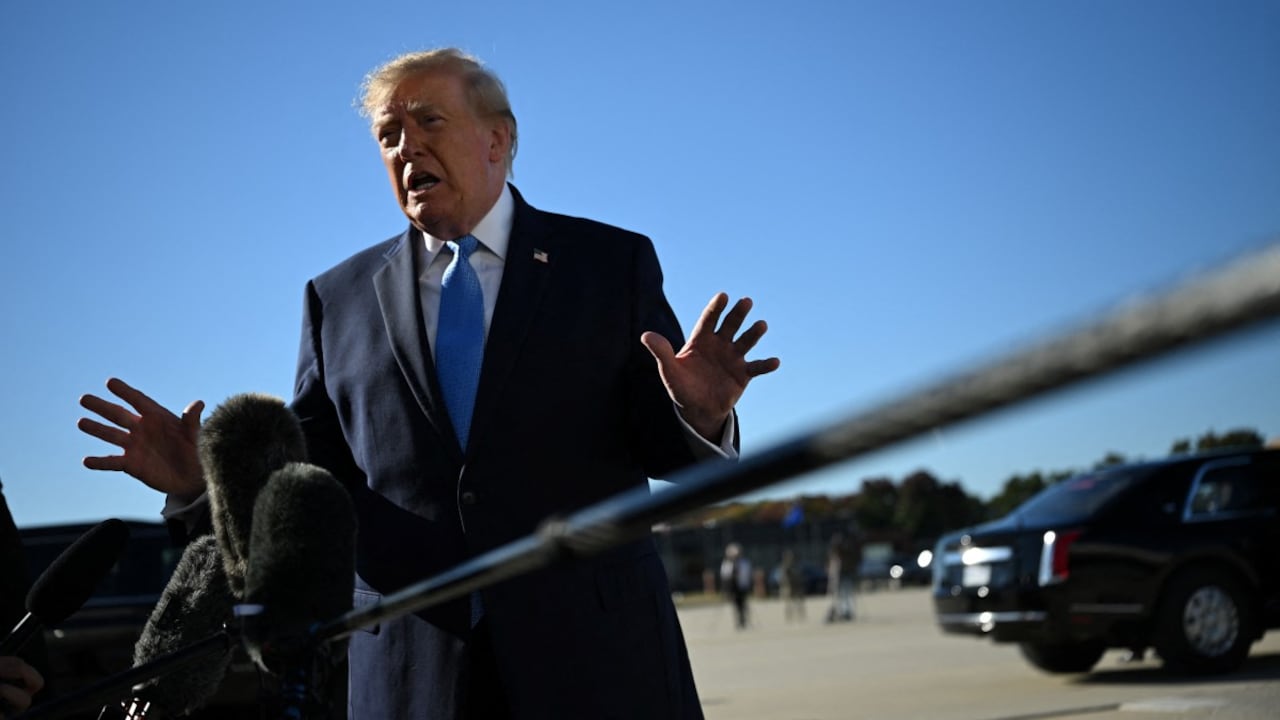
Donald Trump just put a $1,000,000 bounty on election fraud.
In a post blasted out on Truth Social right before the 2026 midterm elections, the president declared that anyone who provides information leading to the arrest and conviction of voter fraud operators will walk away with seven figures. It applies to past elections and the upcoming midterms alike. Recently making news recently: Why The Ghosts Of South Africa Banned Homelands Still Haunt The Country Today.
Naturally, he didn't explain who is funding the cash or how anyone actually claims it.
Honestly, the announcement feels less like a structured legal policy and more like a classic late-stage campaign spectacle designed to seize the news cycle. With polling showing Democrats threatening to take control of Congress, the white-hot focus on election integrity is back at the center of the national conversation. But when you strip away the headline shock value, what does a $1 million voter fraud bounty actually mean in practice? More information on this are detailed by Wikipedia.
How Trump Announced the Million Dollar Voter Fraud Bounty
The declaration came straight from Trump's Truth Social account without any accompanying policy documentation or White House briefing paper.
"Anybody reporting Voter Fraud in the past Elections, or the upcoming 2026 Midterm Election, will be paid $1,000,000 upon the arrest and conviction of those that created the Fraud!" Trump wrote.
That single sentence raised a dozens of basic administrative questions within minutes:
- Is this taxpayer money or private funding?
- Which agency verifies the claims?
- Does a conviction require federal court action or state-level prosecution?
- Who decides if the evidence was the primary driver of the arrest?
When Texas Lt. Gov. Dan Patrick offered a similar reward program back in 2020—offering up to $25,000 for voter fraud tips—it took months to resolve payouts, and most claims led nowhere. A million-dollar pot raises the stakes dramatically, but without a clear mechanism, legal experts are basically treating it as political theater until official paperwork hits the desk.
Why the Timing of the Bounty Matters Right Now
Timing in politics is rarely an accident. Trump's post landed just eight days before voters head to the polls for the 2026 midterm elections.
Control of both the House and the Senate hangs in a delicate balance. If Democrats capture either chamber, the administration faces two years of intense legislative gridlock and congressional subpoenas. Ramping up rhetoric around election security accomplishes two immediate goals for the campaign trail: it rallies the core base to turn out in droves and lays the groundwork to challenge thin margins in battleground states.
It's not the only eyebrow-raising offer circulating ahead of election day either. Trump recently floated a proposal to cut $5,000 checks to every adult American citizen if Republicans retain full control of Congress—a promise with a trillion-dollar price tag that would face impossible hurdles on Capitol Hill. He also linked federal compensation for veterans exposed to toxic water at Camp Lejeune directly to a Republican victory.
Put all these together, and you see a clear pattern: high-stakes economic incentives woven directly into election outcomes.
What Research Actually Says About Voter Fraud Rates
To understand why this offer causes such a stir among election officials, you have to look at the baseline statistics.
Every major study on U.S. voting security shows that widespread, election-altering voter fraud is practically nonexistent. The Brennan Center for Justice conducted exhaustive reviews of federal and state elections, finding fraud rates hovering between 0.0003% and 0.0025%. You are literally more likely to be struck by lightning than to witness someone impersonating a voter at a polling place.
Illegal voting by non-citizens—a frequent target of political speeches—is already illegal under federal law and carries stiff prison terms alongside immediate deportation. Audits conducted by secretaries of state across both Republican and Democratic administrations consistently show that non-citizen ballot attempts represent tiny fractions of a percent, almost always stemming from administrative misunderstandings during driver's license registrations rather than coordinated plots.
When voter fraud convictions do happen, they usually involve minor, isolated infractions:
- An individual casting a mail-in ballot on behalf of a recently deceased relative.
- A voter registered in two places who mistakenly submits ballots in both locations.
- Local officials mishandling administrative procedures during tallying.
None of these scenarios involve massive, multi-state conspiracies that would yield a criminal kingpin deserving of a million-dollar bounty.
The Broader Legal Pressure Surrounding the Midterms
The million-dollar pledge isn't happening in an isolation chamber. It comes alongside unprecedented legal moves by the federal government ahead of ballot counting.
Take Alaska, for example. The Department of Justice filed a lawsuit aiming to halt state officials from certifying Senate election results if Republican incumbent Dan Sullivan loses, pointing to potential voter confusion caused by another candidate running under the same last name. Trump openly acknowledged ordering the legal challenge himself, even as his Department of Justice officials insisted they were not attempting to overturn democratic outcomes.
This aggressive legal posture creates a high-friction environment for election workers. Local election supervisors across the country are already dealing with unprecedented harassment, tight budgets, and shifting state laws. Adding a massive financial incentive for citizens to turn in their neighbors or local workers could flood prosecutors' offices with unsubstantiated tips from people chasing a big payday.
Practical Steps to Fact-Check Election Claims Yourself
When massive claims and big money pledges dominate the headlines, keeping a clear head requires relying on verified sources rather than social media noise. Here is how you can evaluate election claims objectively over the coming weeks:
- Check official state portals: Track local rules and election results directly through your Secretary of State website rather than political commentary accounts.
- Understand the legal bar for fraud: Differentiate between procedural mistakes (like a miscounted batch recounted during routine audits) and actual criminal intent.
- Verify criminal charges: A political announcement or tip isn't proof. Look for actual indictments filed by local prosecutors or the Department of Justice.
- Follow bipartisan local boards: Election supervision in almost every county is managed by bipartisan teams who witness the physical chain of custody for every single ballot.