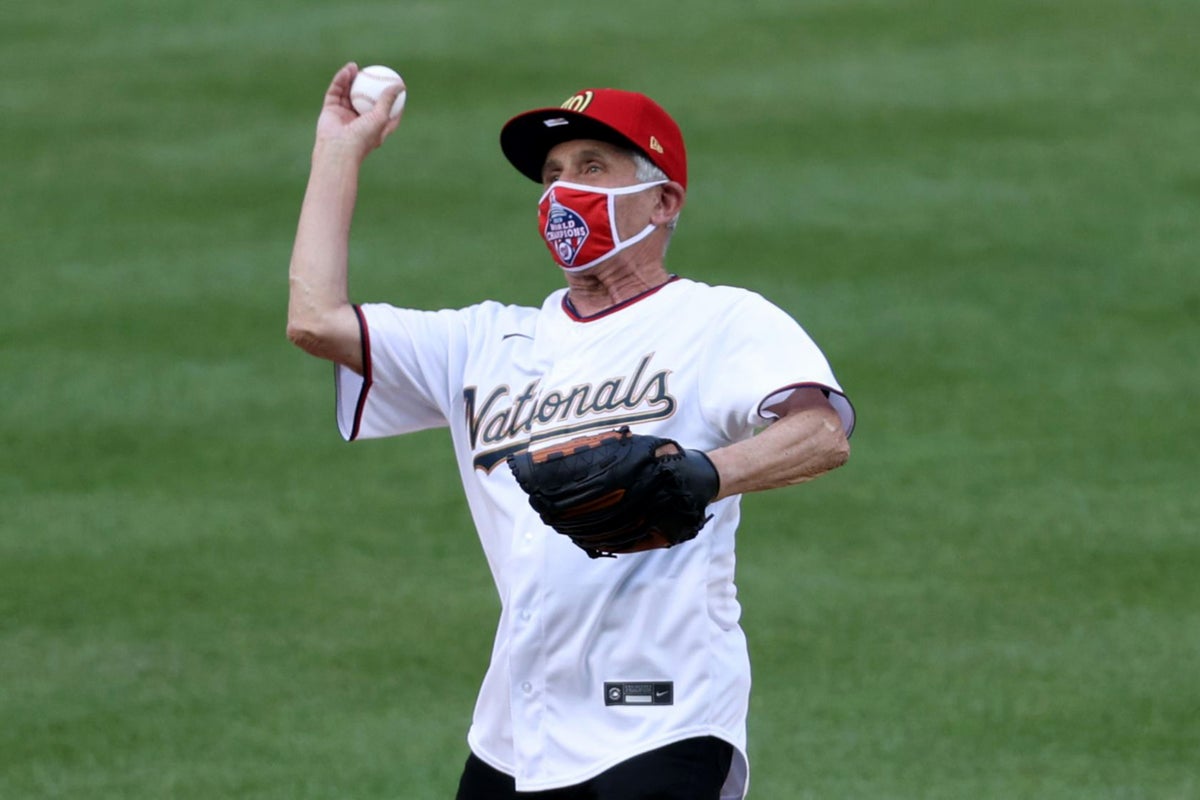
Some political feuds never actually die. They just wait on digital platforms for a second wind. Donald Trump recently pulled a vintage clip from the archives to take another shot at Dr. Anthony Fauci. The target wasn't public health policy or pandemic lockdowns this time. Instead, it was a hilariously bad ceremonial first pitch thrown years ago.
If you remember the summer of 2020, you remember the pitch. Fauci walked out to the pitcher's mound for the Washington Nationals opening game, wound up, and spiked the baseball wildly wide of home plate. It became an instant meme. Now, Trump has dragged that six-year-old footage back into the spotlight on Truth Social to mock the retired infectious disease expert's athletic coordination all over again.
The Anatomy of a Viral Grievance
Why bring up a botched pitch from half a decade ago? Honestly, because political communication loves a visual punchline. Trump has never been one to let a public blunder by an adversary fade quietly into history.
Fauci’s infamous toss was practically begging for internet mockery from day one. The ball skittered off toward the right-hand batter's box like an escaped hamster. When you mix high-stakes political friction with an objectively terrible sports moment, you get digital gold for social media feeds. Trump knows how to keep an old beef simmering by matching it with low-effort, high-impact video clips.
Sure, Fauci was nearly 80 years old at the time. Most septuagenarians would struggle to throw a strike from sixty feet away on national television. But political combatants do not hand out handicap points for age.
Athletic Claims and Political Posturing
Trump has a long history of mixing sports commentary with self-mythology. Over the decades, he has frequently claimed he was a standout baseball player back in his youth at the New York Military Academy. Biographical accounts and old yearbooks suggest he was a capable first baseman, though modern digital sleuths have heavily debated the actual ceiling of his athletic prowess.
Yet, when it came to presidential sports traditions, Trump notably avoided stepping onto the major league mound himself during his term in office. Commissioners noted he opted out of the ritual to bypass potential fan friction, leaving his own pitching arm entirely untested under modern stadium lights. That reality makes his continuous sideline critique of other people's mechanics a bit rich, but consistency has rarely been the currency of online political warfare.
Beyond the Pitching Mound
Revisiting this old video tells us something important about modern media cycles. We live in an era of infinite digital memory. Nothing gets deleted. Old clips wait in cloud storage like digital landmines, ready to be detonated whenever a creator wants to shift the conversation or score cheap points.
Fauci has since stepped away from government service, trading White House press briefings for a quieter retirement. Yet, the cultural echo chamber keeps pulling him back into the ring. Every time a piece of archival footage resurfaces, the old battle lines reform instantly. Supporters chuckle at the petty jab. Critics roll their eyes at the endless fixation.
Ultimately, the viral resurrection of a botched baseball throw isn't about sports. It's about narrative control. If you can keep people laughing at your opponent's worst physical moments, you get to frame the entire history of that conflict through a lens of incompetence.
Check your own digital footprint before entering the public eye. If you throw a bad pitch on national television, or say something regrettable on camera, assume someone will unearth it six years from now just to spice up a Tuesday afternoon timeline.