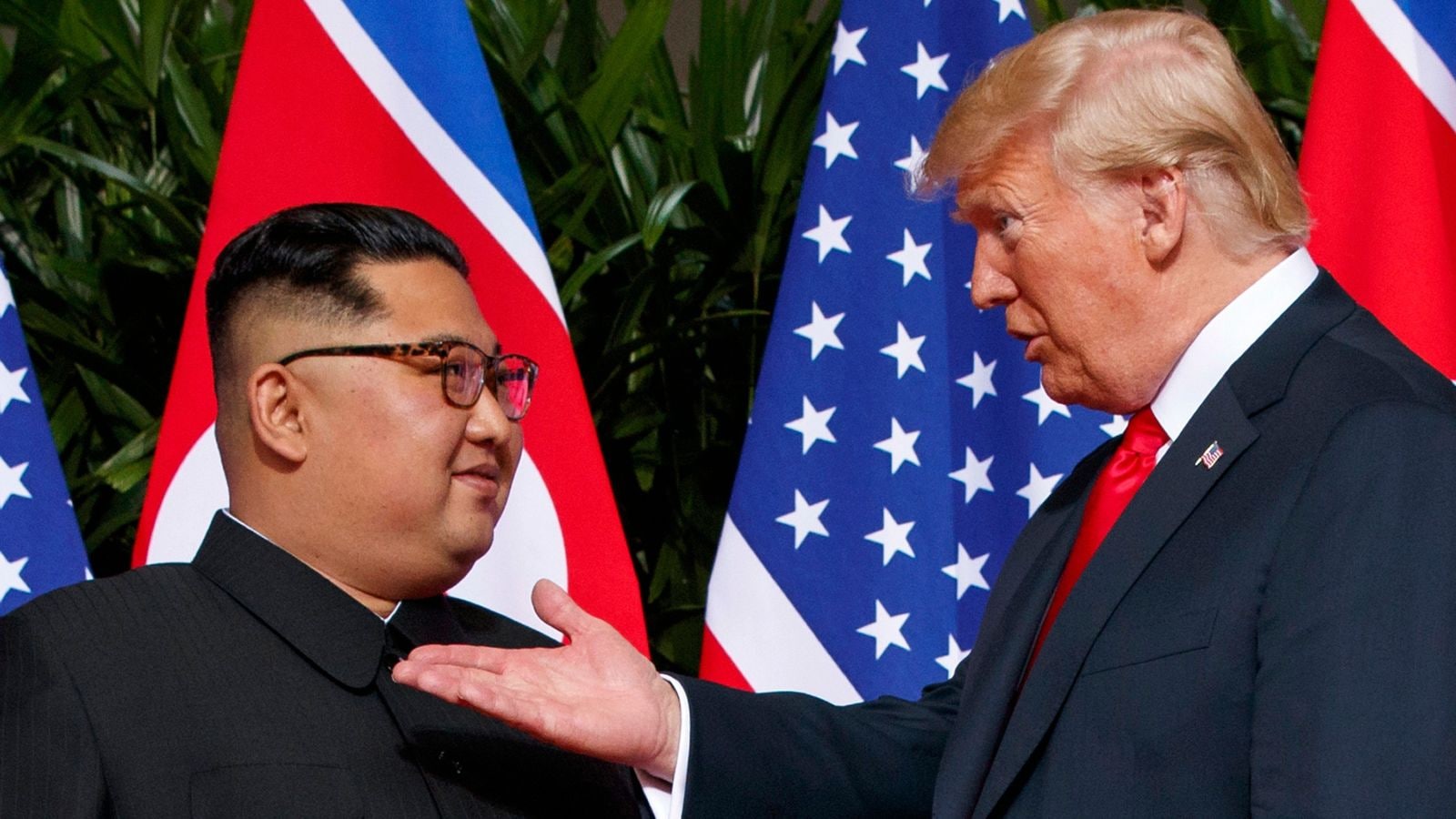
Donald Trump just dropped a hint that could completely upend diplomatic calculations across the Pacific. Speaking to reporters before heading to a campaign stop, the U.S. president openly floated the possibility of sitting down with North Korean leader Kim Jong Un during an upcoming trip to Asia. When asked about a potential meeting, Trump kept it characteristically casual, telling reporters, "I may, yeah. That'll be exciting, won't it? But I get along with him."
If this meeting happens, it marks a dramatic return to high-stakes summit diplomacy that defined Trump's first term. Back then, personal chemistry between world leaders took center stage, brushing aside traditional bureaucratic channels. Now, as preparations shape up for upcoming diplomatic stops—including the APEC summit in Shenzhen, China—the prospect of a revived Trump-Kim summit has foreign policy watchers scrambling to figure out what comes next.
The Reality of Personal Diplomacy
Traditional diplomats hate summit-level negotiations without rigorous groundwork. Bureaucrats spend months drafting communiqués, debating policy fine print, and hedging against every conceivable risk. Trump operates entirely differently. He relies on direct, personal rapport.
During his first term, Trump and Kim held three historic meetings between 2018 and 2019. They met first in Singapore, then held a high-profile summit in Hanoi, Vietnam, and finally shook hands at the demilitarized zone in Panmunjom in June 2019, where Trump famously stepped across the inter-Korean border.
Critics argued those meetings produced more photo ops than concrete nuclear disarmament. Proponents countered that they broke decades of icy stalemate and reduced active tensions on the Korean Peninsula. By floating another encounter now, Trump signals he's ready to bypass standard diplomatic protocols once again.
What Has Changed Since 2019
The geopolitical landscape looks vastly different than it did during their last handshake. North Korea has continued developing its military capabilities, and regional friction points involving China, South Korea, and the United States remain volatile.
Yet, the core dynamic hasn't shifted: Trump genuinely believes his personal relationship with Kim is an asset rather than a liability. While State Department officials maintain that engagement is welcome when it serves U.S. national interests, past summits showed the fundamental friction in negotiations. North Korea wanted major sanctions relief, while Washington demanded complete denuclearization. Neither side budged enough to reach a permanent grand bargain.
If a new meeting materializes during Trump's Asia itinerary, both leaders will face intense scrutiny over whether they can move past past stagnation or if they are simply stepping back into a familiar theatrical loop.
The Stakes for Regional Allies
Governments in Seoul and Tokyo watch these developments with a mixture of hope and anxiety. South Korea has frequently pushed for constructive dialogue and inter-Korean cooperation, but unpredictable summits can leave regional allies guessing about sudden shifts in U.S. defense posture or security commitments.
At the same time, China remains a crucial variable. With Trump scheduled to visit Shenzhen for the APEC summit, Beijing will closely monitor any outreach to Pyongyang, knowing that U.S.-North Korea direct diplomacy directly impacts its own strategic backyard.
The coming weeks will show whether this casual remark turns into a concrete scheduling reality or remains vintage Trump negotiating rhetoric. Either way, the possibility of a renewed summit forces every player in the region to recalculate their next moves.