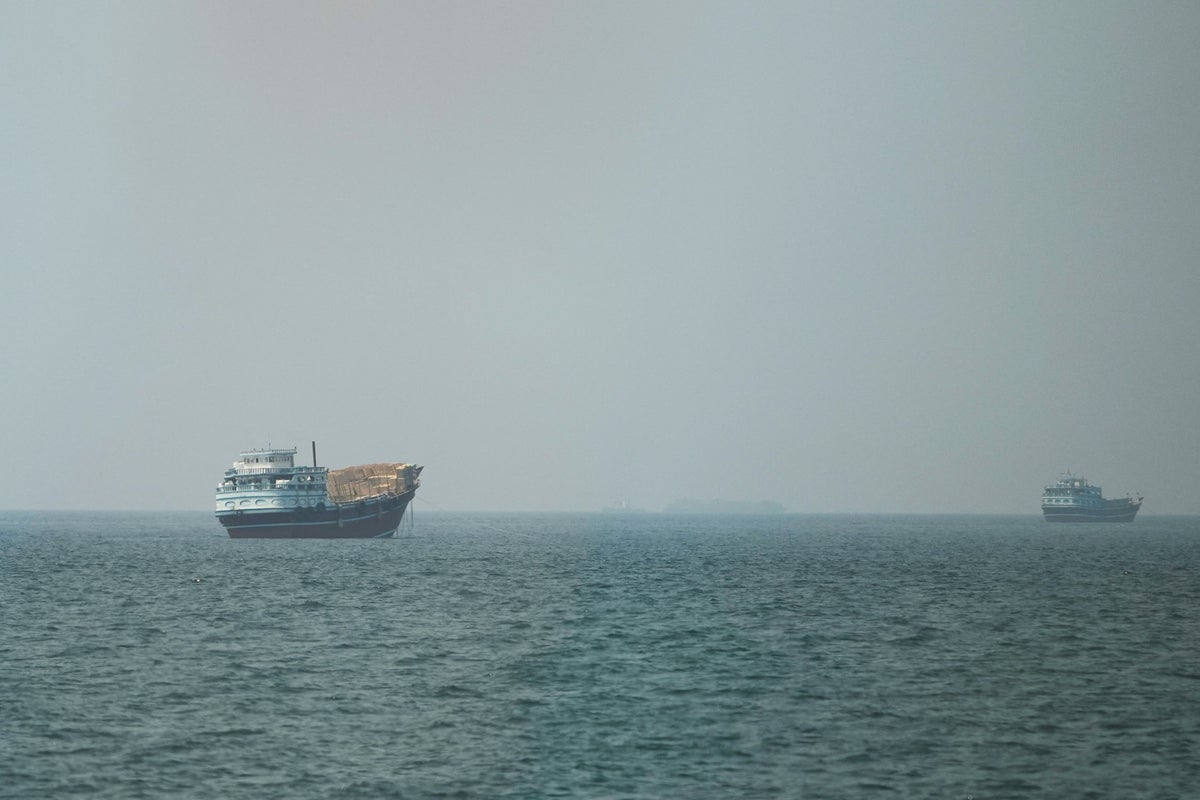
Building a global shipping empire inside a geographic dead-end is a brilliant strategy right up until the moment someone blocks the exit. For decades, Dubai defied the laws of geopolitical gravity. It turned Jebel Ali, located deep inside the Persian Gulf, into one of the busiest maritime hubs on earth. But the ongoing conflict with Iran has exposed a glaring vulnerability. When a single choke point controls your survival, you don't really control your own destiny.
That's why the news of DP World's planned eastward expansion is a massive deal. The Dubai-based logistics giant is quietly negotiating to build a brand new multipurpose port and container terminal in Fujairah. Located on the eastern coast of the United Arab Emirates, Fujairah sits directly on the Gulf of Oman. Ships sailing from Asia, Africa, or Europe can dock there without ever passing through the Strait of Hormuz. Also making headlines in this space: Why Trump Had To Kill His Strait Of Hormuz Shipping Toll.
This isn't just a minor route adjustment. It's a fundamental rewire of how the Gulf handles global trade. The decision to establish a major new gateway outside the Persian Gulf signals that the UAE is preparing for a world where the Strait of Hormuz is no longer a reliable passage.
The Persian Gulf Bottleneck
To understand why this shift is happening now, you have to look at the geography. More details into this topic are detailed by Harvard Business Review.
Jebel Ali Port is huge. It handles over 15 million twenty-foot equivalent units of cargo every year. It serves as the primary gateway for goods heading to the Middle East, Africa, and parts of Asia. But to get to Jebel Ali, every single container ship has to squeeze through the Strait of Hormuz. At its narrowest, the shipping lanes in the strait are just two miles wide. On the northern side of those lanes sits Iran. On the southern side sits Oman and the UAE.
When regional tensions erupted into open conflict earlier this year, the vulnerability of this passage became impossible to ignore. Commercial shipping quickly turned into a high-stakes gamble. Iran has launched thousands of drones and ballistic missiles at targets across the region, heavily disrupting the waterway.
The crisis hit home in a terrifying way when intercepted missile debris struck Jebel Ali itself, sparking a massive fire at the port. Shipping companies faced soaring insurance premiums or flat-out refused to enter the Gulf. Activity at Jebel Ali plummeted by 90 to 95 percent almost overnight.
You can't run a global logistics hub when your traffic drops by nine-tenths. The UAE realized it needed a plan B. And it needed it fast.
The Fujairah Rescue Plan
The solution lies in Fujairah. By shifting cargo operations to the eastern coast, the UAE can completely bypass the Iranian-controlled choke point.
DP World's plan is twofold. First, they want to build a brand new, highly capable multipurpose port in Fujairah. Second, they plan to expand and build a dedicated container terminal at the existing harbor.
This is a defensive strategy designed to build resilience into the supply chain. If the Strait of Hormuz gets blocked again, trade doesn't grind to a halt. Instead, ships dump their cargo on the east coast, and life goes on.
The numbers behind this shift are staggering. While DP World hasn't released a final figure, initial estimates suggest the project will cost hundreds of millions of dollars. That number will likely balloon as they scale up capacity. The timeline is equally ambitious. A senior DP World official indicated that the new port could be operational in as little as 18 months. In the world of mega-infrastructure, that's incredibly fast.
Of course, this doesn't mean Jebel Ali is shutting down. Emirati officials are quick to point out that Jebel Ali remains irreplaceable. It's surrounded by a massive free-zone, heavy industrial plants, and thousands of warehouses that can't simply be packed up and moved. Jebel Ali will continue to handle the bulk of regional trade when the strait is open. But Fujairah will act as a vital release valve and a permanent backup.
Moving Millions of Containers Overland
Bypassing the water is only half the battle. Once you unload millions of tons of cargo in Fujairah, you still have to get those goods to the businesses and consumers in Dubai, Abu Dhabi, and the rest of the GCC.
This is where the logistics get complicated. Moving containers overland requires heavy-duty infrastructure. The UAE has been preparing for this by investing heavily in its national rail network, Etihad Rail.
The rail line linking Fujairah's port to the rest of the country is designed to move massive volumes of freight across rugged mountain terrain. Trucking routes are also being upgraded, but rail is the real key to making a bypass route economically viable.
Even with high-speed rail, moving cargo overland is more expensive and time-consuming than shipping it directly to Jebel Ali. It adds extra handling steps, increased fuel costs, and potential bottlenecks at inland transfer stations. But when the alternative is having your cargo stuck on a ship that's being targeted by cruise missiles, paying a premium for land transport suddenly looks like a bargain.
The Strategic Cost of Security
This pivot to the east coast isn't happening in a vacuum. Other players in the region are reaching the same conclusion.
Sharjah-based port operator Gulftainer recently announced a massive $2 billion investment to upgrade and expand its container terminal in Khor Fakkan, which is also located on the UAE's eastern coast. This friendly rivalry between ports highlights a broader regional trend. Everyone is trying to buy their way out of the Hormuz trap.
Even Saudi Arabia has eyed western pipelines to move its crude to the Red Sea, bypassing the Gulf entirely. And projects like the India-Middle East-Europe Corridor are being reassessed to see how they can adapt to this new reality.
For the UAE, the cost of building these redundant ports is the price of economic sovereignty. For decades, the country enjoyed cheap, efficient shipping because it relied on a single massive hub. Now, it has to pay a premium to build duplicate infrastructure just to keep its supply lines safe.
It's an expensive lesson in geopolitical risk management. In a world where global trade routes are increasingly weaponized, efficiency is no longer the only metric that matters. Resilience is the new currency. By pushing to the east coast, Dubai is making sure that no matter what happens in the Strait of Hormuz, its status as a global trade superpower remains intact.
What Happens Next
If you're a business operating in the Gulf, you need to prepare for a multi-hub reality. Here are the immediate shifts to watch:
- Watch the rail links: The success of the Fujairah bypass depends entirely on how quickly and efficiently the rail and road connections can handle the cargo volume. Keep a close eye on cargo transit times between the east coast and Dubai's industrial zones.
- Diversify your supply routes: Don't rely solely on Jebel Ali. Begin establishing relationships with logistics providers operating out of Fujairah and Khor Fakkan to ensure your supply chain has built-in redundancy.
- Prepare for higher baseline costs: Land-bridging cargo across the UAE is safer, but it isn't cheaper. Factor higher transport costs into your long-term logistics budgets.