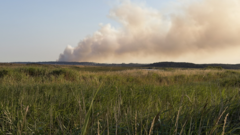
A major incident was officially declared on the Suffolk coast after a massive, wind-driven wildfire tore through the sensitive landscape of Dunwich Heath. Around 90 firefighters scrambled to the National Trust site near Leiston as thick plumes of smoke darkened the sky near the Sizewell B nuclear power station. If you've been tracking how vulnerable Britain's coastal reserves are during intense dry spells, this latest flare-up isn't just an isolated emergency. It's a stark reminder of how fast dry coastal habitats can transform into dangerous infernos.
The Reality on the Ground at Dunwich Heath
Suffolk Fire and Rescue Service first got the call just after 5:30 PM on Wednesday. Crews arriving from nearby Leiston quickly realized standard firefighting tactics wouldn't cut it. They walked into a massive, wind-driven forestry fire racing southwest toward St James' Church off Westleton Road.
Station manager Dan Davis didn't sugarcoat the situation. The service upgraded the response to a major incident purely because of the sheer size and complexity of the blaze. Around 90 personnel have been battling the heat and shifting winds in brutal, arduous conditions.
Why does a heath fire escalate this quickly? Dry heather, gorse, and peat act like kindling under amber heat-health warnings. When high winds hit the coast, they don't just fan the flames—they spot embers yards ahead, creating multiple secondary fronts that stretch local crews thin.
Proximity Concerns Near Sizewell B
Whenever a major fire breaks out near Leiston, public anxiety spikes for one obvious reason: the proximity to critical infrastructure. The blaze at Dunwich Heath sits near the Sizewell B nuclear power station zone, prompting immediate public safety warnings.
Emergency planners issued clear instructions for anyone living or working nearby:
- Stay completely away from the Dunwich Heath and Leiston areas.
- Keep local roads completely clear so fire engines and supply tankers can move without delay.
- Shut all windows and doors tightly if smoke drifts into your neighborhood.
Authorities confirmed that teams will remain stationed across the perimeter overnight and well into Thursday to suppress hot spots and prevent flare-ups.
The Wider Picture of UK Wildfires
This incident doesn't happen in a vacuum. The UK Health Security Agency previously put amber heat-health alerts in place across London, the East, South East, and the East Midlands. Prolonged high temperatures mean moisture levels in the soil and vegetation drop to dangerous lows.
Up north in Scotland, emergency crews spent weeks battling a stubborn wildfire in the Cairngorms that forced property evacuations and charred vast stretches of heather. When you look at both ends of the country, summer blazes are pushing emergency services to their absolute limits.
If you live near open heathland, woodlands, or dry grasslands right now, don't take chances. Dispose of cigarettes properly, skip open fires or barbecues entirely, and report any smoke immediately. Wildfires of this scale start with a single spark, but stopping them takes an army.