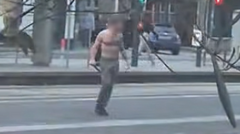
Scotland likes to view itself as an inherently welcoming place. We pride ourselves on an open, progressive society that stands apart from the toxic, anti-immigrant vitriol often seen south of the border or across Europe. But that comfortable narrative shattered on Friday, June 19, 2026, on the streets of Edinburgh.
A 36-year-old man went on a violent rampage in the capital, leaving five people injured. The victims, aged between 22 and 39, faced a terrifying assault by a bare-chested suspect wielding a large weapon. Online footage showed the suspect shouting about protecting the country from Muslims. The counter-terrorism unit immediately joined the investigation. Prime Minister Keir Starmer quickly condemned it as anti-Muslim hatred. Scotland First Minister John Swinney went further, calling the incident a massive wake-up call regarding growing political intolerance.
This was not a random act of madness. It was a symptom of a broader infection.
The Rhetoric Bubbling Inside the Scottish Parliament
When a crisis like this hits, politicians are quick to offer thoughts and prayers. They tweet about how this behavior does not represent Scotland. But John Swinney did something different this time. He pointed the finger right back at Holyrood. He warned that increasingly intolerant rhetoric used within the Scottish Parliament itself connects directly to growing divisions on our streets.
He is right. You cannot spend months using dog-whistle language in political debates and then act shocked when someone takes those words to their logical, violent conclusion. For a long time, Scottish politicians assumed the country was immune to the far-right surge hitting England and continental Europe. We thought our civic nationalism protected us. It did not.
The Scottish Association of Mosques and Muslim Engagement and Development (MEND) have been ringing the alarm bells for months. They noticed a sharp rise in anti-migrant protests organized online. They saw the aggressive rhetoric targeting minorities. When political figures legitimize these grievances to score cheap points in parliament, they hand a license to extremists.
What the Mainstream Media Misses About Islamophobia
Most news outlets report these events as isolated hate crimes. They focus on the individual attacker, his weapon, and the shock of the local community. That approach misses the entire point.
Islamophobia is structural. It thrives when social media algorithms push far-right propaganda to angry, isolated young men. It builds up when mainstream political debates treat the presence of minority communities as a problem to be solved rather than a reality of modern life.
Look at what the suspect allegedly screamed during his arrest. He claimed he was protecting the country. That phrasing is identical to the rhetoric found in far-right online forums. These attackers view themselves as soldiers in a fictional war. They get radicalized right in their own bedrooms, fed a constant diet of conspiracy theories about demographic replacement.
Moving Past Empty Political Condemnations
We don't need another cross-party working group. We don't need another solidarity photoshoot outside a mosque. What Scotland needs right now is absolute clarity from its leaders and its citizens.
First, the police and judiciary must treat this incident exactly as MEND suggested: as far-right terrorism. If a minority individual walked through Edinburgh with a weapon shouting ideological slogans, the word terror would dominate every front page. The same standard must apply here. Labeling it an alleged attack or a simple hate crime minimizes the systemic threat.
Second, political parties need to police their own ranks. If an MSP uses divisive, anti-migrant language during a debate, they should face immediate suspension. The era of treating dog-whistle politics as acceptable debate is over.
Finally, community safety needs real investment. Mosques across Scotland need enhanced security infrastructure, funded by the government, to ensure worshippers can pray without looking over their shoulders.
Scotland is at a crossroads. We can either confront the rot growing within our political culture or we can keep pretending it can't happen here while the violence escalates. The wake-up call has sounded. It is time to open our eyes.