Flying between Delhi and Dubai has always felt like a game of extremes. You either squeeze into a standard economy seat for four hours or drop a small fortune on business class. For regular business travelers and families who want a bit of breathing room without draining their bank accounts, that middle ground has been frustratingly absent.
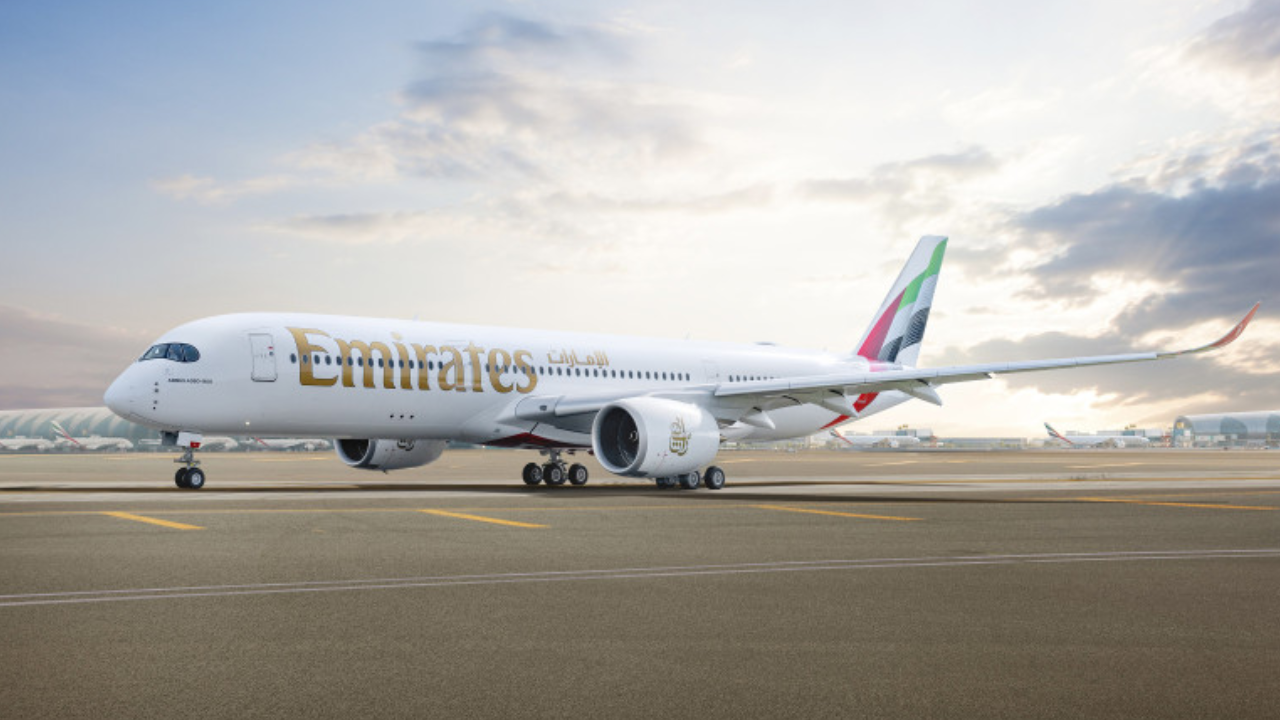
That changes on October 25, 2026. Emirates is officially bringing its flagship Airbus A380 double-decker to the Dubai–Delhi route, turning Delhi into its third superjumbo hub in India after Mumbai and Bengaluru. Along with the giant aircraft comes a massive, aggressive rollout of the airline's highly rated Premium Economy cabin across the country. Learn more on a connected subject: this related article.
This isn't just a minor fleet adjustment. It's a fundamental shift in how one of the busiest international air corridors in the world operates. If you're planning a trip to or through Dubai later this year, you need to understand how these changes will affect your booking strategy, your comfort, and your wallet.
The Reality of the Delhi to Dubai Route
The air corridor between India's capital and Dubai is incredibly lucrative and consistently packed. Demand never really drops. Because the flight is relatively short, around three and a half to four hours, airlines have historically used a mix of regional widebodies and standard narrowbody planes. Additional reporting by National Geographic Travel explores related views on this issue.
Passengers were left with a stark choice. You could choose economy, which gets the job done but offers very little personal space, or you could opt for business class, which feels like overkill for a short flight.
Deploying the four-class Airbus A380 to Delhi solves this exact problem. By introducing a dedicated Premium Economy product on this route, the airline is targeting the sweet spot. They are looking for travelers who are willing to pay a reasonable premium for better food, wider seats, and actual legroom, but who don't need a fully flat bed for a four-hour daytime hop.
Breaking Down the New Delhi Flight Schedule
You can't just book any random flight to Dubai and assume you're getting the double-decker experience. The airline operates four daily flights between Delhi and Dubai. Only one of those will be the giant Airbus A380. The other three will use retrofitted Boeing 777 aircraft.
The good news is that every single one of these four daily flights will offer the Premium Economy cabin. The bad news is that the physical seat and cabin environment will differ depending on which aircraft you end up on.
The Airbus A380 Rotation
The double-decker superjumbo will take over flights EK512 and EK513.
- EK512 flies from Dubai to Delhi.
- EK513 handles the return journey from Delhi to Dubai.
If you book this specific rotation, you get the classic A380 ride. It's quieter, more stable in turbulence, and feels incredibly spacious due to the high cabin ceilings. The Premium Economy section on the A380 is located at the front of the main deck, offering a quiet, exclusive zone away from the massive main economy cabin.
The Boeing 777 Rotations
The remaining three daily flights, EK511, EK515, and EK517, will continue to use the Boeing 777. These planes have been pulled into the engineering hangars to receive the exact same plush Premium Economy seats, but the cabin layout is tighter than what you find on the A380. The 777 has a slightly narrower fuselage, meaning the aisles and overhead bins can feel a bit more constrained compared to the double-decker giant.
Smart travelers will look closely at the flight numbers during booking. If the timing works for your schedule, aim for EK513 out of Delhi to get the superior A380 cabin environment.
What You Actually Get in Premium Economy
Let's talk about the actual product because airlines love to overpromise on "premium" experiences that turn out to be nothing more than an extra inch of legroom. This isn't that. This is a separate cabin class with its own distinct service flow.
The Seat Experience
The seats are covered in cream-colored, anti-stain leather with intricate stitching details and wood panel finishes that mimic the design language of the business class cabins. You get up to 40 inches of pitch, which is the distance from the back of your seat to the back of the seat in front of you. Compare that to the standard 31 to 32 inches in economy, and the difference is massive.
The seats are also wider, coming in at 19.5 inches, and they offer an eight-inch recline. You get a leg rest that swings out, an adjustable calf rest, and a six-way adjustable headrest. It feels more like a luxurious lazy-boy recliner than an airline seat.
Dining and Service Upgrades
You won't be eating out of plastic tubs with plastic cutlery here. The dining service uses proper chinaware and stainless steel cutlery. You get a welcome drink upon boarding, a curated menu featuring regionally inspired dishes, and upgraded wine selections that are distinct from the economy cabin offerings.
The entertainment screens are upgraded too. You get a 13.3-inch high-definition screen at every seat, paired with easily accessible charging ports and a wide shared cocktail table between the armrests so you don't have to keep your main tray table down just to hold a coffee.
The Six Indian Cities Getting the Upgrade
While Delhi is getting the headline-grabbing A380 upgrade, the broader strategy is about expanding this premium footprint across the entire Indian subcontinent. By the end of October 2026, six major Indian cities will have access to Premium Economy.
The expansion follows a highly specific weekly frequency strategy across the country.
- Delhi leads with four daily flights, all featuring Premium Economy across a mix of A380 and Boeing 777 aircraft.
- Mumbai retains its heavy premium presence with 22 weekly flights offering the upgraded cabin.
- Kolkata will see 12 weekly flights with the new configuration.
- Ahmedabad gets a significant boost with nine weekly flights.
- Bengaluru will offer seven weekly flights.
- Kochi anchors the southern region with two weekly flights.
This wide distribution means that if you're flying out of a secondary hub like Ahmedabad or Kochi, you no longer have to transit through Mumbai or Delhi just to get an upgraded travel experience to Europe or North America. You can experience the premium product right from your home airport, connecting effortlessly through Dubai.
Kolkata and the Airbus A350 Factor
An interesting detail that many people are overlooking in this fleet shakeup is what's happening over in West Bengal. Starting October 25, 2026, the daily EK570 and EK571 flights between Kolkata and Dubai will shift away from older aircraft to the brand-new Airbus A350.
The A350 is the newest addition to the carrier's fleet. It's incredibly fuel-efficient, features advanced cabin humidification systems that reduce jet lag, and includes the new Premium Economy cabin out of the factory.
With the A350 handling the daily rotation and retrofitted Boeing 777s covering the remaining schedules, all 12 weekly flights out of Kolkata will offer Premium Economy. If you live in eastern India, the A350 is arguably an even more exciting development than the Delhi A380, simply because the onboard air quality and technology on the A350 are unmatched by older generation planes.
Is It Worth the Price Tag
Fares for the new Premium Economy seats out of India aren't cheap, but they aren't astronomical either. Early pricing data for November bookings shows entry-level round-trip Premium Economy fares starting around Dh4,400 (roughly INR 100,000 depending on currency fluctuations).
Whether that price tag is worth it depends entirely on your travel goals.
If you're a casual tourist on a tight budget, economy remains the logical choice. But if you're a business professional who needs to land in Dubai refreshed and ready for a meeting, or an elderly traveler who struggles with the tight seating configurations of standard economy, the value proposition is incredibly strong.
You're paying roughly double the price of a standard economy ticket, but you're paying less than half of what a business class ticket costs on the same route. For that middle price point, you get priority check-in at the airport, a dedicated boarding lane, a much higher baggage allowance, and a seat that genuinely allows you to rest.
Practical Next Steps for Booking Your Trip
If you want to experience the new cabin or the A380 out of Delhi after the October 25 rollout, don't leave your booking to chance. Follow these specific steps to ensure you get what you pay for.
- Isolate the flight numbers: Look specifically for EK512 (Dubai to Delhi) and EK513 (Delhi to Dubai) if you want the specific experience of flying on the double-decker A380.
- Verify the seat map: During the checkout process on the airline's website or app, always pull up the seating chart before entering your payment details. Ensure the cabin is explicitly labeled "Premium Economy" and look for the unique 2-4-2 or 2-3-2 layout configuration.
- Check your onward connections: If you're using Delhi or Mumbai as a jumping-off point to fly to London, New York, or Paris, ensure your connecting flight out of Dubai also features Premium Economy. It's incredibly frustrating to pay for a premium ticket on the short leg only to be downgraded to standard economy for the long eight-hour leg across the Atlantic because you picked the wrong connecting aircraft. Ensure the entire multi-city itinerary is booked under the same class codes.