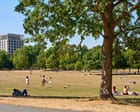
You shouldn't need a trust fund or a countryside estate to breathe cool air on a scorching summer afternoon. Yet, nearly half of all parliamentary constituencies across England currently fail basic access metrics for green and blue spaces. Official research shows that 238 constituencies have over a fifth of their properties sitting more than a 15-minute walk away from a park, river, or lake. Worse yet, seven of the ten most economically deprived areas in the country bear the brunt of this nature deficit.
The Wildlife Trusts recently drew a blunt parallel to Victorian Britain, when choking urban smog and foul water forced a massive, state-backed public park revolution. Back then, leaders realized that filthy air was killing the workforce. Today, blistering heatwaves pushing urban temperatures toward 38 degrees Celsius expose a different kind of killer: heat-trapping concrete deserts where shade is a luxury good. Also making headlines lately: Why The Alleged Houthi Drone Strike On Mecca Changes Everything For Saudi Arabia.
Let's look at why this matters right now, how structural inequality baked this crisis into our towns, and what practical levers can fix it before the next heat dome hits.
The Geography Of Nature Deprivation
If you walk through wealthy suburbs, mature trees canopy the streets and manicured parks sit within a lazy stroll. Step into low-income urban neighborhoods, and you get asphalt, brick, and dust. This isn't an accident. It's decades of fragmented planning policy and cash-strapped local authorities selling off public assets to balance budgets. Additional details into this topic are covered by USA.gov.
When temperatures soar, urban areas don't just get warm—they turn into ovens. Concrete and tarmac absorb solar radiation all day and radiate it back at night, creating local urban heat islands. Without nearby trees to cool the air through evapotranspiration or local ponds to offer a breeze, residents suffer real physical distress. Medical data proves that low-income communities experience higher rates of heat-related hospitalizations, poorer baseline cardiovascular health, and elevated stress levels precisely because their neighborhoods lack nature-based cooling.
Treating green space as a nice aesthetic bonus rather than critical public infrastructure is a policy failure. Clean air and shade belong in the same regulatory category as clean water and safe electricity.
Why Government Promises Keep Stalling
Ministers love talking about green futures during election cycles. Labour entered office with manifesto pledges to expand access to nature and protect biodiversity. Yet, critical policy tools like the long-awaited access-to-nature green paper linger in bureaucratic limbo.
Part of the issue involves local council funding. Local authorities want to build pocket parks and restore urban riverfronts, but they lack the capital funds and legal teeth. Buying land back from private developers or speculative owners costs a fortune. Existing compulsory purchase powers are clunky, expensive, and slow.
If you want real change, you have to change the financial rules of the game. Experts point to several straightforward fixes:
- Empower local councils by making compulsory purchase orders cheaper and faster for public green infrastructure projects.
- Enshrine a community right to buy, letting local neighborhoods acquire neglected plots for pocket parks and community gardens.
- Mandate nature-friendly housing, forcing private developers to build climate resilience directly into new estates instead of treating trees as an expensive afterthought.
- Open up urban waterways, making public access to major rivers and canals a statutory right rather than a privilege blocked by private fencing.
What Real Action Looks On The Ground
Waiting for Westminster to draft another advisory report wastes precious time. Grassroots organizations and local communities are already pushing back against concrete creep. In various towns, resident associations are tearing up unneeded asphalt to plant community orchards, while local campaigners fight for open swimming and walking rights along urban rivers like the River Lea.
If you live in a nature-poor neighborhood, getting involved doesn't mean you need to launch a massive political campaign. Local wildlife groups offer channels to pressure municipal leaders for tree-planting budgets and derelict land conversions.
We survived the public health reckonings of the Victorian era by building public parks that lasted for generations. We can solve today's heat and inequality crisis the exact same way, provided our leaders stop treating nature as an optional luxury. Demand better local planning, protect urban green spaces, and stop treating fresh air as a privilege for the wealthy.


