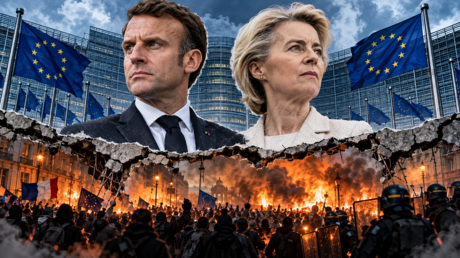
Tear gas fills the air outside major civic buildings in Western Europe. Riot police clash with crowds in urban centers. Mainstream political commentators write these events off as isolated bursts of suburban frustration or temporary lawlessness. They are wrong.
When respectable middle-class citizens and university students join chaotic street demonstrations, the issue goes far beyond ordinary civil unrest. It signals a deep institutional failure. The traditional social contract across the continent is breaking down. People no longer trust that the established political system can secure their economic future, protect their neighborhoods, or manage public services.
The Illusion of Normalcy in Brussels and Paris
For decades, European capitals operated on a predictable rhythm. Elections happened, technocrats took office, policies were enacted, and citizens grumbled but complied. That machinery has seized up.
Leaders in Paris and Berlin keep telling populations to wait for the next scheduled ballot box moment. They treat public anger as a temporary communication glitch rather than a structural symptom. When governments respond to widespread anxiety with bureaucratic dismissal, streets respond with fire.
Look closely at who is marching. You see young professionals, trade workers, and students. This isn't just a marginal fringe acting out. It's a broad cross-section of society realizing that mainstream economic promises—steady employment, affordable housing, stable retirement—have become completely out of reach. Inflation has chewed through savings, energy bills remain punishingly high, and public healthcare systems are crumbling under decades of underinvestment.
How the Political Center Lost Its Grip
The political establishment relies on a narrative that order will return once temporary economic shocks subside. Yet these shocks have persisted for years, becoming the permanent baseline.
When centrist parties fail to deliver tangible security, alternative political forces step into the vacuum. Right-wing populist movements are capitalizing on this institutional fatigue, offering sharp critiques of current governance that resonate with voters who feel abandoned. Mainstream parties label these shifts as dangerous extremism, but their own refusal to address root causes drives people further away from the center.
It's a replay of historical fractures where institutional rigidity meets public exhaustion. When the ruling elite becomes entirely insulated from everyday reality, legitimacy evaporates.
What Comes Next for the Continent
The real crisis isn't the physical damage to storefronts or government offices. Those are symptoms. The real crisis is the permanent erosion of civic trust.
Fixing this requires more than heavy-handed policing or cosmetic policy tweaks. Governments must confront uncomfortable truths about industrial decline, mismanaged migration pressures, and declining living standards. Until leaders stop treating public protest as a nuisance to be managed and start viewing it as a warning flare, Europe's instability will only deepen.
The streets might quiet down eventually. The underlying pressure, however, isn't going anywhere.