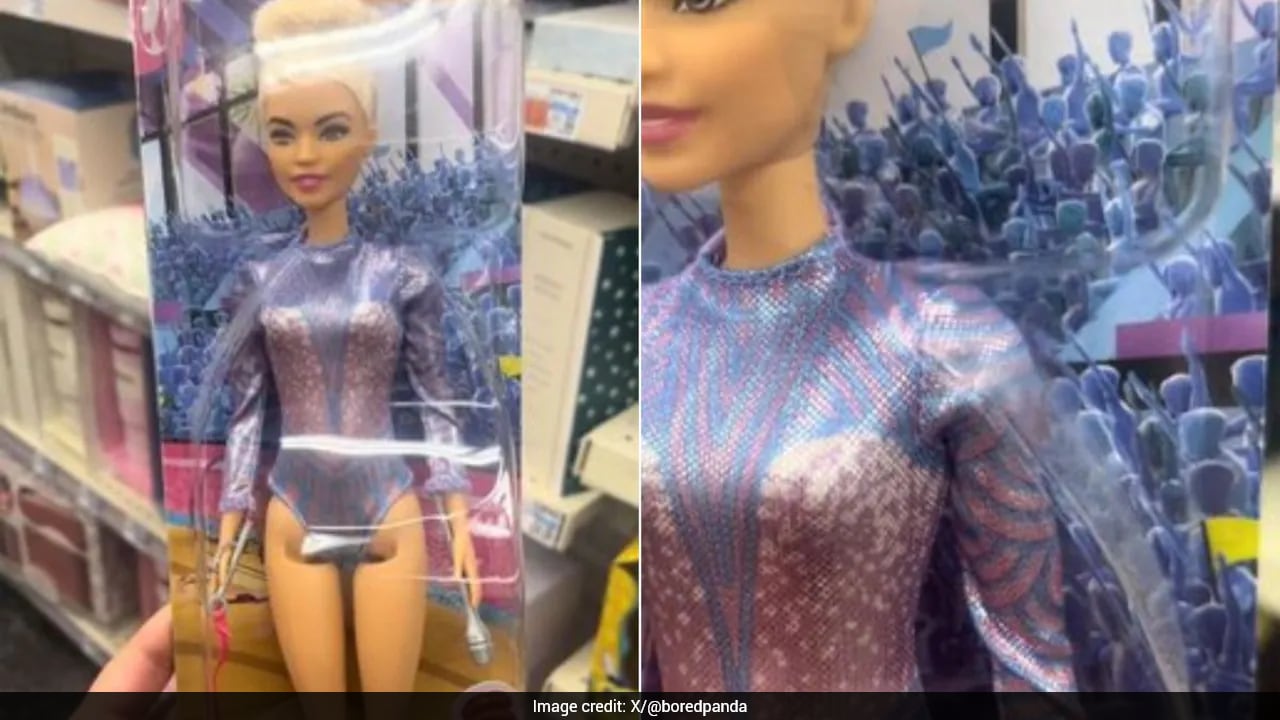
Toy aisles are supposed to be safe, boring spaces filled with plastic pink accessories and cheerful typography. But every so often, a corporate design oversight explodes online and turns a routine shopping trip into an internet-wide detective case. That is precisely what happened when a shopper picked up a gymnastics-themed Barbie doll at a local retail store and noticed something deeply unsettling hidden in plain sight.
The box featured the usual colorful branding under Mattel's popular collection. At first glance, it looked like any other children's toy. The doll wore a bright leotard, holding standard accessories against a graphic backdrop meant to mimic a packed stadium audience cheering on an athlete. But when you zoom in on those tiny background silhouettes, the visual takes a bizarre turn. The figures in the stands have their arms extended upward at an angle that sparked massive online outrage, with viewers immediately drawing comparisons to historical fascist salutes.
It did not take long for the short video to sweep across social media platforms, racking up millions of views and triggering fierce debates about modern corporate oversight. People wanted to know how a major global toy manufacturer could possibly approve a box design featuring crowd graphics that look so glaringly wrong.
The Backlash Against Automated Design Tools
As the screenshots spread across Reddit, TikTok, and X, social media users quickly pointed a finger at a prime suspect: automated generation software. Commenters flooded threads arguing that human artists would never sketch a crowd where every single background figure mimics such an awkward, stiff, and historically loaded posture.
Think about how real people behave at a sports stadium. They wave foam fingers, clap, hold up smartphones, cheer with both hands raised, or hold signs. They do not stand rigidly in uniform rows with singular outstretched arms. Critics argued that relying on generative design tools without proper human editing leads directly to these kinds of tone-deaf disasters. When companies try to cut corners on graphic assets, the results often feel cold, alien, and completely detached from actual human behavior.
The internet response was brutal. Parents and collectors alike questioned the internal review process at corporate headquarters. How many executives, designers, and quality assurance checkers looked at that box art before it went to mass print?
Corporate Silence and Retail Realities
Despite the viral storm, Mattel has kept quiet, refusing to issue a rushed public relations statement while the video circulates. Meanwhile, shoppers began conducting field research of their own. Some visitors checked local inventory at big-box retailers like Walmart and CVS, confirming that the controversial packaging was actively sitting on shelves. Others noted that newer stock updates or alternative packaging runs seemed to feature quieter, plain backgrounds, suggesting the company might be quietly rolling out fixes without drawing more attention to the blunder.
This kind of silent correction happens more often than brands care to admit. When a design error creates a PR nightmare, the standard corporate playbook involves pulling the inventory, updating the asset file quietly, and hoping the news cycle burns itself out before investors start asking uncomfortable questions.
What This Means for Brand Safety Moving Forward
This messy episode serves as a massive wake-up call for creative departments everywhere. Relying too heavily on digital shortcuts without rigorous human oversight is a disaster waiting to happen. When you manufacture millions of items for children, every single background detail matters.
Quality control is not just about making sure the plastic toy inside the box meets safety standards. It extends to the cardboard, the ink, and the microscopic graphics printed on the back. If brands want to maintain consumer trust, they need to invest back into real human artists and thorough editorial checks rather than rushing half-baked digital assets straight to the printer.
Always look closer at the fine print and background art of consumer goods. You never know what kind of design glitch is hiding right behind your favorite childhood characters.