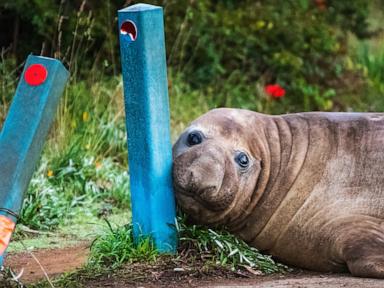
A one-tonne southern elephant seal is currently crushing fences, body-slamming parked Toyota Land Cruisers, and systematically dismantling concrete-embedded roadside bollards in southern Tasmania. His name is Neil. To his 1.4 million TikTok followers, Neil is a hilarious, anti-authoritarian eco-hero performing an aggressive, unprompted municipal infrastructure audit.
But behind the viral videos and the internet obsession lies a much lonelier, more complex reality. Local authorities are begging the public to back off and respect Neil's privacy. The problem? Neil doesn't respect anything, least of all human boundaries. Meanwhile, you can read related stories here: Why Iran's Economy Is Facing A Total Breakdown Beyond The Strait Of Hormuz.
If you think this is just a heartwarming story about a quirky animal celebrity, you're missing the bigger picture. Neil's disruptive behavior isn't a cute comedy routine. It's the byproduct of a displaced apex predator trying to grow up in a human world without any of his own kind to guide him.
The Tragic Isolation Behind the Viral Videos
Most southern elephant seals grow up thousands of kilometers south in massive, crowded colonies on subantarctic islands like Macquarie or Heard Island. They spend their youth surrounded by hundreds of peers, learning how to fight, communicate, and navigate seal society. To understand the bigger picture, we recommend the detailed report by USA.gov.
Neil doesn't have that. Born in 2020 in Salem Bay on the Tasman Peninsula, he is a geographic anomaly. Marine ecologists suspect his mother was a young, inexperienced seal who simply wandered too far north and gave birth in the wrong place. Because elephant seals return to their birthplace to molt, rest, and socialize, Neil keeps coming back to Tasmanian suburbs. It's his 12th haul-out on land, and he treats the local driveways like his personal living room.
Without other young males to spar with, Neil has improvised. He uses traffic cones, wheelie bins, and parked cars as stand-ins for rivals. When you see a video of Neil aggressively nudging a bollard, you aren't watching a playful pet. You're watching a five-year-old subadult male testing his boundaries and practicing the violent dominance displays he needs to survive in the wild.
Even more poignant is how he sleeps. Wildlife officers often find Neil squished tightly against fences or residential walls. According to marine scientists who study these mammals, this isn't just random positioning. In a real colony, seals sleep piled on top of each other for warmth and security. Neil is likely incredibly lonely, using rigid human infrastructure to mimic the physical comfort of a herd he has never known.
Why a 1000 Kilogram Teenager is a Ticking Time Bomb
Right now, Tasmanian locals and tourists are treating Neil like a mascot. Senator Jacqui Lambie joked that he's the only bloke in Tasmania who can stop traffic, ignore everyone, and still be loved for it. Tasman Council Mayor Rod Macdonald admitted the seal is a massive celebrity.
But treating a massive wild carnivore like a cartoon character is a dangerous mistake. Consider the cold math of Neil's biology.
- Current Weight: 1,000 kilograms (2,200 pounds)
- Current Age: 5 years old (Subadult)
- Potential Adult Weight: 3,500 kilograms (7,700 pounds)
- Safe Distance Requirement: 20 meters for humans, 50 meters for dogs
Neil is basically an unruly teenage boy. He's clumsy, incredibly strong, and completely unaware of his own destructive power. If he decides to rest his head on the hood of your car, he will cave it in. If he gets startled by a dog or a camera flash, he can move with shocking, explosive speed despite his blubbery frame.
As he approaches breeding age over the next few years, his hormones will kick in. That playful curiosity will morph into territorial aggression. A 1-ton seal picking a fight with a plastic traffic cone is funny; a 3-ton alpha bull defending a suburban driveway as his personal breeding territory is a public safety nightmare.
The Reality of Wildlife Management Under the Internet Microscope
Managing a viral animal celebrity creates a brutal double-edged sword for wildlife officials. Recently, workers from the Tasmanian Department of Natural Resources and Environment had to use a padded pole and a sheet of plywood to herd Neil off a busy road. The internet immediately erupted in outrage, with armchair experts criticizing the tactics and suggesting officers should have used a traffic cone to lure him away.
This reaction highlights a systemic issue in modern wildlife conservation. The public demands that animals be protected, but they also want them to be accessible for selfies and entertainment.
The internationally recognized herding methods used by Tasmanian wildlife officers are designed to keep both the animal and the public safe without causing harm. When people crowd Neil for social media clout, they force authorities to intervene more aggressively. Every close encounter risks habituating Neil even further to humans, making eventual relocation or tragic conflict almost inevitable.
How to Protect Neil Without Ruining His Freedom
Embracing Neil's presence doesn't mean treating him like a prop. If you live in or visit southern Tasmania, you need to change how you interact with urban wildlife.
First, drop the desire for the perfect close-up photo. If you spot Neil on a beach or blocking a road, give him at least 20 meters of space. If you have a dog, double that distance to 50 meters and keep them on a short leash. A dog barking at an elephant seal isn't just an annoyance; it triggers a fight-or-flight response that drains the seal's critical energy reserves needed for molting.
Second, respect local closures. When wildlife officers block a road or erect temporary barriers around Neil, don't try to bypass them for a better look. Those barriers aren't just protecting the public from Neil; they're protecting Neil from the stress of constant human surveillance.
Neil will likely spend a few more weeks ashore in Tasmania before heading back out into the Southern Ocean to feed. When he returns in a few months, he will be heavier, stronger, and even less cooperative. Enjoy the spectacle from a distance, but stop pretending he's a pet. The best way to love Neil is to leave him completely alone.