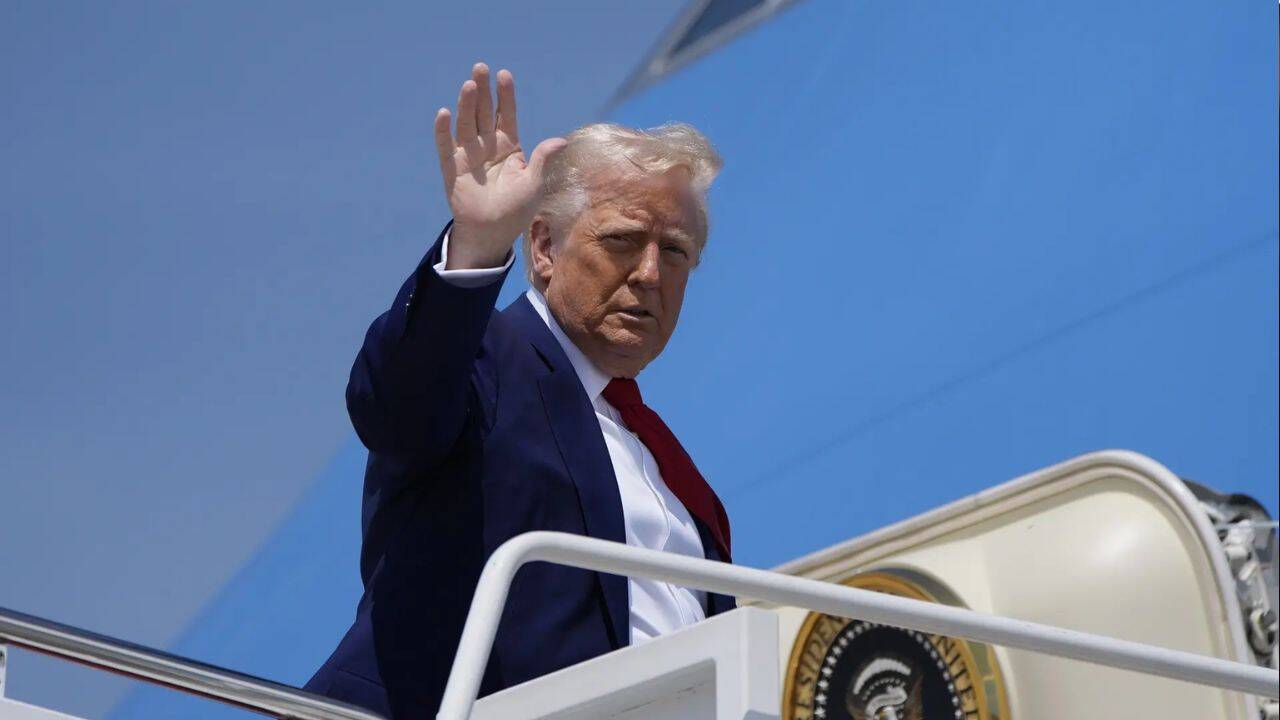
White House staffers just sent social media into an absolute frenzy. They posted photos of the iconic Boeing 747 gleaming on the tarmac under the night lights at Joint Base Andrews. They called it the last ride. They praised the jet as a good and faithful servant. Within hours, major news outlets started blasting out headlines claiming a legendary piece of American aviation history was heading straight to a graveyard.
It makes for a great story. It's also completely wrong. Recently making waves in related news: Why The Rawalakot Narrative Control Fails To Silence Local Voices.
The plane in question is tail number 29000, a heavily modified Boeing 747-200B known in military circles as the VC-25A. It just flew President Donald Trump back to Washington from the G7 summit in France. While that specific flight marked the end of an era for its role as the primary chariot for the commander-in-chief, the Air Force explicitly confirmed that this legendary bird isn't being put out to pasture just yet.
Understanding what's actually happening behind the scenes reveals a chaotic game of musical chairs involving billions of dollars, diplomatic gifts, and severe manufacturing delays. Additional details on this are detailed by The New York Times.
The Real Status of the Executive Fleet
Mainstream media rushed to report the full retirement of the VC-25A. But the Pentagon has a completely different plan. The U.S. Air Force confirmed that both existing VC-25A aircraft will stay active in the executive airlift fleet for the immediate future.
They aren't going to a museum tomorrow. They are shifting roles.
Maintaining these aging airframes is a logistical nightmare. The 747-200 series first entered production in the 1970s. Boeing shut down the entire 747 production line back in 2023. This means spare parts for a 200-series airframe have essentially evaporated worldwide. The Air Force has to custom-manufacture parts or scavenge them to keep these jets safe enough for presidential flight.
The current fleet plan keeps these older planes in reserve status until at least 2029. They will serve as backup options or fly lower-risk missions, possibly operating under the Air Force Two call sign for the Vice President or other cabinet officials. They will only step back into the spotlight as Air Force One if the newer aircraft face mechanical issues.
The Mystery of the Qatari Bridge Plane
If the old 747 is stepping back from primary duty, what takes its place? This is where the story gets bizarre. Trump's next major flight is expected to feature a totally different aircraft type. It's a Boeing 747-8i that was originally gifted by Qatar.
The military refers to this interim solution as the VC-25B Bridge aircraft.
Purchased and modified for less than $400 million, this plane was brought in to save the day. The two permanent, fully modified replacements for Air Force One are deeply delayed. Those two new jets carry a staggering price tag of $5.6 billion. Because Boeing has run into massive delays, the Air Force needed a stopgap. The ex-Qatari VVIP jet fills that operational void.
This bridge plane is already undergoing final modifications. It has been stripped of its previous luxury interior and updated with essential communications gear. It also features a dramatic shift in aesthetics. The classic robin's egg blue and white look, originally selected by Jackie Kennedy in the 1960s, is gone. The bridge aircraft sports a bold red, white, and blue paint scheme.
Reports indicate Trump wants to debut this new bridge plane during a trip to Mount Rushmore in South Dakota for the 250th anniversary of the United States.
Why the Tech Behind Air Force One Defies Age
People assume older planes are inherently unsafe or outdated. That's a massive misconception when dealing with presidential transport. The VC-25A is practically a flying military base, not a standard commercial airliner.
The survivability features built into these 35-year-old frames are astonishing. They feature heavy shielding against electromagnetic pulses caused by nuclear blasts. The onboard electronics are hardwired to ensure they keep functioning even in worst-case scenarios.
The defensive capabilities remain highly classified but incredibly potent. The aircraft carries advanced electronic warfare suites designed to jam enemy radar. It can confuse incoming surface-to-air missiles. It has flare and chaff dispensers to distract heat-seeking threats.
The issue isn't safety. The issue is purely economic.
The cost per flight hour for these aging planes has skyrocketed. Ground crews must spend dozens of hours performing intensive maintenance for every single hour the plane spends in the air. The supply chain is broken because nobody else flies these specific commercial variants anymore.
What Happens Next for Aviation Watchers
Don't expect the old blue-and-white 747 to vanish from the skies completely this summer. Keep your eyes on Joint Base Andrews. You will still see tail numbers 29000 and 28000 flying training missions to keep pilots certified.
The immediate next step belongs to the bridge aircraft. Watch the news cycles around early July. If the scheduled trip to South Dakota goes through, you will see the public debut of the new red, white, and blue livery in full action.
The ultimate fate of the VC-25A planes will likely involve a spot in a high-profile museum like the National Museum of the U.S. Air Force or a presidential library. Until that 2029 timeline hits, they remain an active, vital insurance policy for the federal government.