Two million people don't show up in the middle of July just to wave flags. They show up because something bigger than sport happened. When Spain's open-top team bus finally squeezed through Gran Vía toward Plaza de Cíbeles, Madrid turned into a literal red and yellow sea. Fireworks cracked through the summer heat, smoke bombs burned crimson, and chants echoed off historical facades.
If you watched the quick three-minute video clips online, you saw the highlights. You saw Lamine Yamal dancing on the roof of the bus. You saw coach Luis de la Fuente getting hoisted into the night air by players half his age. You saw the gleaming trophy lifted under the floodlights. But quick news clips completely miss the real story of what went down during Spain’s victory celebration.
This wasn't just a trophy parade. It was a complete national catharsis, a generational changing of the guard, and a loud statement about where world football is heading.
The Night Madrid Stood Still
Planning for two million people on short notice is practically impossible. By 4:00 PM, hours before the squad even touched down at Adolfo Suárez Madrid-Barajas Airport, fans were already occupying every square inch of shade near Cíbeles. Teenagers stacked themselves on lamp posts. Grandmothers sat on folding chairs along Castellana.
When the flight carrying the squad landed from New Jersey, the energy across the capital shifted immediately. Fresh off their grueling 1-0 extra-time win over Argentina at New York New Jersey Stadium, you might have expected the players to look exhausted. Ferran Torres had run himself into the ground before scoring that 106th-minute winner. Rodri had anchored the midfield through 120 minutes of relentless tactical warfare against Lionel Messi and company.
Yet the moment that open-top bus departed the airport gates emblazoned with "Kings of the World" and two gleaming gold stars, fatigue vanished.
The procession took over three hours to crawl toward the city center. Drinks flowed, shirts were swung around heads, and spontaneous sing-alongs broke out every fifty meters. It felt way less like an official civic event and much more like the world's biggest block party.
Beyond the Silverware: Why This Victory Hit Differently
To understand why Madrid exploded the way it did, you have to look at what this national team represents.
When Spain won their first World Cup back in 2010 in South Africa, the team was built on the legendary Barcelona-Real Madrid backbone. It was steady, possession-heavy tiki-taka football that wore opponents down through hundreds of short passes. It was brilliant, but it was methodical.
This current side plays with absolute house money. They run at defenders without fear. They shoot from distance. They gamble.
Look at the age distribution in this squad. Lamine Yamal and Pau Cubarsí were barely out of middle school when Spain were rebuilding their football identity. For millions of young kids lining the streets of Madrid, 2010 is ancient history they only know through YouTube clips and stories from their parents.
14-year-old fan Hector Mollar put it perfectly while waiting near the parade route: living through a moment like this today feels completely different than having someone recount old stories to you. They finally have a team that belongs entirely to their generation.
The Unlikely Architects of Glory
While headlines usually gravitate toward global superstars, this victory parade highlighted the unsung heroes who kept the machine running.
- Luis de la Fuente: Quiet, calm, and stripped of ego, de la Fuente was viewed skeptically when he took over. On stage at Cíbeles, he didn't give a generic speech. He grabbed the mic and reminded two million people that unity is the only reason Spain stands atop world football today.
- Ferran Torres: Often criticized during tricky domestic spells, Torres etched his name into Spanish sports lore forever with his lethal finish in the 106th minute of the final. His joy on top of the bus was pure, unadulterated relief.
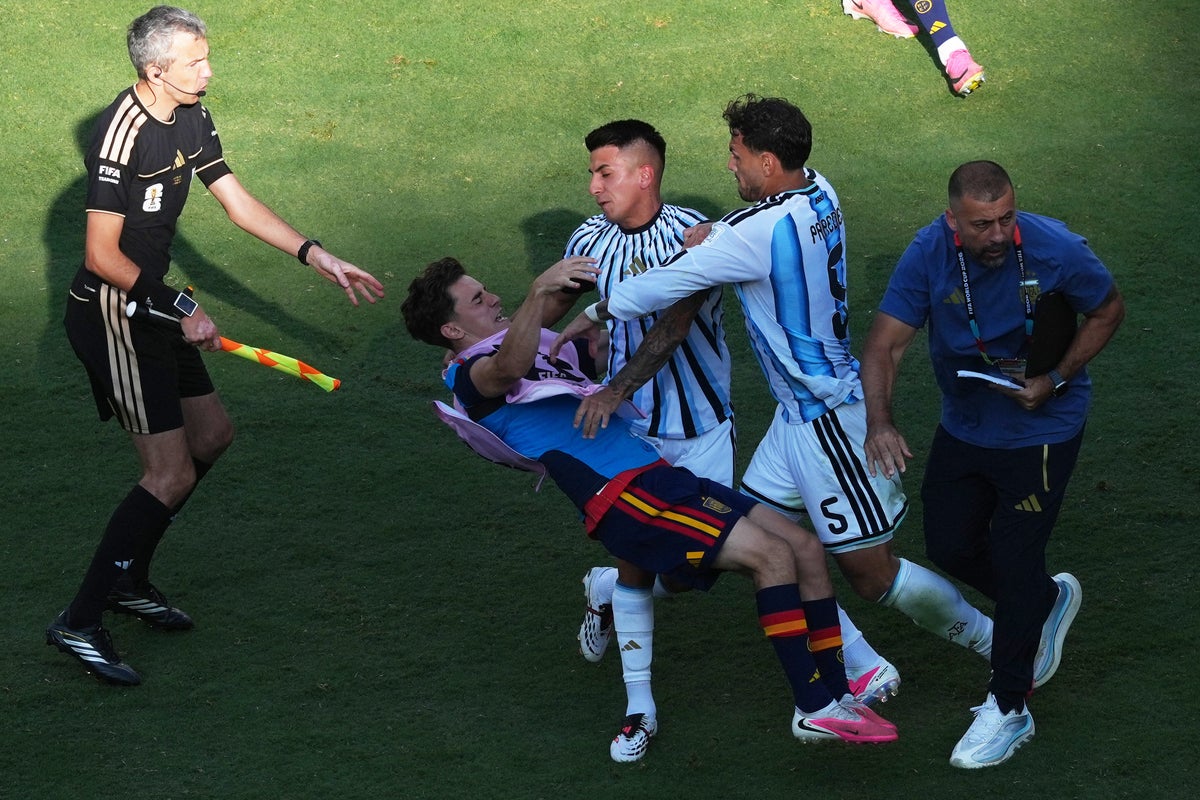
- Dani Olmo and Mikel Merino: The tactical engines who provided the physical edge against an aggressive Argentine side that collected seven yellow cards in a fiery final.
- Borja Iglesias: The absolute wildcard of the night. After the formal speeches wrapped up, Iglesias stepped up to the turntables and delivered a full DJ set that kept Cíbeles jumping past midnight.
The Culture Shift Inside Spanish Football
There's something deeply honest about how this squad interacts with the country. There are no aloof superstars hiding behind dark sunglasses and security detail.
During the parade, players were passing water bottles down to dehydrated fans in the front row. They were taking phones from crowd members to shoot selfies on the bus. When pop star Aitana took the stage to perform, the entire squad joined in, singing off-key without a care in the world.
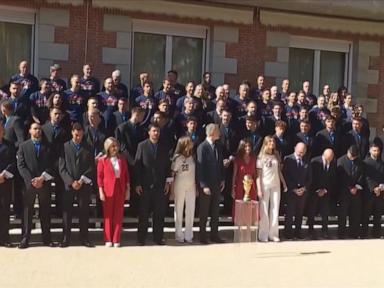
Even Prime Minister Pedro Sánchez’s formal reception at La Moncloa earlier in the afternoon lacked the usual stuffy political tone. The players showed up in customized national team shirts, handed around the trophy, and kept the mood light. Sánchez noted Spain's perfect two-for-two record in World Cup finals—2010 and now this second star—and openly talked about building toward 2030 when Spain co-hosts the tournament alongside Portugal and Morocco.
That long-term vision isn't empty hype anymore. Spanish football holds both the men's and women's World Cup trophies simultaneously right now, following the women's national team's historic triumph in Sydney in 2023. Spain has established an unprecedented double-reign over international football.
What Opponents Should Be Worried About
Winning a World Cup is notoriously difficult. Retaining a high standard afterward is even harder. Most champions suffer from an immediate hangover.
However, looking at the squad composition on that bus, Spain’s window isn't closing—it’s just opening.
Their core players haven't even reached their athletic primes yet. Rodri provides world-class leadership in midfield, Unai Simón has solidified his spot between the posts, and the young attacking talent operates with zero fear of big stages. They went through a brutal tournament path, outlasting the world's best teams, and crowned it by beating the defending champions in extra time.
When a team wins with defensive grit, critics find flaws. When a team wins by out-running and out-thinking everyone else while having fun, competitors start panicking.
The Real Lesson From Cíbeles
It's easy to dismiss sports celebrations as mere noise or distraction. But standing in the middle of Madrid as two million people sing together tells a different story.
Football at this level acts as a cultural mirror. For years, Spanish football was haunted by internal club rivalries, political tension, and tactical doubts. This group stripped all of that away. They played with speed, joy, and collective spirit.
If you ever get the chance to witness a country celebrate a world title in person, take it. Don't settle for the edited 30-second clips on social media that strip out the raw emotion. The real magic happens in the crowd—in the shared chants, the tearful hugs between strangers, and the feeling that for one summer night, an entire nation is moving to the exact same rhythm.
If you're following Spain's football journey, don't look backward at 2010 anymore. The new era is already here, and it's louder than ever.