China just pulled off a trick that SpaceX never even tried.
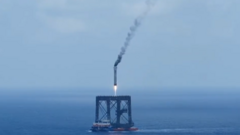
On July 10, 2026, a 207-foot Long March 10B rocket blasted off from Hainan Island. Minutes later, the massive first-stage booster plummeted back toward an offshore platform in the ocean. Instead of deploying heavy landing legs and touching down on a flat deck like a Falcon 9, the Chinese booster did something completely bizarre. It used built-in hooks to catch itself on a massive net suspended above the water.
It worked perfectly.
The state-owned China Aerospace Science and Technology Corporation (CASC) immediately announced it as a historic breakthrough. Western headlines are already framing this as China finally catching up to Elon Musk. But if you think this is just a copycat milestone, you're looking at the wrong things. China isn't trying to build another Falcon 9. They're trying to leapfrog the entire infrastructure constraints that currently govern Western spaceflight.
Here is the real story behind the launch, the weird engineering choices, and what it means for the future of orbital launch costs.
The Net Versus the Legs
Everyone knows how SpaceX lands rockets. The Falcon 9 uses four massive, deployable carbon-fiber landing legs. They add serious weight to the vehicle. Every single pound of landing gear you add to a rocket booster is a pound of payload you can't carry to space.
China went down a radically different path with the Long March 10B.
Instead of putting the landing gear on the rocket, they put it on the ship. The booster itself features minimalist, lightweight landing hooks near its top. As the rocket makes its vertical descent, it guides itself into a specialized, high-strength net-capture system deployed on a seaborne platform.
This design choice solves a few massive engineering problems simultaneously.
First, it sheds weight. The structural mass savings of omitting heavy landing legs and their associated hydraulic systems are enormous. That weight savings translates directly into a higher payload capacity. In its reusable configuration, the Long March 10B can loft 16 metric tons into low Earth orbit. That is a highly competitive number for a medium-lift vehicle.
Second, it solves the tipping problem. Landing an incredibly tall, top-heavy metal tube on a rocking ship in rough seas is terrifying. SpaceX has lost several boosters over the years because of high winds or rough swells that caused the rocket to slide or tip over after landing. A net-capture system grabs the rocket firmly from above or around its core structure, neutralizing the swaying motion of the ocean almost instantly.
It's an incredibly aggressive piece of engineering. It proves China is willing to accept higher operational complexity on the ground if it means maximizing the efficiency of the vehicle in the air.
Under the Hood of the Long March 10B
To understand why this launch matters, you have to look at what is driving the vehicle. The rocket uses a mixed-propellant architecture that highlights the transitional state of modern aerospace engineering.
The first stage burns kerosene and liquid oxygen. Kerosene is dense, cheap, and highly understood. It provides the raw, brute-force thrust needed to fight Earth's gravity during the initial seconds of liftoff.
The second stage tells a different story. It relies on liquid methane and liquid oxygen.
Methane is the current darling of the space industry. It burns incredibly clean, leaving virtually no soot inside the engine plumbing. If you want to reuse a rocket quickly without spending months taking the engines apart to clean out carbon deposits, methane is the way to go. SpaceX uses it for Starship. Rocket Lab is using it for Neutron. China is building its future fleet around it.
By pairing a kerosene first stage with a methane upper stage, CASC is balancing immediate reliability with long-term reuse. They can recover the first-stage booster using the net system, hose it down, inspect the relatively straightforward kerosene engines, and turn it around for another flight far faster than their older hardware allowed.
The Megaconstellation Panic
Why is China suddenly moving with such frantic urgency to master reusability?
The answer isn't a secret. Look at the sky.
SpaceX currently operates thousands of Starlink satellites, dominating global low Earth orbit telecommunications. Beijing views this dominance not just as a commercial loss, but as a severe national security vulnerability. Whoever controls the orbital megaconstellations controls the future of global data distribution, high-speed military communications, and drone coordination.
China has its own answers to Starlink, most notably the Qianfan project, also known as the Thousand Sails constellation. The goal is to put up more than 14,000 satellites into low Earth orbit over the coming years.
You cannot build a 14,000-satellite constellation using expendable rockets. The math doesn't work. If you throw away every rocket body after a single launch, the sheer financial cost will break your budget. Even worse, the manufacturing supply chains can't keep up. You simply cannot build rocket engines fast enough to sustain that kind of launch cadence.
Until today, China was trapped in the expendable loop. Their commercial space sector and state-backed programs were pulling off incredibly impressive launch numbers, but they were discarding their boosters into the ocean or onto inland drop zones.
This successful recovery of the Long March 10B changes the calculus entirely. It gives China the foundational technology needed to scale up the Qianfan constellation. They can now begin thinking about launch cadence in terms of weeks rather than months.
The Path to the Moon
The implications of the Long March 10B extend far beyond commercial satellites. This rocket family is a direct pillar of China's crewed lunar ambitions.
Beijing has stated repeatedly that it intends to land taikonauts on the moon before 2030. The heavy-lift variants of the Long March 10 are the vehicles designated to get them there.
Lunar missions require an immense amount of mass to be lifted into orbit. To send a crew, a lander, and enough fuel to get home, you either need one unimaginably massive rocket or multiple smaller, highly reliable rockets launching in quick succession to assemble the spacecraft in orbit. China is planning for the latter scenario.
A reusable variant of the Long March 10 means China can drastically de-risk the lunar timeline. If a launch fails or gets delayed by weather, a reusable fleet allows for quick turnarounds to maintain the tight orbital windows required for a moon mission. It gives their space program a level of operational flexibility they have never possessed before.
Legitimate Risks and the Missing Pieces
We should avoid overhyping this milestone blindly. One successful recovery does not mean China has conquered the reusable market.
SpaceX has perfected the art of the reuse loop over a decade. They don't just catch rockets; they refurbish them, re-fly them dozens of times, and maintain a logistics chain that operates with the predictability of a commercial airline.
China still has to prove its net-capture hardware can take a beating.
- How much structural stress does the net-capture mechanism put on the upper structural rings of the rocket booster?
- How many times can those landing hooks take the violent impact of a multi-ton vehicle dropping out of the sky before metal fatigue sets in?
- What happens to the net platform during a storm with twenty-foot waves?
Furthermore, the state-run nature of CASC can sometimes act as a double-edged sword. While it benefits from unlimited government backing and strategic alignment with national goals, it lacks the chaotic, iterative speed of a purely commercial entity. When a private company like SpaceX or even China's independent commercial space startups fail, they can pivot on a dime. State corporations often move through denser bureaucratic layers.
What to Expect Next
If you are tracking the global space race, stop watching the launch pads and start watching the oceans. The next steps for China's space program will happen rapidly.
First, watch for the re-flight of this specific booster. The real test of reusability isn't the landing. It's the second launch. If CASC can fly this exact Long March 10B first stage again before the end of the year, the Western space sector will need to recalibrate its timelines.
Second, look out for China's private space sector. Companies like LandSpace, Deep Blue Aerospace, and Space Pioneer have been working on their own vertical landing systems. The state-level success of CASC will likely trigger a wave of technology sharing and regulatory support, allowing these smaller private entities to accelerate their own reusable launch timetables.
The era of American exclusivity in reusable rocketry is officially over. The capture of the Long March 10B booster proves that the technical barriers to vertical rocket recovery are no longer a proprietary secret held in Hawthorne, California. The race for orbital infrastructure is resetting, and the playing field is getting incredibly crowded.