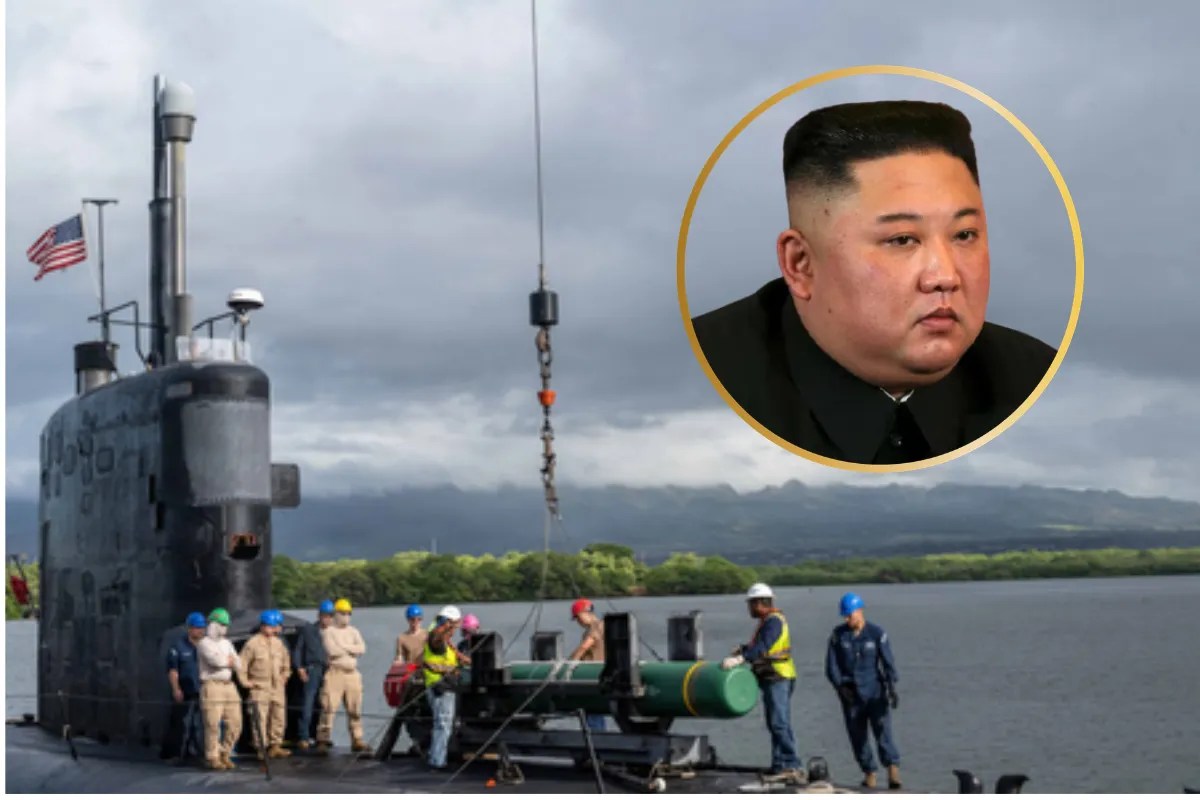
Pyongyang is furious again. That isn't news by itself. Kim Jong Un's regime condemns Western military drills so often that it usually feels like background noise. But the latest explosive statement from North Korea's state media regarding the 2026 Rim of the Pacific (RIMPAC) exercises deserves a much closer look. This isn't just their standard boilerplate rhetoric. Something about this specific naval exercise has deeply rattled the leadership in Pyongyang, and the reasons go far beyond the usual complaints about American imperialism.
If you just glance at mainstream headlines, you will see the usual summary. North Korea called the drills a war rehearsal. They threatened proportional countermeasures. They called everyone names. But if you read between the lines of what the Korean Central News Agency (KCNA) actually published, you discover a regime that recognizes a massive shift in the regional balance of power. They aren't just angry. They're profoundly worried about new military technologies and shifting command structures that threaten their strategic leverage. If you enjoyed this piece, you might want to check out: this related article.
Let's break down exactly what happened and why this particular iteration of the world's largest maritime exercise has driven Pyongyang into a state of high-alert fury.
The Shift That Actually Rattled Pyongyang
For decades, RIMPAC has been an American-led show. The United States brings the massive aircraft carriers, coordinates the drills off the coast of Hawaii, and dictates the flow of operations. Allied nations send their ships to participate, learn, and blend into the American command structure. For another look on this event, check out the recent update from The New York Times.
This year, things changed in a way that Pyongyang finds completely unacceptable.
For the first time in the history of the exercise, the South Korean Navy stepped up to serve as a core command component for the maritime drills. South Korea wasn't just showing up to follow orders. Their officers were actively directing major operations involving multiple nations. They brought high-end assets like the ROKS Jeongjo the Great, a massive 8,200-ton Aegis destroyer that represents the absolute peak of modern naval warfare.
This evolution directly challenges the foundational narrative that North Korea uses to justify its existence. Pyongyang constantly labels South Korea as a helpless puppet of Washington. Seeing South Korean military commanders take the wheel of a massive, 30-nation multinational armada shatters that illusion. It shows a rapidly maturing, highly capable South Korean military that can operate independently and lead international coalitions. That is exactly why KCNA went out of its way to blast the South Korean military as puppet warmongers who are frantic in their confrontation schemes. It's pure projection born out of anxiety.
Why AI Integration Has Changed the Game
Look closely at the specific grievances aired by KCNA. They didn't just complain about the number of troops or the presence of the USS Theodore Roosevelt, a 100,000-ton American supercarrier. They explicitly pointed out something else.
They highlighted the fact that RIMPAC introduced advanced artificial intelligence technology and focused heavily on the integrated operation of unmanned and manned weapon systems.
Think about why this terrifies Kim Jong Un's generals.
North Korea relies on asymmetric warfare. They know they can't match the combined economic or conventional military might of the US and its allies. Their entire strategy relies on flooding the zone with massive numbers of conventional artillery pieces, older submarines, and a massive standing army, backed up by their nuclear deterrent.
High-tech integration completely breaks that strategy. When you combine manned warships with autonomous drone swarms, AI-driven targeting networks, and real-time data sharing across 30 different navies, numbers don't matter as much anymore. An AI-driven defense network can process threats, track submarine movements, and intercept incoming missiles at a speed that human operators simply can't match. North Korea sees the writing on the wall. The technological gap isn't just widening. It's accelerating at an exponential rate.
The Trilateral Noose Tightens Around Pyongyang
North Korea's state media specifically complained that RIMPAC effectively extended the preemptive strike elements that the US, South Korea, and Japan have been mastering in other recent exercises like Freedom Edge and Ulchi Freedom Shield.
This tells us that Pyongyang feels the walls closing in. Historically, cooperation between South Korea and Japan has been rocky, hindered by deep-seated historical grievances. Pyongyang counted on that friction. They knew that even if the US wanted to build a unified front, Seoul and Tokyo would rarely see eye to eye.
That calculation is dead. The current geopolitical environment has pushed South Korea and Japan into unprecedented military alignment. When you see elements of specialized trilateral drills like Freedom Edge being woven directly into the massive fabric of RIMPAC, it means the three nations are learning to fight as a single, cohesive unit.
The focus on preemptive strikes is what keeps the North Korean leadership awake at night. Their doctrine relies on threatening a nuclear launch if they feel an attack is imminent. If the US and its allies are openly practicing how to hunt down, track, and destroy those launch sites via integrated, multi-domain operations before a single missile can leave the ground, North Korea's ultimate leverage is severely diminished.
Sifting Through the Proportional Countermeasures Rhetoric
What does North Korea actually mean when it threatens regional countries with a series of proportional countermeasures?
We don't have to guess. We've seen this playbook before. When Pyongyang feels threatened by allied military exercises, they usually respond with tangible, escalatory actions designed to grab headlines and reassert their presence.
- Ballistic Missile Tests: Expect a flurry of short and medium-range missile tests fired into the Sea of Japan. These are designed to demonstrate that despite allied AI integration, they can still overwhelm regional air defenses.
- Underwater Drone Demonstrations: North Korea has been testing its own nuclear-capable underwater attack drones lately. Don't be surprised if they stage a highly publicized test of these systems to counter the manned-unmanned integration seen at RIMPAC.
- Satellite Launches: Pyongyang has been trying to establish its own military spy satellite network. They may use this allied exercise as a convenient excuse to attempt another launch, claiming they need an eye in the sky to monitor these aggressive forces.
They want to show they aren't intimidated. Yet, the sheer desperation in their rhetoric suggests otherwise. Calling multinational participants international outlaws and ruffians sounds less like a confident nuclear power and more like an isolated regime realizing its old threats are losing their sting.
What Regional Watchers Need to Do Next
The situation on the Korean Peninsula isn't going to cool down anytime soon. RIMPAC runs through July 31, meaning we are in for a tense couple of weeks.
If you're tracking these developments, stop watching the empty political statements. Pay attention to the actual hardware movements. Watch whether North Korea attempts to coordinate its own response with regional partners like Russia, especially given their recently signed mutual defense pact. Keep a close eye on the waters around the peninsula for any sudden naval deployments or unannounced live-fire drills from Pyongyang's forces. The rhetoric is loud, but the physical deployments will tell you exactly how far Kim Jong Un is willing to push this crisis.
Why North Korea's Military Is Panicking explains how joint military drills involving American forces constantly force the North Korean regime into defensive reactions and aggressive missile posturing.
http://googleusercontent.com/youtube_content/1