An 11-year-old girl steps out of her home on a Saturday afternoon in Baruipur, a town just outside Kolkata, to buy a birthday gift for her friend. She never comes back. The next morning, her mutilated body is pulled from a local pond, stuffed inside a coarse sack.
This isn't just another horrifying statistic in India's ongoing battle with sexual violence. The brutal murder and gang-rape of this young child in July 2026 has triggered a terrifying spiral of rage, vigilantism, and blatant political theater that is tearing West Bengal apart.
If you think this is just a story about a failed local police force or a community mourning a terrible loss, you're missing the bigger picture. Within forty-eight hours, the tragedy devolved into the public lynching of an innocent man, a highly controversial police "encounter" shooting, and a bitter, cynical blame game between political parties. The actual victim, a child whose life was cut short in the most gruesome way imaginable, has already been pushed to the margins of her own tragedy.
The Chilling Details of the Baruipur Crime
To understand why the streets of South 24 Parganas district are currently locked down under strict prohibitory orders, you have to look at what the autopsy revealed. The initial medical findings didn't just confirm sexual assault; they painted a picture of absolute sadism.
The young girl suffered a severe, crushing blow to her head. Her body was covered in deep scratches and bite marks. Most horrifyingly, the post-mortem found water inside her lungs and stomach. She didn't die on land. The attackers forced her into a sack and threw her into the Surjyapur Haat area pond while she was still breathing. Drowning and massive blood loss combined to kill her.
A grainy, thirteen-second CCTV clip recovered by investigators shows the final moments of her life. Captured on July 4, 2026, the footage shows a man in a red T-shirt and dark trousers walking down a quiet village road, with the small girl following a few paces behind. Police later identified that man as Prabhas Mondal, one of the primary accused.
The family didn't get immediate help. When the child failed to return home by Saturday evening, her parents panicked. They ran to the local police station to lodge a missing person report, but relatives allege the officers on duty brushed them off. Left with no choice, the family and neighbors spent the entire night searching the dark lanes of Baruipur themselves, scanning local security cameras and knocking on doors, until the grim discovery was made the following afternoon.
Vigilantism and the Death of Due Process
When the sack was pulled from the water on Sunday, July 5, the local community erupted into pure fury. Decades of deep-seated distrust toward the police boiled over in a matter of minutes.
A massive crowd gathered, refusing to hand over the child's body to the authorities for an autopsy. They blocked the crucial Sealdah-Namkhana railway line and sat on the main roads for five hours, burning tires and logs. When police and central paramilitary forces tried to intervene, the crowd attacked them with brickbats. Police vehicles were overturned and torched, leaving several officers injured.
In the middle of this chaotic explosion of grief and anger, a terrifying event took place. The mob spotted a twenty-six-year-old local man, Indrajit Tanti, whom they suspected of being associated with the attackers. Despite his desperate pleas of innocence, the crowd beat him to death on the spot.
Days later, the state government and senior police officials confirmed a devastating reality: Tanti had absolutely nothing to do with the crime. He was entirely innocent. A crowd looking for blood simply picked a target and executed him in broad daylight.
The Dangerous Rise of Encounter Killings in West Bengal
The violence didn't stop with a civilian lynching. By Tuesday, July 7, the primary suspect caught in the CCTV footage, Prabhas Mondal, was dead too.
According to the official police statement, officers took Mondal back to the vicinity of the crime scene to reconstruct the events and search for a hidden weapon. Police claim that Mondal suddenly tried to snatch an officer's service weapon to escape, forcing the accompanying team to open fire in self-defense. He died of gunshot wounds before reaching the hospital.
In other parts of India, these quick, extrajudicial executions—commonly known as "encounter killings"—are frequently celebrated by a frustrated public tired of a sluggish judicial system. But in West Bengal, this is a dangerous and unusual departure from standard practice.
Opposition leaders quickly flagged the shooting as highly suspicious. If a suspect is killed before he ever stands trial, the public never learns the full truth. Was it a genuine case of a fleeing criminal, or was it a deliberate attempt to quiet public outrage and cover up institutional negligence? By bypassing the courts, the state feeds a dangerous cycle where violence replaces legal accountability.
Cynical Politics Over Human Lives
The political backdrop of this unrest makes the situation even more volatile. West Bengal recently underwent a massive political shift in April 2026, when the Bharatiya Janata Party took control of the state government, ending fifteen years of rule by Mamata Banerjee's Trinamool Congress. The centerpiece of that election campaign was women's safety, heavily driven by public anger over the tragic 2024 rape and murder of a trainee doctor at a government hospital in Kolkata.
Now, the tables have turned, and the political maneuvering is shameless.
The newly elected Chief Minister, Suvendu Adhikari, rushed to form a six-member Special Investigation Team to look into the Baruipur case, promising to push for capital punishment for the remaining arrested suspects, Anand Sardar and Dibakar Sardar. Yet, Adhikari has also faced sharp criticism for trying to inject a communal narrative into the tragedy. Because the victim was Muslim and the accused men are Hindu, the Chief Minister publicly suggested there was a deep-seated political conspiracy and a "communal connection" behind the subsequent mob violence and the lynching of the Hindu man.
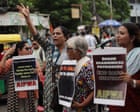
Meanwhile, Mamata Banerjee and her party loyalists immediately hit the streets of Kolkata, staging high-profile candlelight marches and accusing the new government of placing her under house arrest to prevent her from visiting the grieving family. Rebel politicians who recently broke away from Banerjee's party were heckled by locals when they tried to visit the village, with residents shouting down the politicians as opportunists who only care about photo opportunities.
It is a stomach-turning cycle. One party uses a child's death to paint an entire community as violent, while the other uses it to reclaim lost political ground.
The Structural Fixes Nobody Wants to Talk About
If we want to stop these horrors from repeating, we have to look past the political theater and address the broken machinery that allows them to happen. Demanding the death penalty after a child is already dead is a cheap way for politicians to look tough without doing the hard work of prevention.
True safety requires immediate, concrete structural reforms.
1. Mandating Radical Police Accountability
The family in Baruipur had to check CCTV cameras themselves because the local police refused to act immediately. Every single missing child report must trigger an instant, mandatory protocol. If an officer delays filing a First Information Report or refuses to deploy a search team within the first hour, that officer must face immediate suspension and criminal charges for negligence.
2. Upgrading Infrastructure in Vulnerable Suburbs
Tragedies like this rarely happen in well-lit, heavily monitored commercial districts. They happen on dark village roads and unmonitored transit paths on the outskirts of major cities. Local municipalities must prioritize installing high-definition, well-maintained CCTV networks and reliable street lighting along routes frequently used by school children and rural commuters.
3. Rejecting the Culture of Instant Justice
When a society cheers for mob lynchings and police encounter killings, it creates an environment where innocent people like Indrajit Tanti die for crimes they didn't commit. The judiciary must expedite trials for sexual violence through dedicated fast-track courts that deliver verdicts in weeks, not decades. Real justice is swift, transparent, and legal—not delivered by an angry crowd or a police officer's pistol.
The tragedy in Baruipur shouldn't be reduced to a campaign slogan or a weapon for political parties to wield against each other. Until the focus shifts from winning elections to genuinely protecting vulnerable citizens, the streets of West Bengal will remain unsafe for the very people who need protection most.