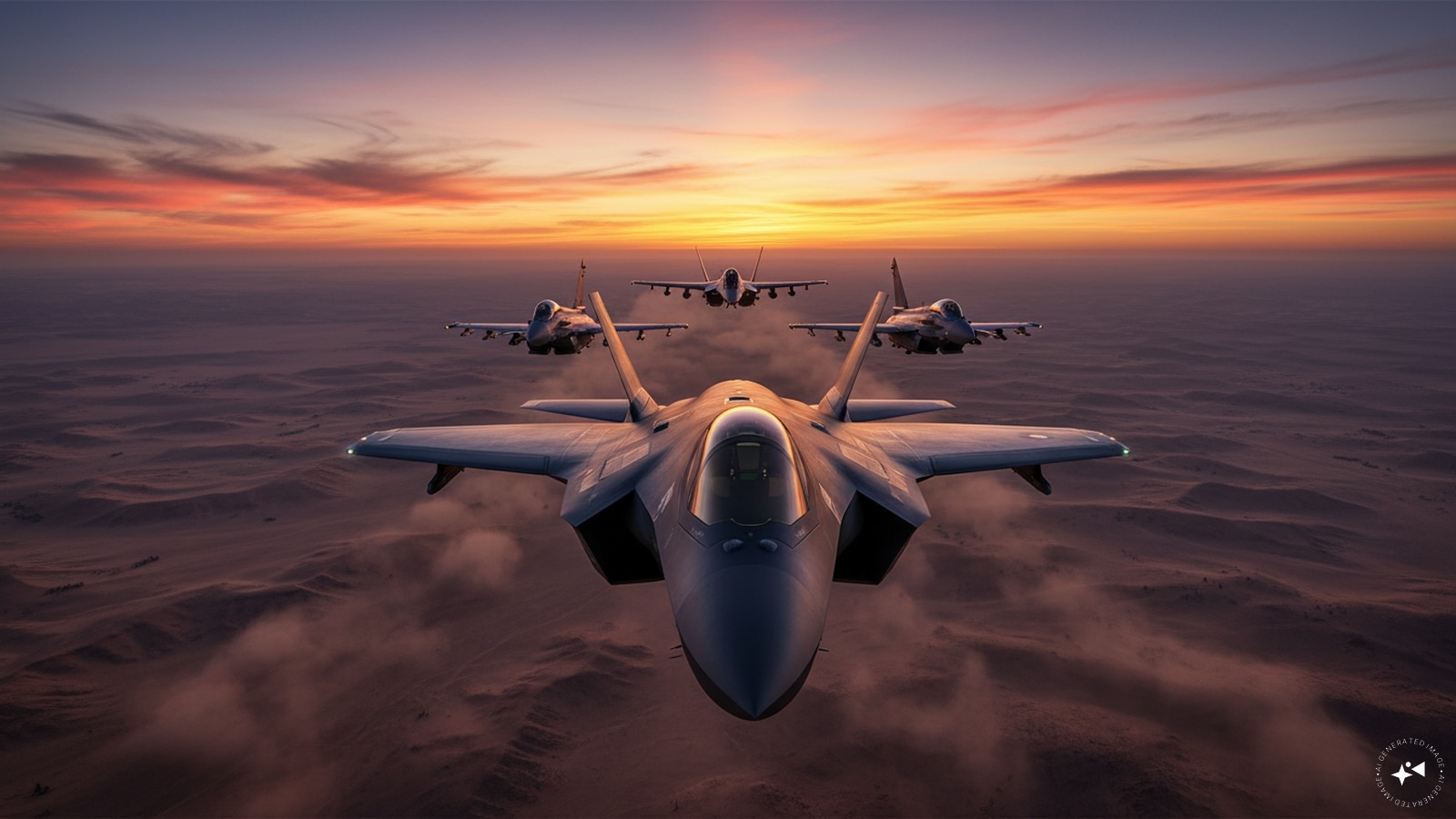
The skies over Rajasthan are about to get very crowded. Starting September 26, 2026, the Indian Air Force will host the second edition of Exercise Tarang Shakti at the Jodhpur Air Force Station. This isn't just another routine military get-together. The headline attraction this time around is the arrival of the United States F 35 Lightning II fifth-generation stealth fighter, making its operational debut in a major Indian multilateral air exercise.
If you have been following global defense trends, you know that moving past simple bilateral drills is the new priority. For decades, air forces trained with one partner at a time. That isolationist approach doesn't work in modern multi-domain coalition warfare. Tarang Shakti is designed to fix that by forcing diverse air fleets to operate under shared operational workflows, completely redefining how global military aviation handles massive coalition threats.
Inside the Jodhpur Deployment
Running through October 12, 2026, the second iteration of Tarang Shakti brings together active flying assets from seven nations alongside observers from dozens of other countries. The logistical footprint at Jodhpur is staggering.
The United States is bringing six F 35 stealth fighters supported by KC 135 tankers. France is deploying seven Rafale jets, accompanied by A400M transporters and multi-role tanker transports. The United Arab Emirates is sending six F 16 Fighting Falcons alongside a Global 6000 aircraft. Other key participants like Germany, Australia, Bangladesh, and Sri Lanka are contributing heavy transport assets and specialized reconnaissance planes.
Against this elite global lineup, the Indian Air Force is fielding its entire frontline operational punch. You will see indigenous LCA Tejas fighters operating side by side with Su 30MKIs, Mirage 2000s, Jaguars, and MiG 29s. This mix gives tactical planners a rare window to test how fourth-generation legacy platforms integrate with advanced fifth-generation nodes like the F 35.
Why the F 35 Presence Matters So Much
Let us be honest about what bringing an F 35 to an Indian airbase actually means. While the stealth jet previously made static appearances at air shows in Bengaluru, bringing active combat assets to Jodhpur is a different beast entirely. It allows air defense networks to test radar signatures, data-link sharing, and sensor fusion in real-world desert conditions.
Operating in the Thar Desert presents unique environmental hurdles. Fine particulate dust, blistering daytime heat, and rapid temperature drops test the thermal management and filtration systems of sensitive low-observable coatings. Pilots flying fourth-generation jets will also experience firsthand what it takes to coordinate tactics with a platform that relies heavily on passive electronic surveillance and networked battlefield transparency.
Breaking Away From Bilateral Limits
Traditional defense diplomacy used to look like a handshake between two nations practicing standard intercept maneuvers. Those days are gone. Air Marshal Ashutosh Dixit noted during recent briefings that shifting toward synchronized multi-nation integration is the only way modern air forces prepare for peer-level conflicts.
When you have French Rafales, American F 35s, and Indian Su 30MKIs flying complex strike packages together, communication protocols matter more than raw thrust. Pilots must manage distinct secure data links, varying fuel burn rates, and completely different logistics chains. Solving these friction points during a planned exercise in Jodhpur prevents catastrophic communication breakdowns during real-world coalition operations.
What Happens Next on the Flight Line
The exercises kick off right on the heels of the bilateral Indo-Japan drill known as Veer Guardian, keeping the Jodhpur airbase running at maximum tempo. Ground crews are working around the clock managing tight turn-around schedules, refueling arrays, and specialized maintenance hangers built to house low-observable aircraft components.
If you are tracking geopolitical defense shifts, watch how these air forces handle large-scale force engagements and high-value asset protection missions over the coming weeks. The data gathered during these two weeks in Rajasthan will influence tactical doctrine for years to come. Check local defense updates daily for flight schedules and operational debriefs as the jets take off.