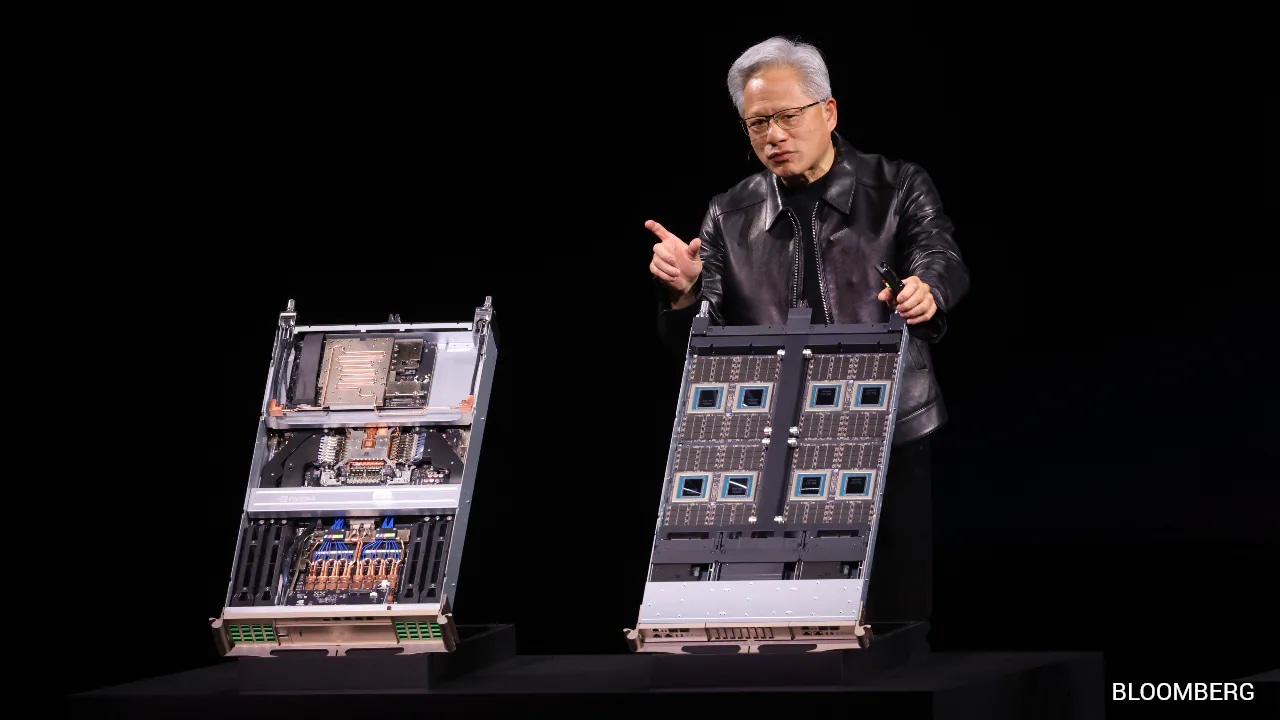
Silicon Valley loves a good founder myth. For years, Jensen Huang wore the leather jacket of an undisputed tech king, presiding over a four-trillion-dollar empire that single-handedly fueled the American artificial intelligence boom. Then the ground shifted. Following explosive reports detailing personal scandals and intense scrutiny over intelligence ties, Huang abruptly resigned as Nvidia's chief executive.
The shockwaves extend far beyond one corporate boardroom. When a single executive and a single company become the beating heart of an entire macroeconomic expansion, their sudden unraveling exposes deep, systemic risks across global markets.
Most market observers missed the fundamental vulnerability of the current tech cycle. Nvidia stopped being a simple semiconductor vendor a long time ago. Instead
How Jensen Huang Became the Engine of the American Economy
business
Nobody expected a guy in a black leather jacket to shoulder the weight of the entire American economic machine. Yet here we are.
Over the last few years, Jensen Huang stopped being just a CEO. He became the architect of a massive industrial shift. When the artificial intelligence boom started reshaping how companies operate, every single road led back to Nvidia. You couldn't build a massive language model, train a neural network, or spin up a hyperscale data center without Huang's silicon. That kind of market dominance changes things. It changes Wall Street. It alters national GDP trajectories.
Let's look past the hype and examine what actually happened. The economy didn't just digitize; it got rewritten in CUDA.
The Silicon Monopoly Nobody Saw Coming
Silicon Valley loves a good garage myth. Nvidia didn't start in a garage, but its rise feels just as improbable. For decades, the company was known for graphics cards. Gamers bought their GPUs to render high-framerate explosions in first-person shooters. Wall Street viewed them as a cyclical hardware play.
Huang saw a different horizon long before anyone else. Back in 2006, Nvidia launched CUDA, a programming model that allowed graphics chips to handle general-purpose computing. Wall Street hated it. Analysts complained that it burned R&D money on a niche feature that didn't boost immediate quarterly profits. Huang kept funding it anyway.
That stubborn bet turned out to be the foundation of the modern tech economy. When OpenAI and other labs needed raw computing power to train massive models, standard central processing units choked. Nvidia's graphics chips handled parallel processing effortlessly. Overnight, a gaming hardware company became the sole tollbooth on the road to the future.
If you wanted to build intelligence at scale, you had to write a check to Huang.
Powering the Macro Economy
We usually talk about the economy through the lens of interest rates, inflation prints, and housing starts. But lately, macroeconomics runs on datacenter buildouts.
Look at what happened to utility grids, commercial real estate, and corporate capital expenditures. Energy companies suddenly found themselves fielding calls from tech giants needing the electrical output of a small city just to power another cluster of servers running Nvidia hardware. Chip manufacturing plants, or fabs, became matters of national security. Billions in public and private capital poured into domestic semiconductor fabrication.
Huang didn't just sell components. He kickstarted a massive physical infrastructure cycle. Construction firms, logistics companies, cooling system manufacturers, and electrical grid operators all felt the ripple effects. When a single firm dictates the hardware roadmap for the entire Fortune 500, the line between corporate strategy and national economic health disappears.
The Real Risk of One-Man Momentum
Relying this heavily on one company and one charismatic leader creates structural vulnerability.
Markets hate single points of failure. When an economy hitches its wagon to a massive technology transition driven primarily by one hardware ecosystem, any hiccup echoes globally. If chip supply chains stutter, or if enterprise software buyers experience a return-on-investment reality check, the shockwaves hit indexes instantly.
Big tech companies spent hundreds of billions buying Nvidia accelerators. Those buyers eventually need to show actual revenue growth to justify those capital expenditures. If end-users don't adopt AI tools at the scale corporate boards projected, enterprise spending will cool off. When enterprise spending cools off, hardware orders slow down.
Huang knows this pressure better than anyone. His public appearances aren't just product launches anymore; they act as macroeconomic indicator check-ins. Analysts parse his tone the way they used to dissect Federal Reserve statements.
Where We Go From Here
The era of easy infrastructure building is maturing. Companies are moving past the initial panic of buying every chip they can get their hands on. Now, they want efficiency, domain-specific optimization, and measurable financial returns.
If you run a business, stop treating artificial intelligence as a magic trick you buy off the shelf. Treat it like infrastructure. Audit your workflows, look at where automated intelligence actually cuts costs or drives revenue, and ignore the marketing noise. The companies winning right now aren't the ones hoarding hardware; they're the ones integrating compute power into real, functional operations.
Jensen Huang proved that a single long-term bet can reshape global commerce. Your job is to figure out how to ride that wave without getting crushed by it.