Campaigning for a job is easy. Governing is hard.
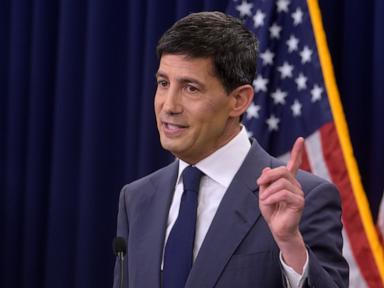
Federal Reserve Chair Kevin Warsh is finding that out fast. Last year, while essentially auditioning to lead the world's most powerful central bank, Warsh sounded like a friend to easy money. He frequently talked up the need for lower interest rates. Fast forward to his appearance at the European Central Bank's forum in Sintra, Portugal, and the tone has changed completely.
If anyone in the White House expected a rubber stamp for lower borrowing costs, they just got a very cold shower.
Warsh took the stage in Sintra and drew a hard line. He explicitly warned businesses and households that if they expect the Fed to tolerate inflation above its 2% target, they are going to be disappointed. He promised price stability. No exceptions. No political favors.
This creates an immediate clash with President Donald Trump, who nominated Warsh back in January and has repeatedly demanded rate cuts. By planting his flag so firmly on inflation control, Warsh is doing something his critics didn't think he had the stomach for. He is cutting the political umbilical cord.
The Death of Forward Guidance
Wall Street loves predictability. For over a decade, the Fed has coddled investors with forward guidance, giving them a detailed roadmap of exactly what policymakers plan to do months in advance.
Warsh is throwing that playbook in the trash.
He didn't just refuse to drop hints about the next interest rate decision at the upcoming July 28-29 meeting. He turned it into a matter of principle. He considers forward guidance counterproductive for the current economic climate.
Instead of pre-determining outcomes, Warsh wants policymakers to walk into the room, close the door, and have what he called a "good family fight." He didn't even submit an interest rate forecast at the June meeting. That is a massive departure from the highly scripted era of Jerome Powell.
This policy shift creates a huge blind spot for markets. Right now, the benchmark rate sits at roughly 3.6%. Investors are betting on a hike to 3.9% as early as September. Nearly half of the 19 Fed policymakers signaled support for higher rates later this year during their June session. Eight wanted to hold steady. Only one wanted a cut. Because Warsh refuses to break his own rule against giving hints, nobody outside that room knows where the new chair actually stands.
The Geopolitics of a 4.2% Inflation Spike
To understand why Warsh pivoted from an easy-money campaigner to an inflation hawk, look at the ground shifting beneath his feet. When he was nominated in January, the inflation picture looked stable. Then the Iran war broke out.
Gas prices skyrocketed. Energy costs bled into everything. By May, headline inflation hit a three-year high of 4.2%.
That changed the math. The Fed can't ignore a 4.2% inflation print, no matter who sits in the Oval Office.
The good news is that economic realities change fast. A recent peace agreement has started lowering gas prices. Technical talks in Doha are making progress on securing shipping lanes through the Strait of Hormuz. Because of that, Warsh admitted in Sintra that inflation risks and public expectations have moderated over the last month.
But a moderation in risk isn't a victory. It leaves Warsh with a difficult choice. Does he hike rates in September just to prove his inflation-fighting credentials? Or does he ride out the decline in energy prices and keep rates steady?
The Artificial Intelligence Wildcard
There is another layer to the new chairman's long-term strategy, and it involves tech. Warsh has been vocal about his belief that artificial intelligence will eventually rescue the economy from structural inflation. The theory is straightforward. Over time, AI expands productivity, making it cheaper and more efficient to produce goods and services. More supply with higher efficiency equals lower prices.
Many economists think that is wishful thinking for the short term.
Right now, the massive investment into data centers, semiconductor production, and computing hardware is actually doing the opposite. It is creating a massive demand shock. Buying up microchips and building out energy-hungry infrastructure costs enormous amounts of money, which adds to inflationary pressures today.
When pressed in Sintra on whether AI spending is actively fueling inflation right now, Warsh dodged the question. He pointed out that he has established five separate internal task forces at the Fed to study productivity and technology. He knows the data isn't clear yet.
Reading the Economic Tea Leaves
The coming days will test the central bank's patience. The labor market isn't showing signs of distress. Hiring remains strong, and economists expect the upcoming government employment report to show unemployment holding steady at a low 4.3%.
A strong jobs market gives the Fed all the cover it needs to keep borrowing costs high. If people are working and spending money, there is no emergency requiring a rate cut.
This leaves the business community in a holding pattern. If you are running a company or trying to buy a house, don't hold your breath for cheaper credit. The era of the Fed telegraphing its every move to protect the stock market is over.
Your Next Steps in the New Fed Era
The rules of the game changed the moment Warsh took over on May 22. Stop waiting for the central bank to bail out the market with cheap money. Here is how to adapt right now.
- Stress-test your capital assuming higher rates for longer. If your corporate debt or personal loans are adjusting soon, model your budget around a 4% benchmark rate rather than expecting a drop back to 3%.
- Ignore Wall Street's short-term predictions. Because the Fed has abandoned forward guidance, market forecasts are mostly guesswork right now. Focus on hard data like core inflation and employment prints rather than Fed whisperers.
- Watch energy and commodity prices closely. If the peace negotiations in Doha hold and oil continues to trade in the low $70s, the pressure on the Fed to hike rates in September will drop significantly.
Warsh called this period the most consequential time to be a central banker in his adult lifetime outside of a financial crisis. He isn't wrong. By reclaiming the Fed's independence and forcing Wall Street to fly blind, he is staging a quiet revolution in monetary policy. The White House might not like it, but the new chair has made his priorities clear. Price stability comes first. Everything else is just noise.