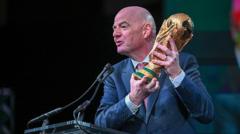
Football governance is barreling toward an unprecedented constitutional crisis. FIFA wants to cash out on its crown jewel, and Europe is drawing a hard line in the sand.
If you've been following the sudden explosion of tension between European football leaders and Zurich, you know this isn't just another routine political spat. FIFA president Gianni Infantino has proposed a massive commercial restructuring, and the continent's top associations are threatening to pull the plug on international competition altogether.
Here is what is actually happening behind the headlines, why European leadership is furious, and what this standoff means for the future of the global game.
The Twenty Billion Dollar Bet That Triggered a Rebellion
The friction started when details emerged regarding a new commercial venture called FIFA Forward Enterprise (FFE). Under the proposal, FIFA plans to spin off the commercial operations of its flagship tournaments—including the men's and club World Cups—into a separate corporate entity valued at $20 billion.
To fund this new structure, FIFA wants to sell a twenty percent stake to outside private equity investors. The primary financial backer lined up for the deal is a prominent New York investment firm, sparking immediate chatter about outside corporate influence creeping into the sport.
To win over the global voting bloc, Infantino didn't subtlely test the waters. He moved fast, attaching a heavy financial incentive to a mid-September approval deadline. FIFA dangled promises of doubling basic funding for its 211 member associations, pushing individual payouts from $10 million to $20 million for the cycle, with long-term projections climbing much higher.
For smaller federations heavily dependent on external financial distributions, the payout looks tempting. For Europe, it looks like a hostile corporate takeover.
Why UEFA Is Threatening a Complete Boycott
Following an emergency meeting of all 55 member associations, UEFA dropped a nuclear option: absolute non-participation in any FIFA competitions if the private equity plan moves forward.
European leadership argued that the moment external shareholders acquire ownership interests in tournament commercial streams, the very soul of the sport alters permanently. Profit margins and quarterly shareholder returns instantly become a daily operational pressure. Calendar congestion, fixture bloat, and tournament formats won't be shaped by sporting integrity anymore. They'll be optimized for dividend yields.
UEFA's official statements didn't mince words, calling the maneuver an abdication of FIFA's foundational duty as a sporting custodian. When you look at how the proposal was rushed through without traditional consultation, it's easy to see why trust evaporated overnight.
Other continental bodies like CONCACAF have similarly pushed back against the tight deadlines and lack of transparency, compounding the pressure on Zurich. Yet, Europe's threat of a flat boycott carries the heaviest weight because a World Cup or international calendar without European powerhouses ceases to be a global championship in any meaningful sense.
The Real Motives Behind the Cash Grab
You have to ask a blunt question: why does an organization sitting on massive financial reserves need to sell a slice of its equity to private investors?
FIFA just came off the back of extraordinarily lucrative tournament cycles. Critics within European football have openly questioned why existing cash reserves aren't being tapped to fund grassroots development instead of mortgaging future commercial streams to Wall Street-adjacent capital.
Whispers behind closed doors point toward long-term succession and legacy architecture. Insiders have noted that shifting commercial rights into an independent enterprise creates powerful, commissioner-style executive roles insulated from traditional sports politics. When presidential terms face regulatory boundaries, corporate structures offer alternative avenues of influence.
What Happens Next
The timeline is moving dangerously fast. With deadlines looming in September and upcoming electoral cycles approaching, Infantino faces the toughest political battle of his tenure.
If FIFA refuses to back down, international football faces a catastrophic schism. European nations aren't bluffing; the infrastructure for a parallel ecosystem or a prolonged legal and sporting war is already being weighed.
Keep a close eye on how the smaller federations vote when forced to choose between immediate cash infusions from Zurich and the long-term structural independence of the game. Football stands at a definitive crossroads, and the outcome will dictate whether the world's most popular sport remains a cultural heritage or transforms into a private equity asset class.