Most teenagers spend their high school years stressing over exams, video games, or weekend plans. Dev Rai decided to build an international supply chain instead. At fifteen, during family visits to India, he noticed a heartbreaking disconnect. Traditional artisans spent weeks crafting intricate, generational masterpieces only to watch them sit unsold because they lacked access to reliable markets. Instead of just feeling bad about it, he did something unusual. He founded the Serving Society Global Foundation.
Two years later, that high school project based out of Virginia isn't a cute school club. It is a functioning social enterprise that has raised over $15,000, supported more than 400 marginalized craftspeople, sold over 900 handmade products, and mobilized a network of over 300 student volunteers spanning multiple states. You might also find this related coverage interesting: Why Emmanuel Macron Is Scrambling For Gulf Diesel Right Now.
If you think starting a nonprofit requires a million-dollar endowment or decades of corporate experience, Rai's story proves you completely wrong.
Spotting the Real Market Gap
Most young founders stumble because they try to solve problems they've only read about in textbooks. Rai had front-row seats to the actual struggle. Traveling through India, he saw master weavers and handicraft makers whose skills were dying out simply because young consumers chased mass-produced junk. The issue wasn't a lack of talent. It was a lack of visibility and distribution. As reported in recent coverage by Bloomberg, the implications are widespread.
Traditional artisans don't need charity handouts. They need paying customers who value authentic work. Rai understood that American communities—particularly diaspora networks, local temples, and cultural festivals—were hungry for genuine, sustainable cultural goods. The missing piece was a bridge.
He didn't try to reinvent artisan craftwork from scratch. Instead, he partnered directly with established nonprofit and government-backed organizations already embedded inside India's craft communities. This operational shortcut let him bypass regulatory red tape and source authentic goods straight from the source.
Turning Community Spaces Into Retail Hubs
Good intentions don't sell inventory. Distribution does. Without a massive brick-and-mortar storefront or a multi-million-dollar digital marketing budget, the Serving Society Global Foundation had to get creative.
Rai and his growing team took products directly to where people gather. They set up pop-ups at local grocery stores, community events, cultural festivals, and religious centers across Virginia and neighboring regions. By meeting buyers face-to-face, volunteers didn't just push a transaction across a counter—they shared the personal story behind every carved artifact and hand-woven textile.
That human element changed everything. Customers weren't just buying a decor item; they were investing in a family half a world away. To date, this grassroots sales strategy has pushed over 900 unique items through just eight local partner locations, proving that physical community presence still beats sterile e-commerce listings for niche craft goods.
Scaling Through Youth Empowerment
You can't scale a global nonprofit if you're trying to micromanage every shipment from a high school desk. Rai quickly realized that delegation wasn't just helpful; it was survival.
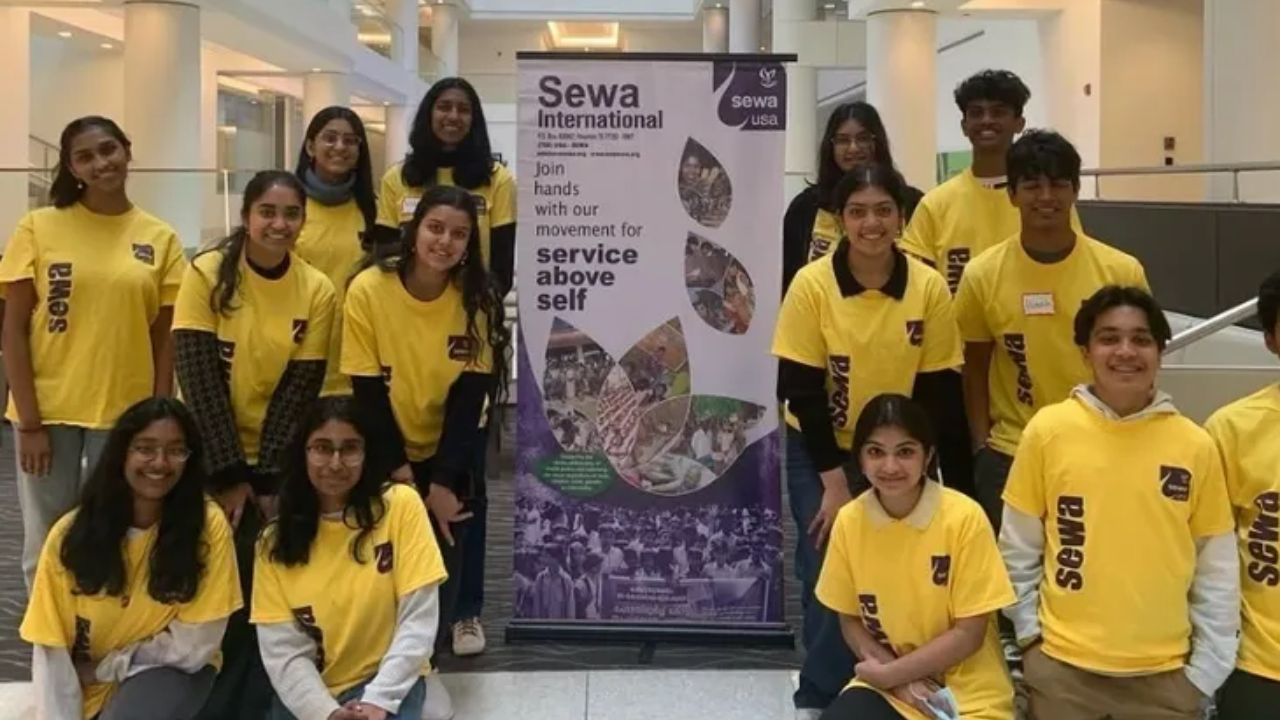
What started as a solo mission morphed into an organized youth movement. Partnering with groups like the SEWA DC Youth Group, the initiative expanded to include seven distinct chapters and 18 youth leaders. High schoolers across Maryland, New Jersey, Minnesota, and Virginia stepped up to run local events, manage social media campaigns, and handle outreach.
Balancing AP classes with managing a cross-country volunteer network forces a brutal prioritization of time. Rai relies on summer blocks to knock out heavy infrastructure work, breaks down large objectives into strict weekly goals during the school year, and trusts his student leaders to execute without hand-holding.
This structure teaches teenagers real-world business skills—supply chain logistics, marketing, inventory management, and public speaking—that no standard classroom curriculum can replicate.
What Comes Next for Student-Led Philanthropy
The hardest part of any charity project is long-term survival once the original founder graduates. Rai is already planning for that phase. The ultimate goal isn't to act as a permanent middleman between Indian craft clusters and American buyers.
The next frontier involves building digital infrastructure directly for these artisan communities, giving them the tools to manage their own online storefronts and market globally without relying on outside foundations. By handing over technical independence, the project shifts from a temporary relief effort into a permanent economic engine.
You don't need to wait for a mid-life crisis or a corporate retirement package to make a tangible dent in a systemic problem. Sometimes you just need to spot a broken link in the chain, pick up the phone, and start selling.