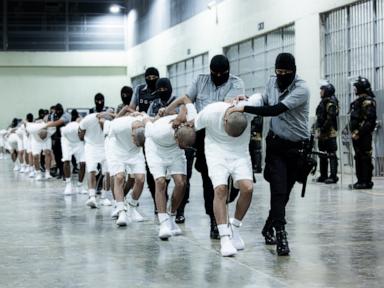
The battle over the Trump administration's sweeping immigration enforcement just hit a critical junction. The full U.S. Court of Appeals for the D.C. Circuit is taking up the explosive fight over the contempt inquiry into CECOT deportations. This isn't just another dry legal squabble over administrative procedures. It's a high-stakes constitutional showdown that asks a terrifying question. Can the executive branch simply ignore a federal judge's order during a crisis and walk away without facing consequences?
If you haven't kept up with the frantic pace of this docket, the core issue centers on a dramatic standoff that unfolded high in the skies. The administration used the 228-year-old Alien Enemies Act to summarily remove more than 200 Venezuelan migrants. They flew them directly to El Salvador's notorious Terrorism Confinement Center, known as the CECOT mega-prison. When U.S. District Judge James Boasberg issued a frantic oral order to turn those planes around, the administration kept flying. What followed was a year-long investigation by an angry judge trying to find out who defied him. Now, the full appeals court must decide if that investigation was a legitimate defense of the rule of law or an unconstitutional overreach.
The stakes are massive. If the full court upholds a recent panel decision that killed the probe, it sets a wild precedent. It means future administrations can interpret court orders however they want, fly under the radar, and claim immunity under the guise of foreign policy.
The Night the Planes Kept Flying
To understand how we got here, you have to look back at the chaotic events of March 2025. The White House invoked the Alien Enemies Act of 1798, a wartime law that lets the president deport citizens of a hostile nation without standard immigration hearings. The government claimed the targeted individuals were members of the Tren de Aragua gang. Civil rights attorneys rushed to court, arguing that the administration was using a centuries-old law to strip people of basic due process.
Judge Boasberg agreed to pause the removals. He issued a temporary restraining order to freeze the operation. Here is where the narrative splits into two completely different realities.
When the order came down, two planes were already airborne, charting a path toward San Salvador. Judge Boasberg expected the flights to reverse course immediately. Instead, high-ranking officials within the Department of Justice and the Department of Homeland Security held hurried, private consultations. Todd Blanche, who was then the Deputy Attorney General, and his associate Emil Bove reviewed the judge's text. They advised Homeland Security Secretary Kristi Noem that the order was too vague to stop an active international transfer.
The jets landed. The migrants were handed over to Salvadoran authorities and locked up in the brutal CECOT facility.
Judge Boasberg was furious. He called the administration's actions a deliberate flouting of judicial authority. He didn't buy the excuse that the order lacked clarity. To him, "stop" meant stop. He opened a criminal contempt inquiry to figure out exactly who gave the green light to ignore his courtroom.
The Separation of Powers Defense
The administration didn't take the investigation lying down. They bypassed the standard trial process and went straight to the D.C. Circuit Court of Appeals, demanding an extraordinary writ of mandamus to kill the probe. On April 14, 2026, a divided three-judge panel gave the administration exactly what it wanted.
Circuit Judge Neomi Rao, writing for the 2-1 majority, pulled no punches. She declared that Judge Boasberg's criminal contempt inquiry into CECOT deportations was a clear abuse of discretion. Her reasoning rested heavily on the separation of powers. Rao argued that the judiciary has no business digging into the internal deliberations of executive branch officials when they are handling foreign policy and national security.
The majority opinion laid out a strict rule. Criminal contempt can only apply if the original court order is perfectly clear and specific. Because Judge Boasberg's initial order didn't explicitly use the phrase "transferring plaintiffs into Salvadoran custody," Rao argued the administration had enough legal wiggle room to proceed. She wrote that letting the probe continue would create an antagonistic jurisdiction that threatens open-ended inquiries into military and diplomatic initiatives.
It was a total victory for the executive branch. The ruling essentially built a wall around senior officials, shielding their decision-making process from judicial oversight.
The Alarming Ripple Effects of the Panel Ruling
The panel decision left the legal community deeply divided. Judge J. Michelle Childs issued a blistering 80-page dissent that exposed the dangerous logic of the majority's view. Her warning was stark.
Childs argued that the majority completely trampled on a trial judge's inherent power to enforce their own orders. By allowing the administration to escape an investigation before a formal contempt finding was even made, the court handed a blank check to any future litigant.
Think about what this means in practice. Under this rule, a government agency can receive an injunction, cook up a highly creative, self-serving interpretation of the text, violate the spirit of the order, and then claim the order wasn't specific enough to warrant an investigation. It completely flips the power dynamic between the courts and the executive.
The American Civil Liberties Union, representing the deported migrants, wasted no time in petitioning the full D.C. Circuit for an en banc rehearing. They point out a glaring contradiction. The administration managed to halt a criminal investigation before the investigator could even finish gathering the facts.
What the Competitor Missed About the Main Players
Most mainstream news coverage treats this as a generic battle between the White House and a rogue judge. They miss the fascinating irony involving the people at the center of the storm.
Todd Blanche and Emil Bove weren't just random government lawyers. They were the key architects of this legal strategy. Since advising Noem to let the planes land, Blanche has been nominated to serve as the permanent Attorney General. Bove has already been elevated to a seat on the U.S. Court of Appeals for the Third Circuit.
If Judge Boasberg's contempt inquiry into CECOT deportations is allowed to resume, these two men face a genuine risk of being tried for criminal contempt of court. We are looking at a scenario where a sitting federal appellate judge and a nominated Attorney General could be scrutinized for willfully defying a federal court order. No wonder the Department of Justice fought with everything it had to shut the inquiry down.
The Reality on the Ground in El Salvador
It is easy to get lost in the abstract theories of constitutional law. Let's look at the human cost that gets buried under the legal jargon.
The individuals on those flights spent months locked inside CECOT. This isn't a normal jail. It is a sprawling, high-security fortress designed for hardened gang terrorists, where inmates are subjected to extreme isolation and harsh conditions. While the administration claimed every single deportee was a member of the violent Tren de Aragua gang, subsequent investigations painted a very different picture.
Independent reviews found that a significant number of the deported Venezuelans had no criminal records whatsoever. They were caught up in a rushed, politically charged sweep designed to showcase administrative strength. Though the initial 250 migrants were eventually returned to their home country months later as part of a complex prisoner swap, the damage was done. One wrongfully deported man has already hit the U.S. government with a $1.3 million lawsuit for damages.
Next Steps for Following the Case
The full D.C. Circuit's decision to hear arguments en banc means the panel's previous ruling is on thin ice. This is the moment where the judiciary decides if it will protect its own institutional power or retreat in the face of executive pressure.
If you want to track this case as it develops over the coming weeks, focus on these specific actions.
First, watch for the scheduling of oral arguments before the full complement of D.C. Circuit judges. The live audio streams of these hearings are publicly available on the court's website, and they offer a raw, unedited look at how the active judges view the separation of powers.
Second, look closely at the briefs submitted by outside legal scholars. Dozens of constitutional experts are filing amicus briefs, warning that stripping trial judges of their contempt powers will cripple the enforcement of civil rights orders across the nation.
The outcome of this en banc review will define the limits of presidential power for a generation. If the full court allows the investigation to proceed, it sends a clear message that no one is above a judge's order. If they agree with Judge Rao, the boundary between the law and political will gets incredibly blurry.