A veteran shipwreck hunter spent six decades chasing a ghost at the bottom of Lake Michigan. When Paul Ehorn finally located the luxury steamer Lac La Belle, it proved that obsessive archival work and a single piece of modern luck can still solve century-old maritime mysteries.
The 217-foot vessel vanished on a brutal October night in 1872. It left Milwaukee carrying 53 people and a dense cargo of flour, pork, whiskey, and barley. Barely two hours into the crossing toward Grand Haven, Michigan, the hull sprang an unmanageable leak. As the captain attempted a desperate turn back to port, hurricane-force gales battered the vessel and completely extinguished its boiler fires. The ship drifted helplessly southward before sinking stern-first into the freezing dark at around five in the morning. While lifeboats managed to reach the Wisconsin shoreline, a capsized boat claimed eight lives. The ship itself disappeared beneath the waves, turning into a legendary missing piece of Great Lakes history. If you liked this article, you might want to look at: this related article.
The Anatomy of a Six-Decade Hunt
Ehorn started looking for the Lac La Belle back in 1965 when he was just a teenager. Over the next sixty years, underwater exploration changed completely. Early searchers relied on vague historical accounts, guesswork, and crude equipment. Ehorn poured thousands of hours and personal funds into tracking down the steamer, treating the search like a massive, high-stakes logic puzzle.
Most people assume finding a massive 19th-century steamer is just about scanning the open water with expensive tech. It is not. The real hurdle is narrowing down a massive grid where a ship could rest anywhere across hundreds of square miles of open lakebed. For another look on this development, check out the recent update from Reuters.
The breakthrough finally happened in 2022. Fellow maritime researcher Ross Richardson passed along a vital tip involving a commercial fisherman. Operating miles offshore between Racine and Kenosha, Wisconsin, the fisherman's nets had snagged an unusual object specific to 1800s steamships. Armed with this localized coordinate data, Ehorn deployed side-scan sonar. Within two hours on the water, the target appeared on his screens.
What the Lac La Belle Looks Like Today
The discovery stayed quiet for years. Ehorn and his team found the wreck in October 2022, but delayed public announcements until they could build accurate three-dimensional video models. Adverse weather and scheduling conflicts kept divers off the site until subsequent summers.
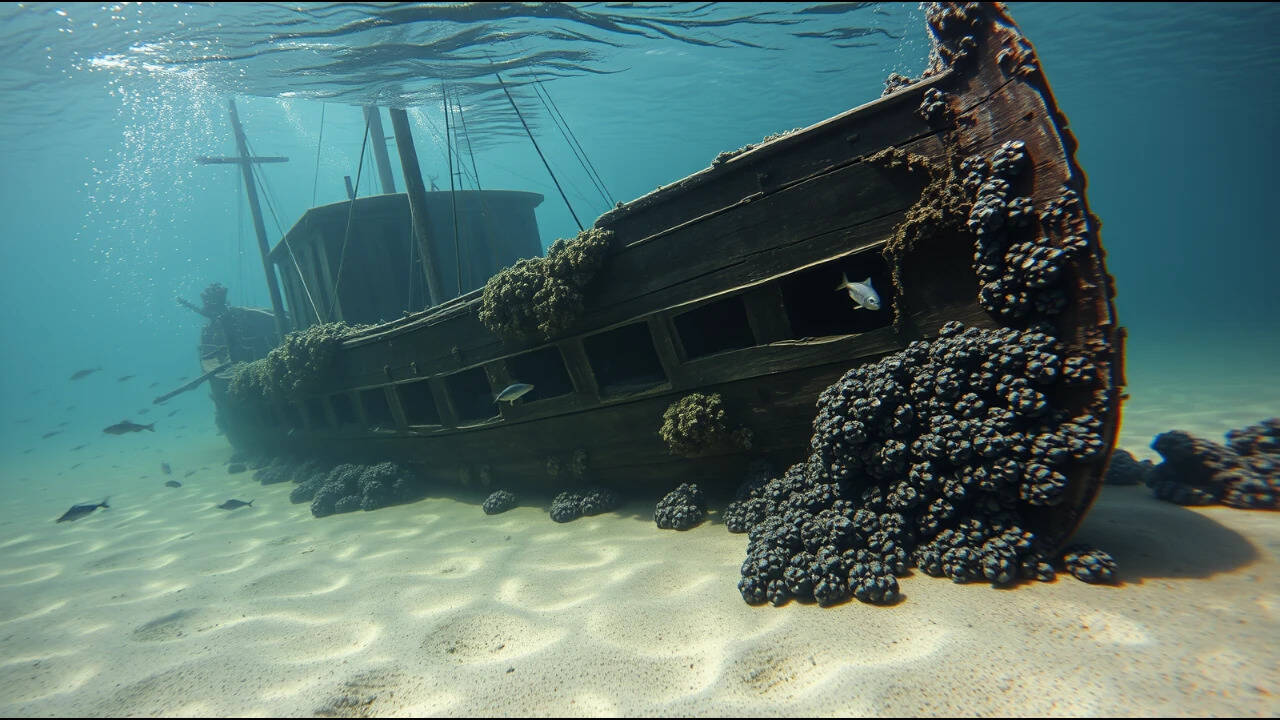
When divers finally descended approximately 20 miles offshore, they found a remarkably preserved time capsule.
- The hull sits entirely upright on the lakebed.
- The intricate oak interior craftsmanship remains visible.
- The exterior is heavily encrusted with invasive quagga mussels.
- The upper cabins have long since disintegrated.
This resilience is partly due to the vessel's heavy construction. Built in Cleveland in 1864, the steamer featured massive longitudinal hogging arches designed to keep its long wooden frame from sagging. Ironically, this was the ship's second brush with disaster. It had already survived a total sinking in shallow water on the St. Clair River in 1866 before being salvaged and completely rebuilt.
Why Great Lakes Shipwrecks Are Disappearing
The discovery of the Lac La Belle highlights a race against time. The Great Lakes hold thousands of undiscovered wrecks, but they face a quiet destruction. Invasive quagga mussels coat almost every square inch of submerged wood and iron. While these organisms clear the water column, they also accelerate structural decay and obscure historical details.
For wreck hunters like Ehorn, who has mapped 15 separate discoveries over his lifetime, finding these vessels is about preservation and closure. Modern side-scan sonar and GPS make scanning easier than it was in 1965, but archival persistence remains the true barrier to entry.
If you want to understand Great Lakes maritime history, look past the romanticized legends and study the commercial shipping manifests, local fisherman logs, and old newspaper columns. That is where history actually hides.