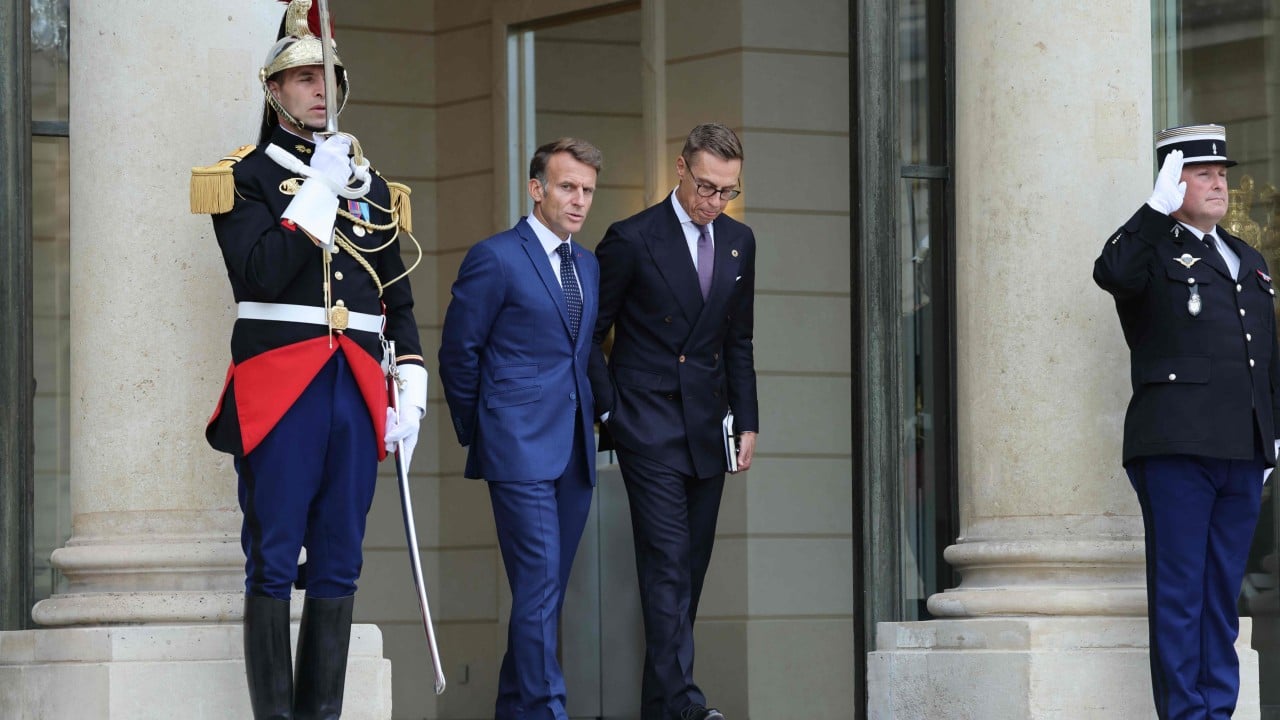
Europe is quietly rewriting its security playbook. Finland just became the tenth nation to sign up for France's forward nuclear deterrence initiative, bringing a heavy artillery of geopolitical reality straight to Russia's doorstep.
If you think this is just another diplomatic photo op, look closer. Helsinki shares a sprawling 1,340-kilometre border with Russia. When a frontline NATO state steps up to coordinate strategic signaling with Paris, the entire European defense architecture shifts on its axis. If you found value in this piece, you might want to check out: this related article.
What the French Nuclear Initiative Actually Means
President Emmanuel Macron launched this framework in March with a specific goal in mind. He wanted to stitch together a European dimension of nuclear deterrence that operates outside Washington's shadow. Let's be honest. Doubts regarding American security guarantees have forced European capitals to panic-buy alternative insurance policies.
Paris isn't handing out launch codes. France retains absolute, sovereign control over its nuclear arsenal. There is no shared command structure here like the one you find inside NATO's traditional Nuclear Planning Group. For another angle on this event, refer to the latest coverage from Wikipedia.
Instead, joining the initiative opens the door to high-level strategic alignment. Participating countries engage in deep-dive consultations on French nuclear doctrine, take part in targeted deterrence exercises, and coordinate political signaling below the threshold of war. Paris could even deploy elements of its strategic air forces temporarily to allied soil.
Why Helsinki Made the Move Now
Helsinki didn't stumble into this decision. Since joining NATO in 2023, Finland has completely dismantled decades of military non-alignment.
The security calculus changed overnight when tanks rolled into Ukraine. Finnish leadership realized that relying solely on conventional forces and traditional deterrence leaves dangerous gaps. By aligning with France, Finland adds another layer of unpredictability for Moscow.
Finnish President Alexander Stubb put it bluntly on social media, noting that the framework is all about reinforcing Europe's responsibility for its own defense. Prime Minister Petteri Orpo made sure to clarify that Helsinki has zero intention of hosting nuclear weapons on its soil during peacetime. That distinction matters for domestic politics. Yet, the symbolic and operational weight of the partnership remains massive.
The Operational Reality on the Ground
Critics love to argue that European defense pacts are just paper tigers. This specific arrangement carries sharp operational teeth, particularly when paired with Finland's military capabilities.
Helsinki recently stripped away the old legal barriers in its 1987 Nuclear Energy Act that used to complicate modern defense integration. Furthermore, military planners in Paris have taken intense notice of how Finland trains. Finnish pilots master dispersed air operations using makeshift highway strips and remote civilian airfields. This matches NATO's Agile Combat Employment philosophy line for line.
Integrating this capability into strategic defense planning gives European leaders tools they simply did not have five years ago.
What Happens Next
Don't expect overnight missile deployments or dramatic public drills. The immediate next step involves setting up a dedicated Franco-Finnish Nuclear Steering Group over the coming months.
Officials will hash out the mechanics of doctrine sharing and intelligence coordination. Other nations like Germany, Poland, Sweden, the UK, and Norway are already sitting at this table.
Europe is finally growing up defensively. Stop viewing these agreements as bureaucratic noise. They represent a fundamental, permanent hardening of the continent's northern and eastern flanks.