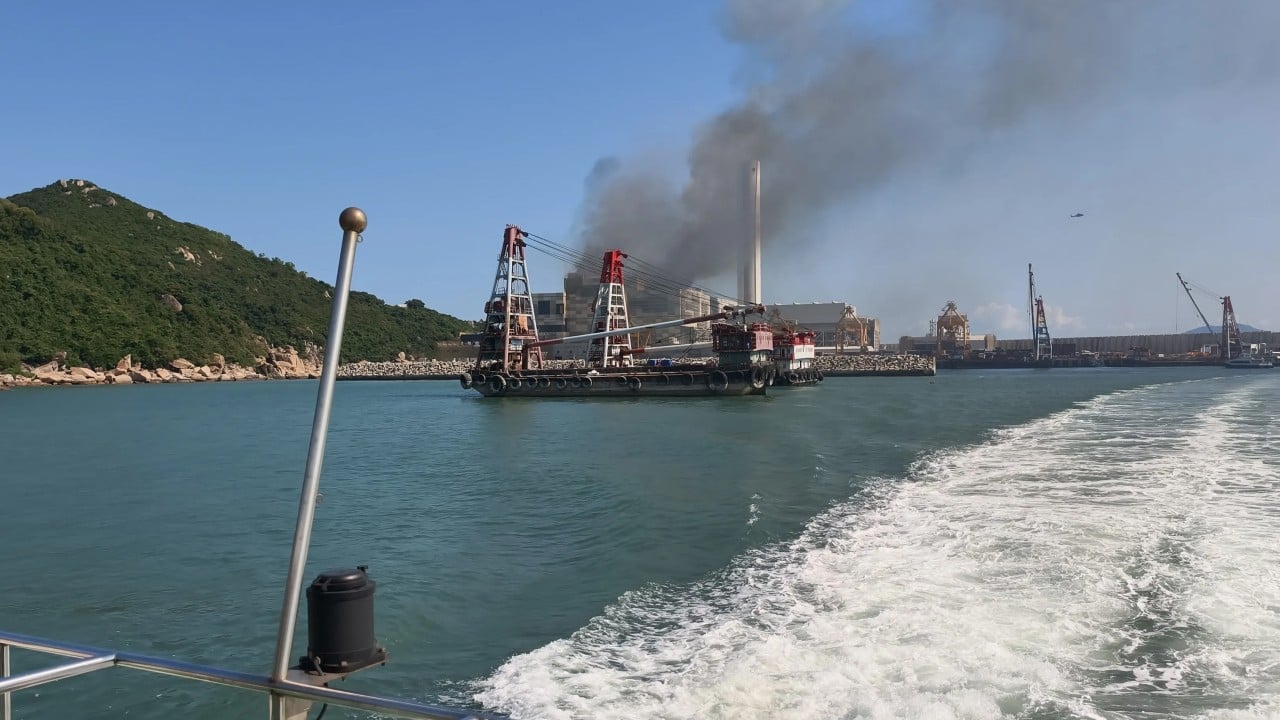
When a massive fire broke out at Hong Kong's newly minted HK$31.3 billion trash incinerator on an artificial island off Shek Kwu Chau, it didn't just trigger a four-hour emergency response. It exposed a fundamental flaw in how the city handles trash.
Nearly 970 people were evacuated, one worker ended up in the hospital, and the flagship waste facility had to suspend its daily intake of up to 3,000 tonnes of municipal solid waste. Officials scrambled to divert garbage to the West New Territories Landfill Extension, proving how fragile the city's high-tech waste system really is.
If your entire municipal strategy rests on massive, centralized industrial mega-plants, a single accident brings the whole island to a halt.
The Illusion of Infinite Burning
For years, the government sold the Integrated Waste Management Facilities Phase 1, or I·PARK1, as the ultimate silver bullet. The pitch was simple. Build a multi-billion-dollar state-of-the-art facility, burn 3,000 tonnes of garbage a day, reduce waste volume by 90 percent, and generate surplus electricity for the power grid.
It sounds tidy on paper. But incinerators aren't magic boxes that make trash vanish. They are complex, high-pressure industrial factories dealing with volatile material. When mechanical failures or fires strike, cities find themselves scrambling for backup plans because they’ve ignored the boring, unglamorous work of actual waste reduction.
You can't burn your way out of a consumerism problem. Pumping billions into single points of failure makes the entire urban ecosystem vulnerable.
Why Environmentalists Are Right to Panic
Local environmental groups immediately stepped forward after the blaze, urging officials to pivot hard toward reduction and reuse instead of doubling down on massive combustion tech. They aren't wrong.
Think about how other dense urban centers handle garbage. Relying heavily on backend disposal creates a dangerous moral hazard. It encourages residents and corporations to keep churning out single-use plastics because they assume an industrial furnace will swallow the guilt.
When that furnace breaks down, the cracks in the system show instantly. Landfills fill up faster, backup logistics strain city transport networks, and public trust takes a massive hit.
What Actually Needs to Change
Hong Kong's policymakers need to stop treating waste management like a real estate mega-project. Real progress doesn't come from building bigger incinerators on artificial islands. It comes from fixing the fundamentals.
- Mandatory source separation: Enforce strict recycling and organic waste sorting before trash ever reaches a municipal collection truck.
- Producer responsibility laws: Hit manufacturers with heavy financial penalties for non-recyclable packaging, shifting the burden off local taxpayers.
- Decentralized processing: Build smaller, localized composting and recycling hubs across different districts so that a single fire or technical glitch doesn't paralyze the entire territory.
We don't need another PR campaign about green technology. We need a system built to survive reality. Stop waiting for the smoke to clear before asking the hard questions.