Five hundred days. That is how long French journalist Christophe Gleizes has spent confined inside the walls of the Koléa prison in Algeria. Five hundred days of restricted visits, heavy silence, and a rigid daily routine built around survival. For his family, waiting has become an exhausting, permanent state. For the wider press freedom community, this grim milestone represents a line that should never have been crossed.
Gleizes, a respected reporter known for his investigative work with publications like So Foot and Society, was arrested while reporting on a local Algerian football club. What was supposed to be a standard journalistic assignment morphed into a nightmare when local authorities accused him of serious offenses, including apologie du terrorisme. Despite exhaustive appeals and a defense team dismantling the charges piece by piece, a court in Tizi Ouzou confirmed a seven-year prison sentence.
Life inside a correctional facility thousands of miles from home demands an immense psychological toll. Reports from his rare family visits paint a picture of a man trying desperately to anchor himself in routine. He interacts with guards and cellmates, maintaining a dignified front that protects his relatives from the true depth of his isolation. Yet, beneath that surface resilience lies the grinding reality of an indefinite wait. His parents, Sylvie and Francis Godard, have spoken publicly about the sheer absurdity of the situation. Every month that ticks by is another fragment of a life stolen over routine reporting.
Why does this case matter so much right now? Because imprisoning reporters for doing their jobs sends a terrifying signal across international borders. When basic investigative work is treated as a security threat, the foundation of a free press cracks. Journalists don't operate in a vacuum. They dig into uncomfortable truths, sports politics, and local scandals. When those investigations cross paths with state paranoia, the consequences can become catastrophic.
The legal battles have largely hit a brick wall. Earlier this year, Gleizes chose to drop his pourvoi en cassation, effectively clearing the procedural path for a presidential pardon from Abdelmadjid Tebboune. Families and advocacy groups like Reporters Sans Frontières pinned their hopes on this clemency. Yet, months have bled into one another without a signature, turning a legal dispute into a geopolitical chess piece. Diplomats talk behind closed doors, but the human cost piles up day by day.
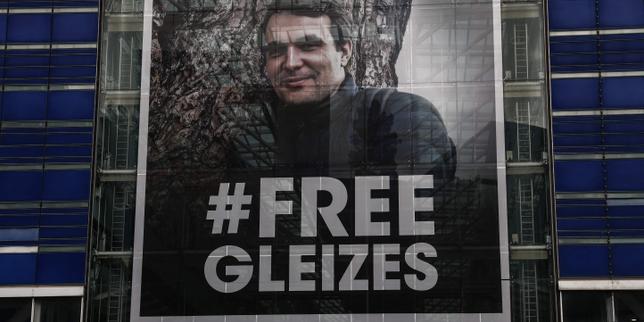
Public mobilization remains the primary weapon against indifference. Portraits of the detained reporter have appeared across French regional buildings, and international bodies—including FIFA, which granted him a symbolic accreditation during recent global tournaments—have tried to keep his name in the spotlight. But symbols don't open prison gates. Real political pressure does.
The silence surrounding such detentions is corrosive. If governments allow journalists to become political leverage, reporting anywhere near sensitive regions becomes an extreme hazard. Christophe Gleizes belongs at a desk, tracking down stories, not staring at concrete walls in Koléa. Five hundred days of captivity is already five hundred too many. The time for quiet diplomacy has expired, and the demand for his immediate release is the only stance that makes sense.