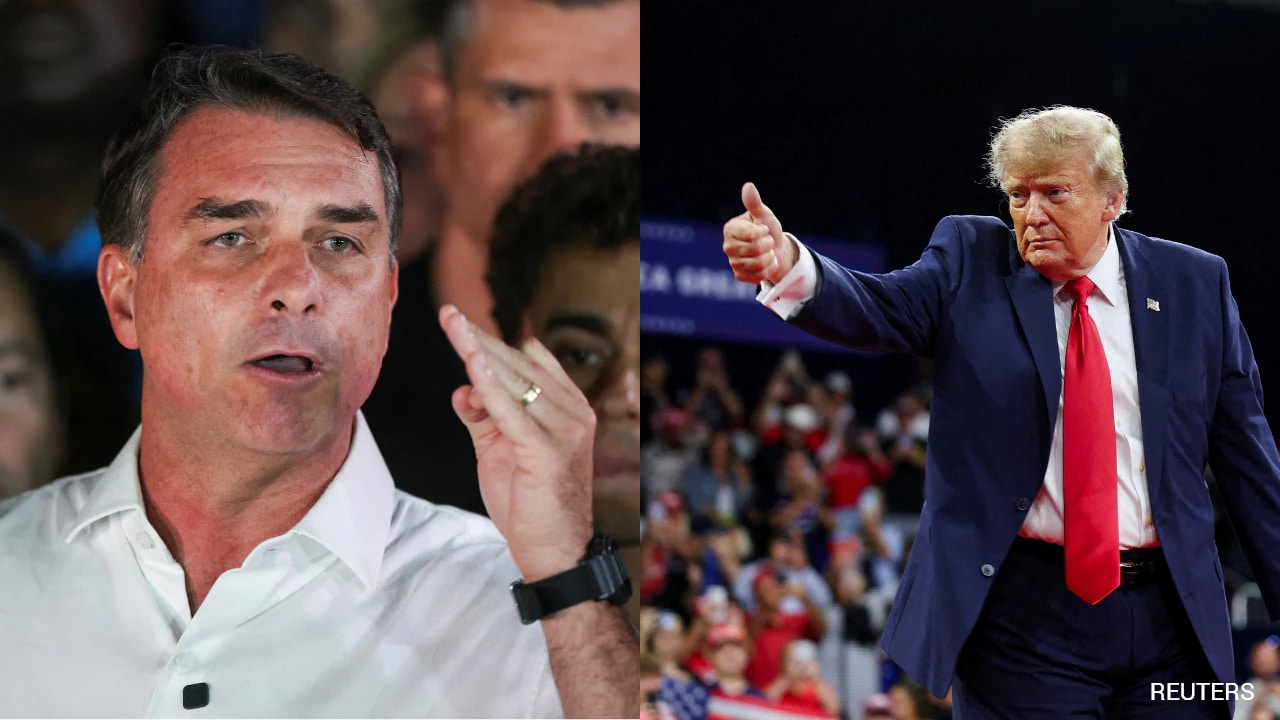
When Brazilian Senator Flávio Bolsonaro slipped across the border into Argentina and boarded a plane to Florida, history didn't just repeat itself—it practically copy-pasted.
Just like his father Jair Bolsonaro did after losing the 2022 presidential race, Flávio opted for a sudden flight to the United States right after his runoff defeat to President Luiz Inácio Lula da Silva.
The move has triggered a fresh wave of diplomatic friction between Brasília and Washington. Brazilian Supreme Court authorities had ordered Flávio to surrender his passports over an investigation into an alleged $905 million money-laundering network tied to sports betting firms. Instead of handing over his documents by the court's Tuesday deadline, the senator packed his bags, took his wife and two daughters, and headed north.
Now, with Donald Trump confirming that he approves of Flávio entering the US, the political fallout is spilling over borders fast.
A Sudden Flight Across the Border
Flávio didn't fly straight out of Brasília's main international airport. Reports indicate he crossed into Argentina by land via the Tancredo Neves International Bridge before boarding a private flight. His sudden absence left his campaign team scrambling to issue denials while his whereabouts remained unaccounted for during several tense hours.
By Tuesday evening, senior US officials confirmed that the State Department would issue entry visas to Flávio and his immediate family. Sources close to the family noted they had already landed in Florida.
The timeline matters here. Flávio wasn't just taking a post-election vacation. He left while under active scrutiny from Brazil’s Federal Police and the Supreme Court. Besides the money-laundering probe, the court launched another investigation into alleged illegal foreign campaign financing, examining potential ties to US donor networks.
Lula didn't hold back when addressing the departure. Speaking at an event in Brasília, he criticized the move sharply, arguing that anyone who leaves their country under these circumstances acts out of fear of accountability.
"A person who sneaks out of their country must have something to hide," Lula remarked, calling the flight "shameful."
Trump Backs the Entry while Washington Balances Leverage
In Washington, Donald Trump took a characteristic stance when asked by reporters about Flávio's arrival.
"It would be OK with me," Trump said, describing the Bolsonaro family as "fine people."
Trump also cast doubt on the outcome of the election itself, calling the tabulation process "very strange" and pointing to an unusual two-hour voting extension ordered late on election day due to transportation and weather disruptions. Even so, Trump stopped short of declaring an official endorsement, noting that he maintains a working relationship with Lula as well.
That nuance reflects real economic realities behind the rhetoric.
The US government has strategic interests in maintaining functional ties with Brazil. Washington wants stable access to Brazil's extensive deposits of critical rare earth minerals to diversify military and technological supply chains away from China. Pushing the diplomatic strain too far risks pushing Lula to tighten trade conditions or seek deeper ties within the BRICS framework.
Brazil's Vice President Geraldo Alckmin dismissed Trump's comments about election irregularities, emphasizing that the electoral court confirmed the outcome without issue. With Lula securing his fourth term by over 4 million votes, the Brazilian government considers the matter legally settled at home.
The Legal and Political Reality Facing the Bolsonaros
Flávio insists he hasn't conceded defeat in spirit, stating publicly that "the system won" rather than his ticket. He signaled plans to challenge the results through legal filings and organize Congressional opposition to Lula’s administration from abroad.
Legal experts in Brazil suggest those electoral challenges stand on shaky ground. Demonstrating that a voting hours extension actually distorted voter intent is a steep hurdle under Brazilian law.
Meanwhile, Flávio's physical presence in Florida creates a tricky political situation for the Bolsonaro clan itself. With Jair Bolsonaro serving a sentence related to the 2022 post-election events, leadership of the Brazilian far-right is in flux. Former First Lady Michelle Bolsonaro retains strong political ambitions in Brazil, and Flávio attempting to direct party politics from exile could intensify internal friction among family factions.
What to Watch Next
- Watch the extradition space. If Brazilian authorities issue formal extradition requests or Interpol notices regarding the passport defiance and financial probes, Washington will face a direct choice between legal compliance and political cover.
- Monitor critical mineral negotiations. Pay attention to trade talks between the US State Department and Brazil's Commerce Ministry. Economic cooperation often signals how much political noise both sides are willing to ignore.
- Track opposition leadership in Brasilia. Watch whether the Liberal Party (PL) accepts remote direction from Florida or if conservative leaders remaining inside Brazil move to claim control of the party apparatus.