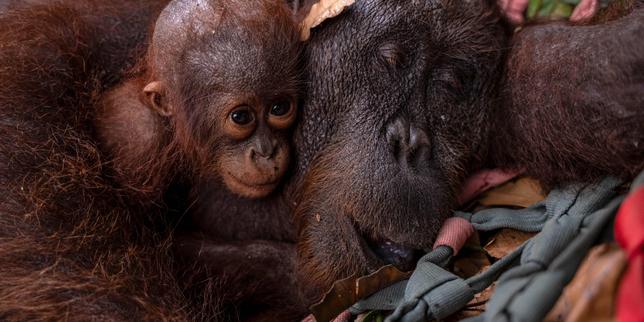
Smoke chokes the canopy. Fires tear through the peatlands of Borneo, leaving ash and devastation in their wake. Amidst the chaos, wildlife rescue teams are in a desperate race against time to pull endangered orangutans away from the advancing flames. You don't realize how fast a jungle fire moves until you're standing in front of one. It's terrifying.
Recent emergency operations on the island have brought to light the sheer vulnerability of Indonesia’s iconic primates. A mother and her infant were recently tracked down, sedated, and carried out of the choking smoke just before the fire engulfed their habitat. Stories like this are becoming far too common as seasonal blazes intensify across the region. For a closer look into similar topics, we recommend: this related article.
The Anatomy of an Indonesian Wildfire Crisis
Let's be clear about why these fires keep happening. It's a toxic mix of prolonged dry spells, agricultural clearing, and fragile ecosystems that refuse to bounce back. When peatlands catch fire, they burn underground for weeks. You can't just throw water on the surface and expect it to go out. The ground itself is fuel.
Local forestry ministries, alongside specialized wildlife organizations like YIARI, face impossible choices every single day. Do they put out the blazes threatening local villages, or do they track down trapped animals that cannot outrun the smoke? Teams have stepped up operations, rescuing multiple individual orangutans in just a single week across provinces like West Kalimantan. For broader context on this issue, in-depth analysis can also be found on NPR.
Why Orangutans Are Running Out of Time
Numbers tell a brutal story. Decades ago, hundreds of thousands of these great apes roamed freely across Southeast Asia. Today, populations on Borneo hover around 57,000 individuals based on older baseline estimates, while Sumatra holds roughly 11,000. Every single animal lost to fire pushes the species closer to the point of no return.
Habitat fragmentation makes escape nearly impossible. When a patch of forest catches fire, the animals find themselves surrounded by palm oil plantations or human settlements. They have nowhere to go. They either suffocate in the thick smog or venture into dangerous territory where conflict with humans becomes inevitable.
Inside the High-Stakes Rescuers Toolkit
Saving a wild adult orangutan isn't simple. Vets and conservationists have to track the animals through burning thickets, deploy blowdart anesthetics, and carry heavy crates across unstable terrain.
- Darting and Capture: Vets must accurately estimate weight and distance through heavy smoke to administer safe sedatives.
- Health Assessments: Every rescued primate undergoes immediate medical screening for smoke inhalation, burns, and malnutrition.
- Relocation: Healthy animals are moved deep into unaffected, protected sections of primary rainforest.
It's messy, dangerous work. And it's entirely reactive.
Moving Beyond Emergency Extractions
Rescuing individual primates feels good, but it's a Band-Aid on a severed limb. If Indonesia wants to stop losing its biodiversity to seasonal infernos, the focus has to shift toward aggressive prevention and land management reform. Artificial rain initiatives help dampen the dry zones temporarily, but corporate accountability regarding slash-and-burn clearing needs absolute enforcement.
Protecting the remaining jungle isn't just about saving cute animals for a news headline. It's about preserving the lungs of Southeast Asia before the smoke wins for good.


