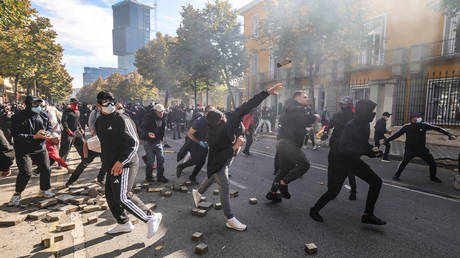
Tear gas in the air. Slogans echoing across Parisian boulevards. Blockaded streets. It's the familiar, tense soundtrack of modern France when the cost-of-living crunch hits a breaking point.
Right now, the French government is scrambling to put out a fire before it spreads. Officials are actively weighing an early bump to the national minimum wage—known locally as the SMIC—pulling a scheduled January 1 adjustment forward while adding an extra financial cushion.
Why the sudden panic in Paris? Because workers aren't waiting for the calendar to turn. With demonstrations lined up for the weekend over soaring inflation, energy bills, and shrinking purchasing power, officials view a faster paycheck boost as the only tool left to calm public anger.
Let's look at how we got here, why standard political maneuvers are failing, and what this frantic wage adjustment actually means for the country.
The Pressure Cooker of French Living Costs
France has a long tradition of taking grievances to the pavement. But the current wave of unrest isn't just about general political dissatisfaction. It's about math. People simply cannot afford groceries and rent on current paychecks.
When inflation bites hard, low-income earners feel it first and hardest. Even with previous adjustments—including a 2.41 percent bump earlier in the year that pushed the gross monthly salary for full-time work to around 1,867 euros—household budgets remain stretched to their absolute limits. Energy prices refuse to stabilize, and grocery receipts keep climbing.
When workers look at government projections telling them to wait until January 2027 for relief, they reach for their picket signs. Governments understand this calculus all too well. Left with a choice between severe weekend disruptions and adjusting the fiscal timeline, authorities chose pragmatism.
Why Speed Trumps Economic Tradition
Moving up a minimum wage hike sounds simple on paper. In practice, it breaks standard administrative routines.
Normally, French labor authorities evaluate the SMIC toward the end of the year, factoring in official inflation metrics and purchasing power data for blue-collar households, with changes taking effect at the start of the new year. Rushing that process by a month or more signals an emergency posture.
Think about the administrative headache this creates for businesses. Human resources departments and payroll providers rely on predictable, scheduled updates to adjust corporate budgets, social security contributions, and variable compensation grids. Disrupting this rhythm causes logistical friction.
Yet, ministers are willing to accept that administrative headache. The alternative—widespread, paralyzing strikes that disrupt transportation, fuel distribution, and retail commerce—costs the economy far more than an accelerated wage adjustment ever could.
The Broader European Autumn of Discontent
France isn't operating in a vacuum. Across the continent, an autumn of unusual public frustration is boiling over. From Madrid to Milan, citizens are pushing back against the widening gap between state promises and economic reality.
Housing crises, stagnant real wages, and expensive utility bills form a toxic cocktail for sitting administrations. When voters feel unheard, electoral consequences follow quickly. Governments across Europe are learning that traditional technocratic responses no longer work when people are choosing between heating their homes and feeding their families.
By offering a faster wage bump, Paris hopes to puncture the momentum of the upcoming protests. But throwing money at a systemic cost-of-living crisis rarely solves the root problem. It's a band-aid on a structural wound.
What Happens Next on the Streets
Will an early minimum wage hike actually keep protesters off the streets this weekend? Probably not entirely.
Labor unions and activist groups have built too much momentum, and the grievances extend beyond just the base pay rate. Public funding for education, healthcare access, and broader tax burdens—France maintains one of the highest social and tax burdens relative to GDP in the developed world—remain massive flashpoints.
When people feel squeezed from every direction, a minor adjustment to minimum pay feels like a drop in the ocean.
If you're running a business in France or trying to navigate the upcoming weeks, expect heavy logistical disruptions, transit delays, and tense negotiations. Keep a close eye on official decree announcements regarding the exact timing and percentage of the wage adjustment, and prepare your payroll systems for sudden shifts.
The streets of France are talking. Whether the government's rushed financial maneuvers are enough to quiet them remains to be seen.