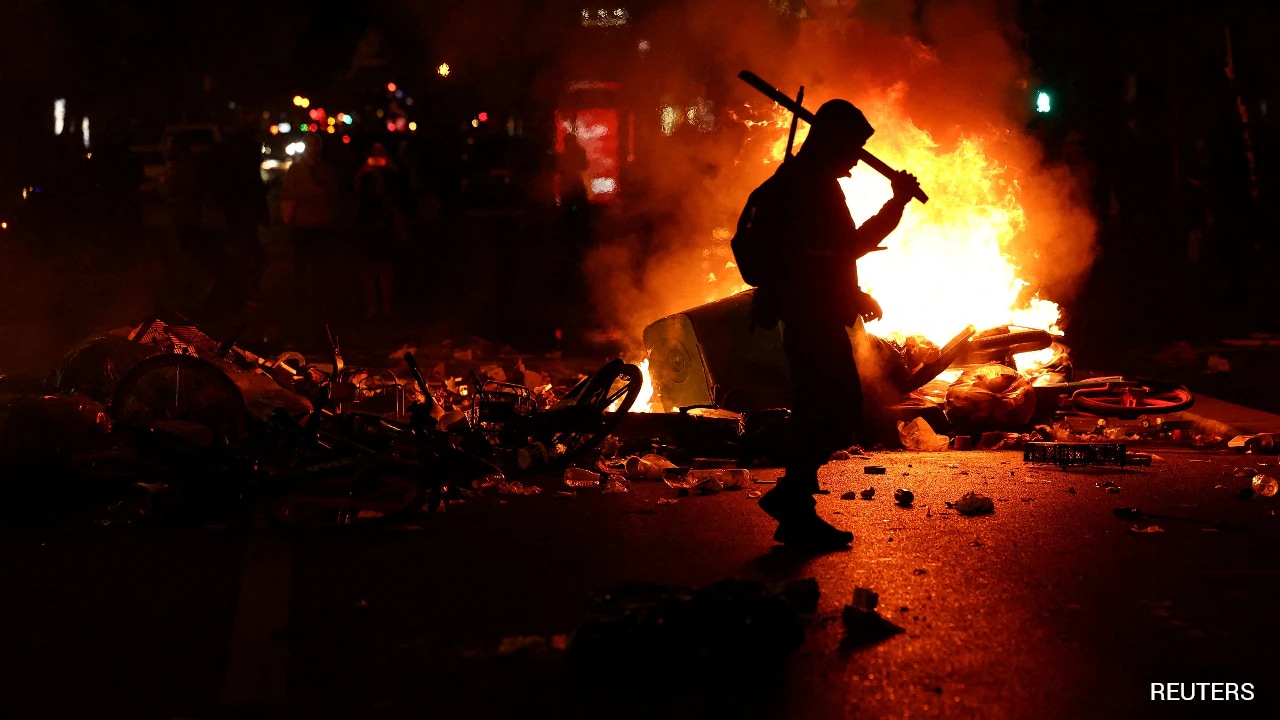
French cities are bracing for another wave of unrest, and honestly, nobody looks surprised anymore. If you've been watching the streets of Paris, Marseille, and Lyon over the last few days, you know the drill. Rioters torching storefronts, police locking down transit hubs, and politicians scrambling to rewrite safety playbooks on the fly.
Prime Minister Sebastien Lecornu promised a "massive" security mobilization heading into the weekend. President Emmanuel Macron is pointing fingers squarely at fringe agitators from the ultra-left. But behind the curfews, the emergency bans on petrol cans, and the mobilization of elite tactical units, a deeper frustration is boiling over. When a government admits it lost control of its own streets, issuing interest-free loans to 3,000 looted shop owners feels like putting a band-aid on a structural collapse.
The Reality Behind The Curfews And Transit Bans
Let's look at what's actually happening on the ground. Authorities didn't just casually suggest staying indoors. They rolled out targeted curfews in areas hit hardest by weekend looting, while Marseille banned unaccompanied minors from central shopping zones during evening hours. Paris police clamped down hard, banning the carrying of fuel containers and fireworks—simple tools that quickly turn a march into urban warfare.
Even mundane daily routines are taking a hit. Over a thousand rental bicycles across Paris were dragged into makeshift street barricades and burned down to ashes. Food delivery riders working for apps like Uber Eats and Deliveroo have pushed back, demanding the right to refuse orders heading into volatile neighborhoods without taking a hit to their pay.
This isn't an isolated flash mob. It's a recurring cycle of urban friction that highlights how fragile modern public infrastructure really is when civil trust hits rock bottom.
Why Small Business Owners Are Paying The Price
The financial fallout is staggering, and the official response misses the mark entirely. The state announced interest-free loans for devastated merchants, but shopkeepers know loans just mean more debt for businesses that might never recover their customer base. Grassroots crowdfunding campaigns have pulled in a few hundred thousand euros, which sounds nice until you realize the actual damage bill runs into the hundreds of millions.
When your local bakery, boutique, or electronics shop gets gutted because it happens to sit on a protest route, government aid packages that take months to clear aren't going to save you. Business owners are dealing with broken windows, burned stock, and terrified insurance providers raising premiums through the roof.
The Core Problem Nobody Wants To Fix
Macron is banking on heavy-handed policing, keeping Operation Sentinelle soldiers stationed at key transit points and tourist zones while keeping a full state of emergency in reserve. But heavy policing treats the symptoms while ignoring the disease.
When generations of youth feel entirely disconnected from economic mobility, and when public policy feels completely deaf to community grievances, curfews and firework bans become temporary speed bumps. You can deploy every elite tactical unit in the country, but you cannot police your way out of a crisis of legitimacy.
If you're running a business or planning a trip to major French urban centers right now, keep your eyes open, check local transit updates before heading out, and don't expect normal routines to hold up once the sun goes down. Stay flexible, stay safe, and pay attention to what's happening beneath the surface headlines.