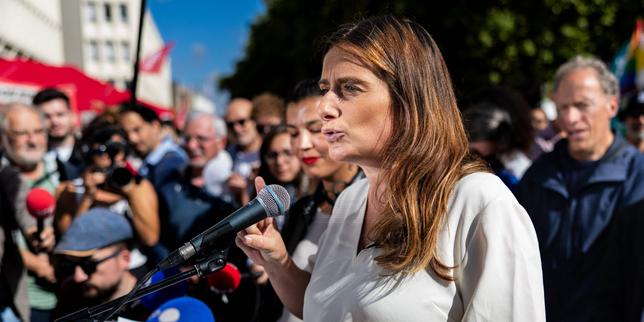
Foreign policy rarely dominates domestic campaigns until a major geopolitical crisis forces every faction to show its true colors. Right now, the war in Ukraine serves as the ultimate acid test for French political leaders preparing for future presidential battles. When figures like Marine Tondelier and Raphaël Glucksmann openly target the Rassemblement National, calling them a "trojan horse" or a "party of the foreigner," they aren't just debating foreign aid. They are fighting over who truly protects national sovereignty.
If you look closely at how the debate has evolved, you will notice a sharp divide in the political landscape. On one side, leaders from the environmental and social-democratic wings argue that equivocating on Russian aggression compromises Europe's collective security. On the other side, right-wing strategists try to frame these criticisms as elite panic over an ascendant populist movement.
The Core Disconnect on National Defense
Why do opposition figures focus so intensely on the Rassemblement National's stance on eastern Europe? Basically, it comes down to a fundamental disagreement about alliances and international law. Critics argue that hedging bets against an aggressive foreign power undermines decades of diplomatic architecture. You can't claim to champion the French nation while simultaneously promoting positions that weaken European deterrence against hostile powers.
The rhetoric has escalated rapidly. Marine Tondelier didn't mince words when describing the potential risks of far-right governance, warning that external dependencies could paralyze national decision-making during a crisis. Meanwhile, Raphaël Glucksmann has consistently hammered home the point that democratic resilience requires absolute clarity about who our adversaries are.
What Voters Actually Care About
Voters find themselves caught between grand geopolitical warnings and immediate domestic economic pressures. Inflation, purchasing power, and public services usually top the list of everyday concerns. Yet, ignoring foreign policy comes with a heavy price tag. Security, energy prices, and supply chains depend entirely on how Europe navigates ongoing conflicts.
Politicians who master both fronts—connecting international stability to daily living costs—tend to capture public attention far more effectively than those who rely solely on ideological labels.
Moving Forward
Evaluating political credibility requires looking past the soundbites. Watch how parties vote on defense budgets, how they address international treaties, and whether their proposed alliances strengthen or isolate the country. Pay attention to concrete legislative actions rather than fiery speech delivery during campaign rallies. Clear choices lie ahead, and understanding the stakes helps you cut through the noise.