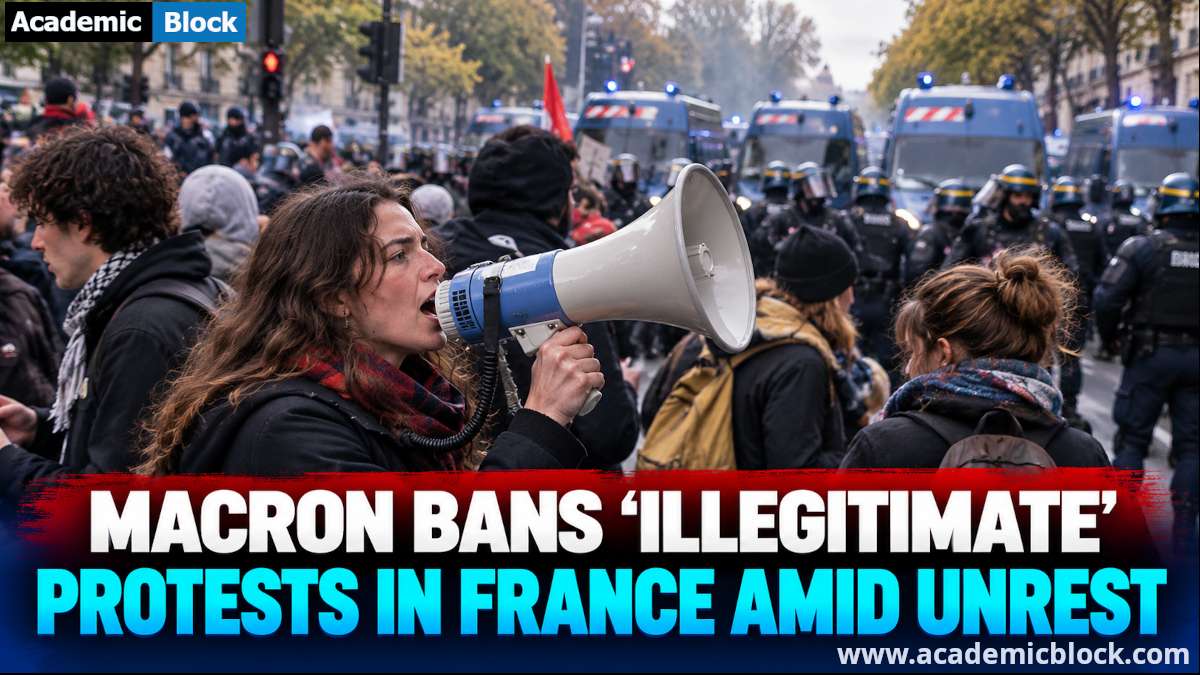
French President Emmanuel Macron finds himself staring down a political crisis that feels eerily familiar, yet carries far higher stakes than his previous battles. With high school blockades stretching from Paris to Marseille and nationwide demonstrations drawing thousands into the streets, the government is scrambling to contain a movement born out of classroom overcrowding and soaring living costs. When you look past the burning bins and police tear gas in the Place de la République, a deeper question remains: how did public frustration reach a boiling point so fast, and where is this mobilization actually heading?
The Boiling Point in French Classrooms
The roots of this friction didn't appear overnight. Since September, student organizations like Renouveau Lycéen have been sounding alarms over dilapidated school infrastructure, severe teacher shortages, and classes bursting past forty students. Imagine trying to learn in a crumbling building while your teacher tells you there are no permanent contracts available for half the staff. That's the daily reality driving teenagers to block school gates. If you liked this post, you should look at: this related article.
Beyond basic school conditions, students are demanding a total overhaul of Parcoursup, the centralized university admissions platform that many teenagers view as discriminatory and opaque. When young people feel the system is rigged against them before they even hit higher education, they don't write polite letters—they take to the streets.
From High School Grievances to National Unrest
What started as localized school protests quickly metastasized into a much broader societal eruption. Labor unions joined the fray, calling for higher wages, protected public services, and immediate relief against spikes in energy and food prices. Echoes of the 2018 yellow vest movement are impossible to ignore. People are wearing high-visibility vests again, marching side by side with teenagers, venting total exhaustion with economic policies they believe protect the wealthy while squeezing everyone else. For another perspective on this development, check out the recent coverage from Associated Press.
Macron's administration has tried a two-pronged approach: deploying heavy police presence—with thousands of security forces on standby—and scheduling direct talks with student representatives. But the state's messaging has stumbled. When Macron publicly blamed fringe far-left agitators and criminals for hijacking peaceful marches, he largely glossed over the core economic complaints fueling the anger. Labeling protesters as insurrectionists might satisfy hardline security advocates, but it does nothing to fix a fifteen percent approval rating.
What Happens Next on the Streets
Authorities are drawing hard lines ahead of the weekend. Curfews, heavy security cordons, and outright bans on demonstrations in cities like Lyon and Marseille show that the government wants order restored at any cost. Courts have pushed back against some blanket bans, but the overall atmosphere remains tense.
Opponents across the political spectrum smell blood in the water. They are positioning themselves to capture the vote of a disillusioned generation that feels entirely abandoned by mainstream centrist politics. If the government fails to offer concrete funding for schools and real relief for soaring living expenses, these protests won't just fade away when the weather turns cold. They will simply morph into the defining battleground of the next election cycle.
The government can throw up all the curfews and riot barriers it wants, but concrete walls won't fix a broken education system or quiet an angry populace.
France Student Protests Turn Police Confrontations into a Debate Between Political Parties
This video provides an in-depth look at how student confrontations with police in France have transformed into broader political debates among national parties.