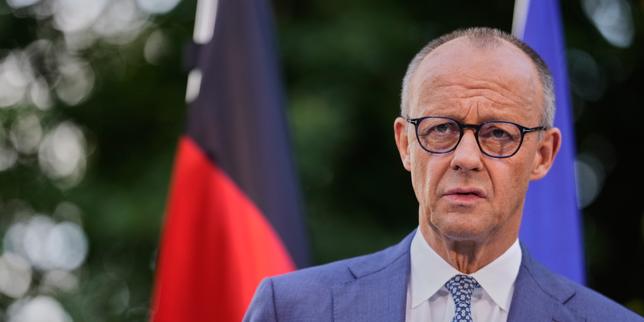
Political hypocrisy carries a heavy price tag in Berlin. German Chancellor Friedrich Merz learned that truth firsthand when he was forced to announce a sudden cabinet reshuffle following the abrupt resignation of Jens Spahn. Spahn, a central figure in the conservative Christian Democratic Union (CDU) and leader of its parliamentary group, stepped down after revealing he and his husband welcomed a child born via a surrogate mother in the United States.
The move triggered immediate outrage across Germany's political spectrum. It wasn't just about a baby. It was about credibility.
Germany maintains a strict legal ban on surrogacy under its 1990 Embryo Protection Act (Embryonenschutzgesetz). The CDU has consistently defended this legal framework on moral and ethical grounds. Spahn himself went on record in 2015 stating that as a gay man and a Christian, he found the concept of a "rented womb" deeply troubling. During his tenure as health minister in 2020, he actively refused to ease restrictions on surrogacy. Fast forward to mid-2026, and the conservative heavyweight secretly turned to an American surrogate to start a family, creating an impossible political contradiction that Merz couldn't sweep under the rug.
When news broke of baby Georg's arrival, the internal party backlash was swift and ruthless. Backbenchers, conservative women's organizations within the party, and opposition lawmakers openly called out the double standard. Spahn resigned from his parliamentary leadership position on July 18, 2026. Less than a week later, Merz had to rebuild the upper echelons of his administration to stem the political bleeding.
How a Personal Milestone Shattered a Conservative Coalition
Politics moves fast, but personal choices often leave permanent marks. Spahn thought he could manage the narrative surrounding his child's birth. He was wrong.
Surrogacy remains one of the most contentious social issues in German law. Under German statutes, a woman who gives birth to a child is legally recognized as the mother, and commercial surrogacy carries penalties including heavy fines or imprisonment for up to three years. Because domestic options are legally blocked, wealthy German couples regularly travel abroad to countries like the United States or Georgia to access commercial surrogacy services, bringing children back home to register them under complex family court proceedings.
For ordinary citizens, this legal grey zone is a logistical nightmare. For the leader of the conservative parliamentary group in the Bundestag, it was political suicide.
"Politicians who set standards for others must be measured by them too," noted Marion Rosin, a CDU representative from Thuringia. "If that credibility is gone, resignation is a matter of consequence."
Spahn tried to defend his choice during media interviews, acknowledging he had wrestled with his personal conscience for years. But his party had voted as recently as February 2026 to reaffirm its opposition to commercial surrogacy. That timing made defense virtually impossible. Merz publicly admitted that Spahn informed party leadership far too late, leaving no time to craft a managed public response or soften the blow.
Inside the Rapid Cabinet Reshuffle
With Spahn out of the parliamentary leadership seat, Merz had to act decisively to prevent his governing apparatus from stalling. He used the vacancy to orchestrate a wider political realignment within the Chancellery and key ministries.
The most prominent move involves Thorsten Frei. Previously serving as Merz's chief of staff in the Chancellery, Frei steps directly into Spahn's former role as leader of the CDU/CSU parliamentary faction (Unionsfraktion). Frei is a trusted Merz loyalist, quiet, disciplined, and seasoned in parliamentary procedure. Putting Frei at the helm of the parliamentary party ensures that legislative business moves forward without open mutiny from the party's conservative wing.
To fill Frei's spot as head of the Chancellery, Merz appointed Health Minister Nina Warken. Her elevation into the central nerve center of the German government brings an experienced administrator into a role that coordinates policy across all government departments.
The shuffle didn't stop there. Carsten Linnemann, the energetic secretary general of the CDU, stepped into the vacancy created at the Health Ministry. Meanwhile, young conservative lawmaker Philipp Amthor moved into the Chancellery as minister of state handling federal-state relations.
Here is how the leadership positions changed following the reshuffle.
Thorsten Frei left the Chancellery Chief of Staff position to become CDU/CSU Parliamentary Group Leader. Nina Warken left her role as Health Minister to become Chancellery Chief of Staff. Carsten Linnemann left his position as CDU Secretary General to become Health Minister. Philipp Amthor stepped into the role of Minister of State for Federal-State Relations.
This wasn't just a simple game of musical chairs. It was a calculated attempt to restore order after a damaging personal scandal threatened to derail the coalition's momentum.
The Deep Contradiction Surrounding German Surrogacy Laws
To understand why this scandal carried such explosive political weight, you have to look at the sharp divide between German law and the realities of modern family building.
Germany's legal posture on surrogacy relies on two foundational principles: preventing the commercialization of the human body and protecting the legal rights of birth mothers. Under the Embryo Protection Act of 1990, any medical professional who assists in artificial insemination or embryo transfer for a surrogate mother faces criminal prosecution.
While the law targets medical personnel and agencies rather than intending parents directly, the practical outcome is a complete domestic standstill. German citizens who desire a child through surrogacy must navigate a complex, expensive international legal landscape. They typically spend tens of thousands of dollars in jurisdictions where surrogacy is legal, such as California, before returning to Germany to petition courts for parental recognition.
This creates a massive economic divide. Wealthy couples can circumvent domestic bans by flying across the Atlantic, while average citizens cannot. When a top politician who actively defended these restrictive domestic laws uses foreign commercial surrogacy himself, voters don't see a private family matter. They see elite privilege.
Public opinion on surrogacy in Germany remains divided along clear demographic and ideological lines.
Recent survey data from German social research institutes indicates that 58 percent of voters under 35 support legalizing altruistic surrogacy in Germany. Among voters over 60, support drops sharply to just 24 percent. Within conservative CDU voters, opposition to commercial surrogacy sits firmly at 71 percent, highlighting why Spahn's action caused such an immediate rupture within his own political base.
Opposition parties in the Bundestag were quick to seize on the scandal. Representatives from the Greens and the Free Democrats (FDP) argued that Spahn's personal decision highlights the urgent need to modernize German family law, calling the current ban outdated and hypocritical. Conversely, conservative traditionalists inside the CDU insisted that the law must remain strict to prevent the commercialization of motherhood, arguing that Spahn's departure was the only honorable resolution.
How Merz Handled His First Major Internal Crisis
Friedrich Merz took office with a promise of strong, decisive conservative leadership. Managing this crisis offered a direct test of his authority over the CDU.
Merz handled the situation with cold pragmatic distance. He avoided public attacks on Spahn's family choices, explicitly wishing the newborn child good health, but he refused to offer Spahn a political lifeline. By letting Spahn bear the full force of public criticism without official Chancellery backing, Merz signaled that individual hypocrisy would not be protected at the expense of party discipline.
In his ZDF interview following the resignation, Merz made it clear that the CDU's platform on surrogacy would not change to accommodate a single politician's choices. He firmly shut down suggestions that Germany should revise its ban, reinforcing his standing with the party's right wing.
However, the rapid reshuffle also reveals underlying vulnerabilities in Merz's administration. Moving key figures like Thorsten Frei and Nina Warken out of their established roles less than a year into the governing mandate forces departments to recalibrate their agendas. It consumes valuable political capital that Merz desperately needed for economic reforms and security policy.
What This Means for German Politics Going Forward
The fallout from the Spahn scandal and subsequent government reshuffle will ripple through German politics for months. Several clear developments are already emerging.
First, family law reform will remain a fierce battleground. While Merz's government refuses to alter the ban on surrogacy, progressive parties will continue using Spahn's case as primary evidence that existing regulations are out of touch with international reality. Expect heated debates in the Bundestag over the legal recognition of children born to surrogate mothers abroad.
Second, the power dynamic inside the CDU/CSU parliamentary group has shifted. Thorsten Frei brings a quieter, more procedural management style compared to Spahn's aggressive policy pushes. This change may reduce internal friction, but it could also make the parliamentary party less dynamic in responding to legislative challenges.
Third, Carsten Linnemann's transition into the Health Ministry places a prominent economic conservative over Germany's healthcare apparatus. Linnemann's focus will likely shift toward cost containment and restructuring healthcare spending, aligning with broader economic goals.
Practical Takeaways for Tracking German Foreign and Domestic Policy
If you follow European politics, keep an eye on these specific indicators over the coming months:
- Watch how Thorsten Frei manages votes on upcoming budget proposals inside the CDU/CSU parliamentary group. His ability to maintain party discipline without Spahn's forceful style will test his leadership early.
- Monitor legal challenges brought by non-traditional families in German courts. High-profile cases involving international surrogacy recognition will continue to force judges to address gaps between domestic bans and international legal realities.
- Track Nina Warken's transition into the Chancellery. Her ability to coordinate cross-ministerial strategy will determine whether Merz can regain legislative momentum after this unexpected distraction.
- Observe whether opposition parties introduce legislation aimed at regulating altruistic surrogacy, keeping the pressure on Merz's conservative base.
The Jens Spahn surrogacy scandal proved once again that in modern German politics, policy stances and personal actions cannot exist in separate silos. Merz moved quickly to repair his cabinet, but the broader debate over family law, elite privilege, and legislative credibility is far from over.