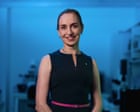
Stage four melanoma used to be a death sentence measured in months, not years. When Professor Georgina Long started out treating advanced melanoma, she rarely saw the same patient in her clinic for more than nine to twelve months. Now she has been named a joint winner of the 2026 Prime Minister's Prize for Science alongside subatomic physicist Professor Anthony Thomas, capping a transformation where over half of people with advanced melanoma can be cured.
That shift didn't happen by accident. It took relentless clinical trial work, uncomfortable bets against old oncology assumptions, and an Australian research ecosystem that punched way above its weight. If you've ever wondered why skin cancer research in Australia sets global standards—or what a personalised mRNA vaccine actually means for patients—this prize is the clearest marker yet.
How Melanoma Immunotherapy Flipped the Odds
For years, oncology treated late-stage melanoma like an unstoppable brushfire. Once melanoma spread to distant organs or the brain, standard options offered slim hope, and patients with active brain metastases were routinely barred from clinical trials altogether. Median survival for those brain metastases sat around four to six months.
Long, medical director at Melanoma Institute Australia and a researcher at the University of Sydney, helped push immunotherapy from a fringe idea into the front line. Her clinical and translational breakthroughs have lifted survival tenfold for stage four melanoma and 24-fold for patients with brain metastases. Around half of patients with active, asymptomatic brain metastases are now alive at seven years, many living full lives.
Honestly, what strikes me most isn't just the headline numbers. It's the ripple effect across cancer medicine. As Long has pointed out, immunotherapy proved its worth in melanoma first, setting the benchmark that opened doors for treating other cancers. When you watch a disease go from near-certain lethality to long-term remission in a single career, you stop treating "incurable" as a permanent label.
Still, I don't want to paint a fairy tale. Long herself is blunt that we aren't curing the other 50 percent of melanoma patients yet. Drug resistance happens, toxicities can be rough, and figuring out which patients need less treatment versus a completely different regimen is still hard work. Good science doesn't stop at a pat on the back.
What Makes the 2026 Prime Minister's Prize Stand Out
The Prime Minister's Prizes for Science, now in their 27th year, carry serious weight in Australian research. Sharing the $250,000 top science honour with Professor Anthony Thomas of the University of Adelaide—whose subatomic physics and "cloudy bag model" reshaped how scientists study protons, dark matter, and neutron stars—highlights just how wide the prize's lens is.
Other 2026 winners underline that same breadth. Professor Mark Smythe of the University of Queensland took the Prime Minister's Prize for Innovation after co-founding six biotech companies that turned local research into medicines for psoriasis and polycythaemia vera. Associate Professor Fengwang Li of the University of Sydney won the Malcolm McIntosh Prize for Physical Scientist of the Year for cracking the "carbonate paradox" in carbon capture, turning emissions into clean energy and sustainable materials. Together with prizes spanning Indigenous knowledge systems, life sciences, early innovation, and school teaching, the awards show basic lab work feeding directly into real-world impact.
When you compare clinical breakthroughs like Long's to physical or industrial breakthroughs like Li's or Smythe's, the timeline looks very different. Clinical oncology moves at the pace of human trials, safety monitoring, and years of follow-up data. Physics and materials chemistry can sometimes test hypotheses faster at the bench, though scaling them to global industry takes its own grinding effort. Both require patience that short-term funding cycles rarely reward.
Beyond Immunotherapy into Personalised mRNA Vaccines
If immunotherapy was chapter one of this revolution, individualised cancer vaccines are looking like chapter two. In October 2026, results from the phase 3 INTerpath-001 trial—led with Long's involvement—showed that adding intismeran, a bespoke mRNA-based therapy, to pembrolizumab after surgery for high-risk melanoma cut the risk of cancer recurrence or death.
Notice an important detail that casual readers miss. That phase 3 mRNA vaccine milestone wasn't even part of Long's Prime Minister's Prize nomination. Her prize recognised years of foundational immunotherapy and clinical leadership, while the vaccine trial points toward what comes next.
Let's be real about what "personalised mRNA vaccine" means in plain English. Unlike a classic flu shot that trains your immune system against a seasonal virus, a bespoke cancer vaccine is tailored to target specific tumour mutations in an individual patient's resected melanoma. Paired with a checkpoint inhibitor like pembrolizumab, it's designed to wake up and aim T-cells at lingering microscopic disease before it comes back.
There's a catch, of course. Custom manufacturing takes time, costs aren't trivial, and long-term durability beyond two years is still being tracked closely. Promise in a phase 3 trial is huge news, yet real-world access, regulatory approvals, and broader patient selection always test how fast a breakthrough reaches everyday clinics.
Common Misconceptions About Skin Cancer Progress
Seeing headlines about "over 50% cured" can accidentally make people careless about sun safety. That's one of the biggest mistakes I see people make when survival rates jump. Better late-stage drugs are a triumph, not a substitute for prevention or early checks.
Here are a few things people routinely get wrong:
- Survival leaps mean melanoma is minor now. Even with much better odds, advanced melanoma still demands complex treatment, scans, and side-effect management. Catching a suspicious spot early is still vastly easier than treating metastatic disease.
- One drug works the same way for everyone. Responses vary wildly depending on tumour biology, prior treatments, and whether disease has spread to places like the brain.
- A breakthrough trial equals an immediate cure-all. Clinical trials test specific stages and combinations under strict rules; translating results into routine care across different health systems takes extra steps.
Practical Next Steps If You're Navigating Melanoma or Skin Checks
Whether you're keeping an eye on your own skin or supporting someone facing a diagnosis, don't rely on vague internet summaries. Take concrete steps based on where you stand right now.
- Book a thorough skin check with a qualified clinician. If you notice a changing mole, a new spot that looks different from the rest ("ugly duckling"), or anything bleeding or crusting, get it evaluated promptly rather than waiting months.
- Ask targeted questions at oncology appointments. If you or a loved one are dealing with melanoma, ask your specialist about stage, biomarker or mutation testing, clinical trial eligibility, and how current immunotherapy or combination options fit your specific case.
- Follow trusted cancer organisations for updates. Stick to evidence-based sources like Melanoma Institute Australia or recognised oncology societies rather than sensational social media claims about "miracle cures."


