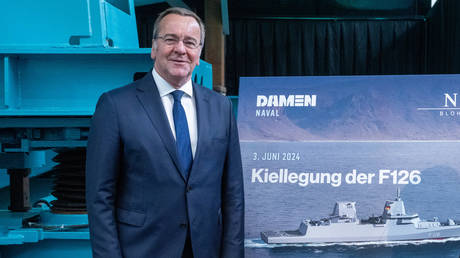
Germany just did something rare in the world of military procurement. It pulled the plug on its biggest naval project in decades. The defense ministry completely canceled the F126 frigate program, a massive effort to build six next-generation warships that was quickly turning into a financial disaster.
The original goal seemed simple enough back in 2020. Berlin wanted to build a fleet of massive, high-tech multi-purpose combat ships primarily designed to hunt submarines. But costs skyrocketed from an initial estimate of around €10 billion to a staggering €18 billion. Facing endless delays and unpredictable technical risks, German Defense Minister Boris Pistorius decided he had seen enough. Berlin is walking away entirely and pivoting to a cheaper, faster alternative.
This move directly dismantles a defense legacy rooted in the tenure of European Commission President Ursula von der Leyen, who championed these massive modular ship designs during her previous role as Germany's defense minister. The decision has sent shockwaves through the European defense sector, causing stock prices to tank and forcing a major rewrite of naval strategy.
The Death of a Ten Billion Euro Dream
The F126 frigate program was highly ambitious. These ships were not standard frigates. With a planned displacement of roughly 10,000 tonnes and a length of 166 meters, they were closer in size to massive destroyers. They were intended to be the largest combat vessels built in Germany since World War II.
The core philosophy behind the F126 was modularity. The navy wanted a ship that could serve as a jack-of-all-trades. By swapping out specialized mission modules, a single hull could transition from an anti-submarine warfare platform to a long-range patrol vessel or a command hub. It sounded great on paper. In practice, it created a engineering nightmare.
Dutch shipbuilder Damen Naval originally won the contract to build the ships in German yards. They struggled early on with the intense bureaucracy of German procurement agencies. Reports emerged that the German government demanded massive submissions on physical paper and required every single piece of technical documentation to be in German. Subcontractors fell behind. Timelines slipped. The first ship was supposed to arrive by 2028, but that target quickly became an impossibility.
By 2025, the defense ministry began looking for an escape hatch. They explored transferring the entire prime contractor role to German defense titan Rheinmetall through its newly acquired NVL shipyard division. But the audit numbers came back horrifying. Taking over the delayed project and covering the existing work done by Damen would drive the total bill north of €18 billion. For a country trying to rebuild its military quickly under a strict budget, that price tag was unacceptable.
A Shockwave in the Defense Markets
When Berlin announced the cancellation, the financial markets reacted instantly. Rheinmetall took the brunt of the blow. The company's stock price plummeted by up to 20% in a single afternoon. It was the sharpest single-day drop in the company's modern history, wiping out billions in market valuation.
Investors were caught completely off guard. Rheinmetall executives had publicly expressed confidence that they would finalize the multi-billion euro takeover of the F126 program by mid-2026. Financial analysts at JP Morgan noted that losing this contract means Rheinmetall will likely miss its ambitious €80 billion order intake target for the year. It is a harsh reminder that defense sector growth is never a guaranteed straight line.
While Rheinmetall reeled, its domestic rival celebrated. Berlin announced it is shifting its entire focus to the MEKO A-200 frigate, built by Thyssenkrupp Marine Systems, known as TKMS. Shares of TKMS surged nearly 10% on the news.
Instead of waiting into the 2030s for six overly complex F126 ships, Germany is purchasing eight smaller MEKO frigates. The financial arrangement is straightforward. The first four ships will cost about €6.3 billion. Berlin retains an option to order four more for €5.3 billion before the end of 2026. The total package comes out to roughly €11.6 billion for eight ships, giving the navy more hulls for significantly less cash.
Putting Steel in the Water
This sudden pivot reveals a fundamental shift in how European nations view defense spending in 2026. The ongoing war in Ukraine changed the math. Massive, bespoke military projects that take fifteen years to develop are becoming liabilities. The rise of cheap maritime drones and precision missiles has shown that relying on a small handful of hyper-expensive mega-ships is a risky gamble.
German naval planners are dropping the dream of the perfect customizable ship. They want something that works right now. Officials refer to this new approach as putting steel in the water. The MEKO A-200 is an off-the-shelf, proven design that TKMS has already built for international navies. It does not require a decade of fresh blueprinting.
TKMS indicated that preparatory work has been underway since February. They aim to deliver the first new frigate by late 2029, with subsequent ships rolling out every nine months. This aggressive schedule allows Germany to meet its strict anti-submarine warfare commitments to NATO far faster than the old program ever could.
There are trade-offs to this speed. To get the ships quickly, Germany is relying on existing international supply chains. The command systems and advanced radar units will largely come from Swedish suppliers like Saab and Canadian firms like Lockheed Martin Canada. Local German tech firms like Hensoldt and Thales Germany will see far less involvement than they anticipated under the F126 setup.
Next Steps for the German Navy
Berlin must now navigate a complex legal and industrial untangling process. If you want to track how this defense pivot unfolds, keep a close eye on these three upcoming developments.
First, watch the Bundestag Budget Committee. The defense ministry needs to fast-track the formal contractual approval for the first batch of MEKO frigates before the summer recess to secure the 2029 delivery date.
Second, monitor the legal fallout with Damen Naval. Minister Pistorius noted that Germany is assessing potential damage claims against the Dutch shipbuilder for failing to meet the initial contract terms, though legal experts warn that recouping the €2 billion already spent will be an uphill battle.
Third, look for the industrial consolidation of German shipyards. TKMS has already hinted at bringing in smaller domestic yards to help meet the aggressive nine-month production rhythm, which could throw a financial lifeline to workers who just lost out on the F126 project.