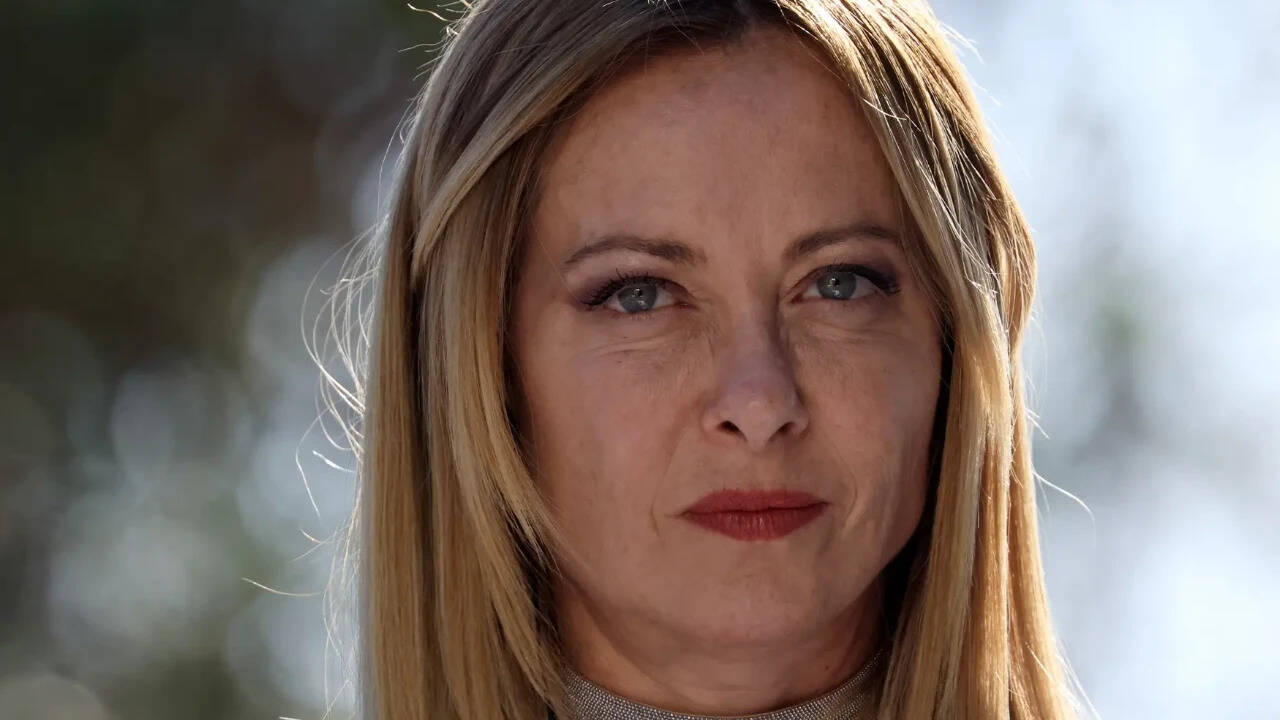
Italian Prime Minister Giorgia Meloni once looked a reporter in the eye and said something that still echoes through European politics. She insisted that if she were a fascist, she would just come out and say it. She claimed she never hides who she is. It's a bold stance for a leader whose party traces its family tree directly back to the ashes of Benito Mussolini's regime.
People often search for this specific quote to figure out if Italy's leader is rewriting history or just being practical. The global political community keeps questioning her roots. Critics call her party far-right. Some call it post-fascist. Meloni rejects the labels completely.
To understand what's really happening in Italian politics, you have to look past the quick headlines. The relationship between Meloni, her party, and Italy's dark 20th-century history is complicated. It's not as simple as a yes or no answer.
The Story Behind the Famous Defiance
The quote itself didn't come out of nowhere. It came from an interview with The Spectator right before she took power in 2022. Meloni wanted to clear the air before international voters and markets panicked over her upcoming election victory. She argued that her party, the Brothers of Italy, was built as a standard center-right movement with its head held high.
She pointed out that she criticized Mussolini decades ago. Back in 2006, she told a left-wing journalist that Mussolini made massive historical blunders. She cited the racial laws against Jewish people, the choice to enter World War II, and the creation of an authoritarian system. In her view, those actions ruined any good things the dictator tried to do.
Meloni maintains that nostalgia for totalitarianism has no place in her modern political strategy. She frequently tells her party leaders to be incredibly harsh on any members who show what she calls foolish nostalgia. She thinks those people are just useful tools for her political opponents on the left.
A Family Tree That Is Hard to Shake
You can't talk about Meloni without talking about her party's origin story. The Brothers of Italy didn't just appear out of thin air in 2012. Its lineage goes straight back to 1946. That was the year former Mussolini supporters created the Italian Social Movement, known as the MSI.
The MSI kept the fascist flame burning in postwar Italy. Literally. They used a tricolor flame as their official symbol. When the party tried to mainstream itself in the 1990s, it rebranded as the National Alliance. They publicly walked away from fascism back then, calling themselves post-fascist instead.
[Mussolini's Regime] -> [MSI (1946)] -> [National Alliance (1990s)] -> [Brothers of Italy (2012)]
When Meloni co-founded the Brothers of Italy, she took that same tricolor flame and put it right back into her party's logo. It's still there today. For critics, keeping that symbol is proof that the old ideas never really went away. For her supporters, it's just a traditional conservative badge.
Public Moderation vs Private Behavior
The biggest challenge to Meloni's anti-fascist messaging didn't come from her speeches. It came from her own party's youth wing. An undercover investigation by the online newspaper Fanpage exposed a massive gap between public PR and private reality.
Reporters used hidden cameras to infiltrate the National Youth group. They recorded young party members doing fascist salutes, chanting praise for Mussolini, and shouting Nazi slogans. The footage shocked the country and forced Meloni into a corner.
She responded by writing a sharp letter to her party bosses. She stated clearly that there was no room for racism, antisemitism, or totalitarian nostalgia in her movement. She called the actions stupid folklore. Two high-profile youth members resigned immediately after the tapes went public.
Opponents didn't buy her outrage. They argued that the youth wing was simply reflecting the true, unvarnished nature of the party when the cameras weren't supposed to be rolling. It showed how difficult it is for Meloni to police the fringes of her own movement.
Playing to Different Audiences
Political analysts note that Meloni is a master of adjusting her tone based on who is listening. When she speaks to the foreign press or international leaders, she sounds like a standard conservative. She compares her ideology to the British Conservative Party or the American Republican Party. She emphasizes her support for NATO, her alliance with Western powers, and her strong backing of Ukraine against Russian aggression.
But her domestic rallies can feel totally different. When she speaks to her base at home or joins right-wing rallies abroad, her language gets much more aggressive. She focuses heavily on immigration, traditional family structures, and national identity. Critics say these speeches rely on the same traditional themes that old-school Italian nationalists used for generations.
The Reality of Governing Italy
Running a country requires pragmatism. Since becoming prime minister, Meloni has mostly avoided the radical economic experiments that people feared. She worked closely with European Union officials, even when she disagreed with their broader vision.
She used major national holidays to try and settle the historical debate once and for all. During Liberation Day celebrations, which mark the fall of Mussolini's regime, she publicly stated that the end of fascism laid the groundwork for democracy to return to Italy.
Yet, the skepticism remains. Every time an official from her party gets caught using old right-wing rhetoric, the debate starts all over again. Her critics believe she refuses to completely destroy the historical connection because she still needs those far-right votes to stay in power.
Pay close attention to her upcoming policy decisions regarding judicial reforms and state broadcasting control. Those actions will tell you far more about her actual style of governance than any single interview quote ever could. Keep watching how she handles internal dissent when regional elections test her party's unity later this year.