Why the Girls Basketball Tournament at Redondo Union Sets the Early Tone
Late November in Southern California high school basketball always carries a distinct charge. While plenty of programs are still trying to figure out their starting lineups and conditioning, the girls basketball tournament at Redondo Union throws teams straight into real competition. You don't get to hide behind soft warmups here. Every possession tests timing, spacing, and stamina against programs that expect to play deep into winter.
Honestly, early-season tournaments are where coaches learn the truth about their rosters. Practice drills feel clean until a quick press speeds up your point guard or a physical wing crowds your catch window. When a program steps onto the floor at Redondo Union High School in Redondo Beach, the stakes aren't a league banner yet, sure, but the lessons show up immediately on film. Meanwhile, you can explore similar events here: What Infantino's 39 Private Jet Flights Reveal About Fifa's Election Race.
What makes this stretch so revealing is how much ground gets covered in a few days. Instead of waiting six weeks to find out whether your half-court defense holds up against athletic guards, you find out before Thanksgiving week even wraps up.
What Makes Early Showcases Matter So Much
People love to treat November games as throwaways. That's a mistake. A lot of coaches and scouts pay closer attention to early tournament play than they let on, especially when a team faces unfamiliar styles from outside its usual league rotation. To explore the bigger picture, check out the excellent report by FOX Sports.
Consider how Southern Section basketball works under the California Interscholastic Federation (CIF Southern Section). Programs compete in leagues like the Bay League, Marmonte League, or South Coast pathways, where teams eventually know each other's tendencies inside out. Early tournaments break that familiarity. You have to adjust on the fly when an opponent switches ball screens differently or pushes pace off missed free throws.
From years of watching high school hoops around South Bay gyms, I've noticed a clear pattern. Teams that treat November tournaments like glorified scrimmages often fall behind habits-wise by mid-December. Meanwhile, teams that stay sharp on defensive rotation and shot selection build momentum that carries straight into league play.
Still, let's be fair about the flip side. Winning a November bracket doesn't guarantee a February playoff run, and a rough opening week doesn't ruin a season either. Rosters change, injuries pop up, and young players grow fast between Thanksgiving and Christmas break.
What Coaches and Scouts Actually Watch For
When you watch high-level girls basketball in late November, the box score only tells half the story. Shooting percentages swing wildly early in the year because legs are heavy and jumpers are still finding their arc.
Here is what actually separates sharp programs from sloppy ones during a tournament run:
- Turnover discipline under pressure: Early-season defenses love to trap sidelines and jump passing lanes. A guard who stays poised without forcing skip passes saves five to eight possessions a game.
- Rebounding box-outs and second efforts: Shooting slumps happen in November. Teams that crash the glass and limit opponents to one shot stay competitive even when shots aren't falling.
- Bench composure: Tournament schedules compress games into tight windows. When starters sit for a breather, the second unit has to keep the score steady rather than handing away a lead in two minutes.
- Defensive communication: Talking through screens and calling out backdoor cuts takes reps. You can spot a well-coached group right away by how early defenders talk before the ball even moves.
Another detail worth noting is how coaches manage minutes. Pushing key players thirty-plus minutes every day in November can wear down legs before league games even start. Smart staffs use early tournament stretches to test lineups and give role players real minutes against tough competition.
South Bay Context and Program Tradition
Redondo Union has a long-standing athletic identity in the South Bay, and programs like the Sea Hawks—alongside regional rivals such as Mira Costa, Palos Verdes, and visiting Southern California squads—keep the local basketball calendar lively. Even when a program's year-to-year record fluctuates, competing in a well-run tournament at a recognizable gym raises the energy in the building.
In Southern California prep hoops, early tournaments also serve as a measuring stick for depth. A school might have one or two standout scorers who can carry a game against average competition, yet still struggle against disciplined team defense. Facing strong opponents early exposes those gaps while there's still plenty of time to fix them in practice.
Let's not overcomplicate that point. High school basketball rewards habits that hold up when everyone is tired. A tournament format—where games stack up quickly and scouting time is limited—mirrors the mental demands of postseason basketball better than a once-a-week league schedule ever could.
Common Myths About November Tournaments
One common myth is that early-season wins automatically lock in top playoff seeding later on. Selection committees and ranking systems evaluate overall body of work, strength of schedule, and late-season performance rather than a single November weekend.
Another misconception is that losing a close game early means a team lacks toughness. Sometimes a narrow loss to a well-coached opponent teaches more than blowing out an overmatched team by thirty. If a young roster learns how to execute late-game inbound plays or handle a fourth-quarter run, that experience pays off later.
On the other hand, ignoring recurring problems is dangerous. If a team turns the ball over twenty-five times or struggles to get back in transition across multiple tournament games, hoping it magically disappears in January rarely works.
Practical Next Steps for Players, Parents, and Fans
If you're following a team in this tournament—or playing in it—keep your focus on things you can actually use right away.
- Track effort stats, not just points: Watch how quickly players get back on defense after a made basket and how often they hustle for loose balls. Those habits translate across every level of basketball.
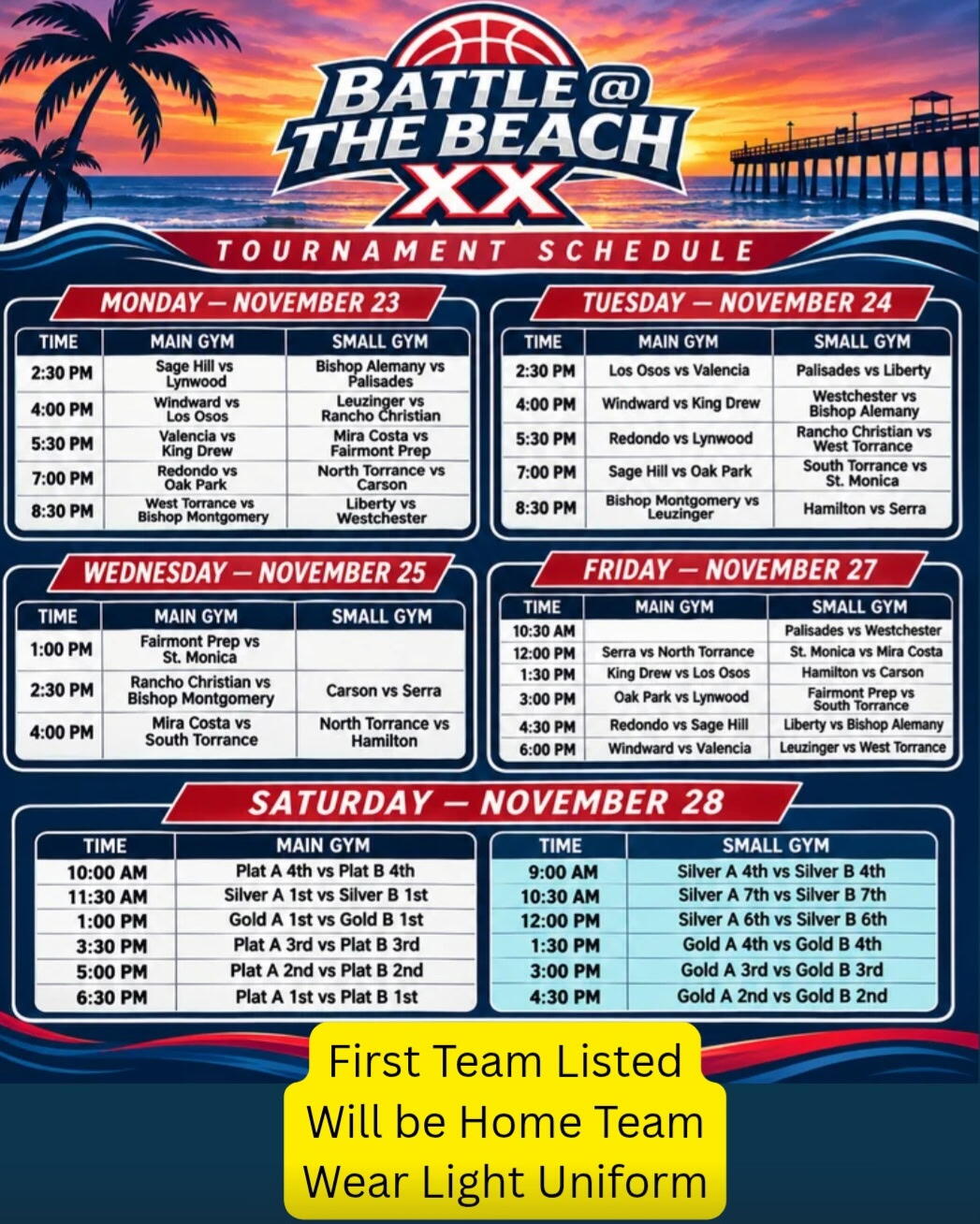
- Check official schedules and rosters early: High school tournament brackets and game times can shift, so verify matchups directly through school athletic pages or official CIF Southern Section resources like CIF Southern Section and MaxPreps.
- Review film with one clear goal: If you're a player or coach, pick two specific things—like weak-side help or attacking closeouts—rather than critiquing every single play from a busy weekend.
- Stay patient through December: Give new combinations time to click, and judge growth by how cleanly a team executes in month two compared to week one.
Early November basketball won't hand out championships, and nobody hangs a banner in Thanksgiving week. Yet the teams that compete hard, communicate on defense, and learn from every possession give themselves a real head start before the winter grind hits full speed.