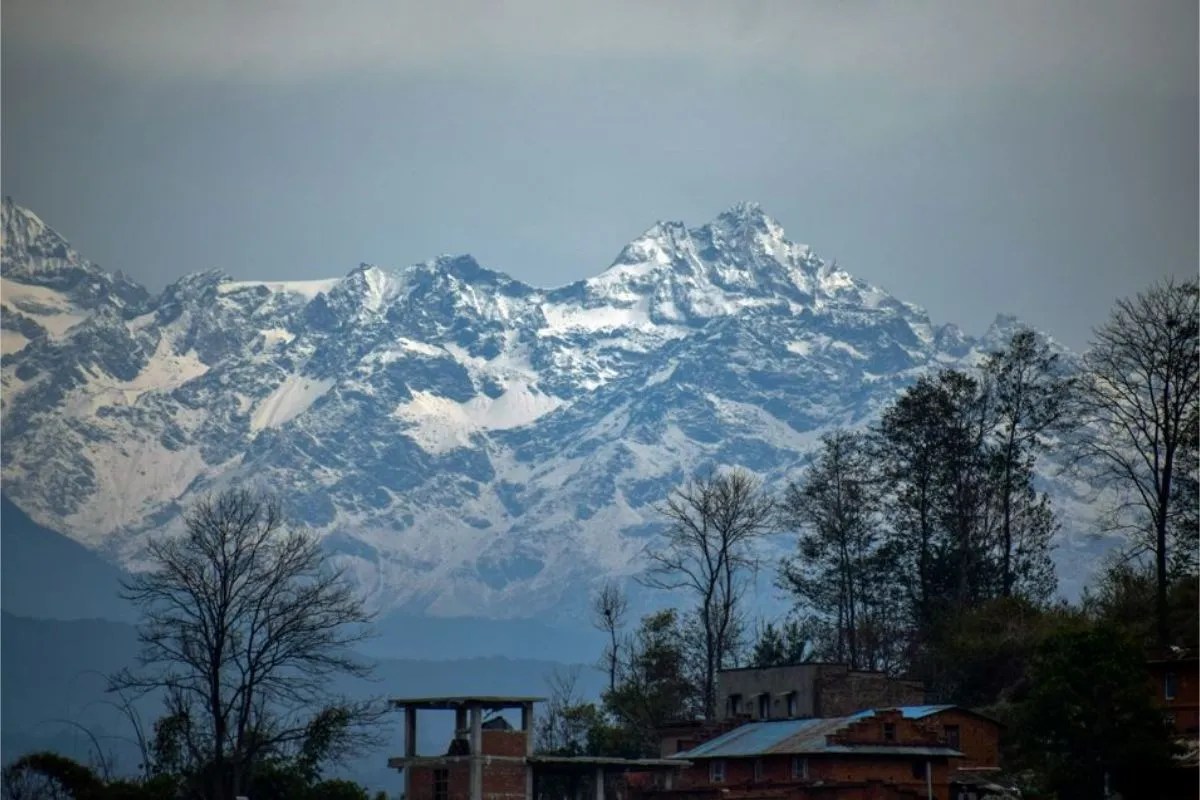
We need to talk about what is quietly pooling up at the roof of the world. High above the bustling plains and river valleys, thousands of new lakes are forming at an alarming pace. Scientists are tracking a ticking time bomb, and ignoring it won't make it go away.
The Quiet Expansion Frozen in Time
Glaciers don't just melt and disappear quietly. As global temperatures creep upward, retreating ice leaves behind massive depressions. These basins fill with meltwater, held back precariously by walls of loose rock, ice, and debris. These are glacial lakes, and they are multiplying fast.
Data shows that between 1990 and 2020, the number of significant glacial lakes across the Himalayan region surged by roughly 83 percent, jumping from 2,406 to 4,420. In the Indian Himalayas alone, a focused study on hundreds of larger lakes revealed a sprawling 15.84 percent expansion in surface area alone.
These aren't uniform changes. The buildup is concentrated heavily in regions like Nepal, Bhutan, Sikkim, and the Everest surroundings—areas that serve as the vital catchment basins for major river systems feeding millions downstream.
Why Experts Call It a Water Bomb
When people talk about a natural disaster, they usually picture sudden cloudbursts or earthquakes. But what geologists call a Glacial Lake Outburst Flood (GLOF) operates on an entirely different scale. Picture a sudden landslide, an avalanche, or even heavy torrential rain crashing into an unstable high-altitude lake.
The natural earthen dam gives way. Millions of cubic meters of water, mud, and boulders instantly rush down narrow mountain valleys. It acts as a literal water bomb. The destruction doesn't stay confined to remote peaks. That sheer wall of energy travels miles downstream, wiping out bridges, roads, hydro projects, and human settlements in minutes.
The Scale of the Risk to Millions
Global assessments estimate that around 15 million people live in areas directly exposed to potential GLOF impacts. Out of that total, India accounts for an estimated 3 million residents living within vulnerable downstream flood zones.
That figure doesn't mean a massive flood is happening tomorrow. It represents the population footprint sitting right in nature's crosshairs along vulnerable river basins. Take Uttarakhand as a prime example, where authorities have cataloged roughly 426 glacial lakes. While every single one of them isn't an immediate hazard, monitoring their stability has become a massive logistical headache for disaster management teams.
What Comes Next for Vulnerable Regions
We can't stop glaciers from retreating at this stage, but we can change how we react to the aftermath. Early warning sensors, continuous satellite tracking of lake volume expansion, and strictly regulated infrastructure planning near high-risk river channels are the bare minimum. Mountain communities need real-time communication lines, not post-disaster rescue operations after the damage is done.
Pay attention to how land use is changing near major Himalayan river routes. The warning signs are already mapped out.