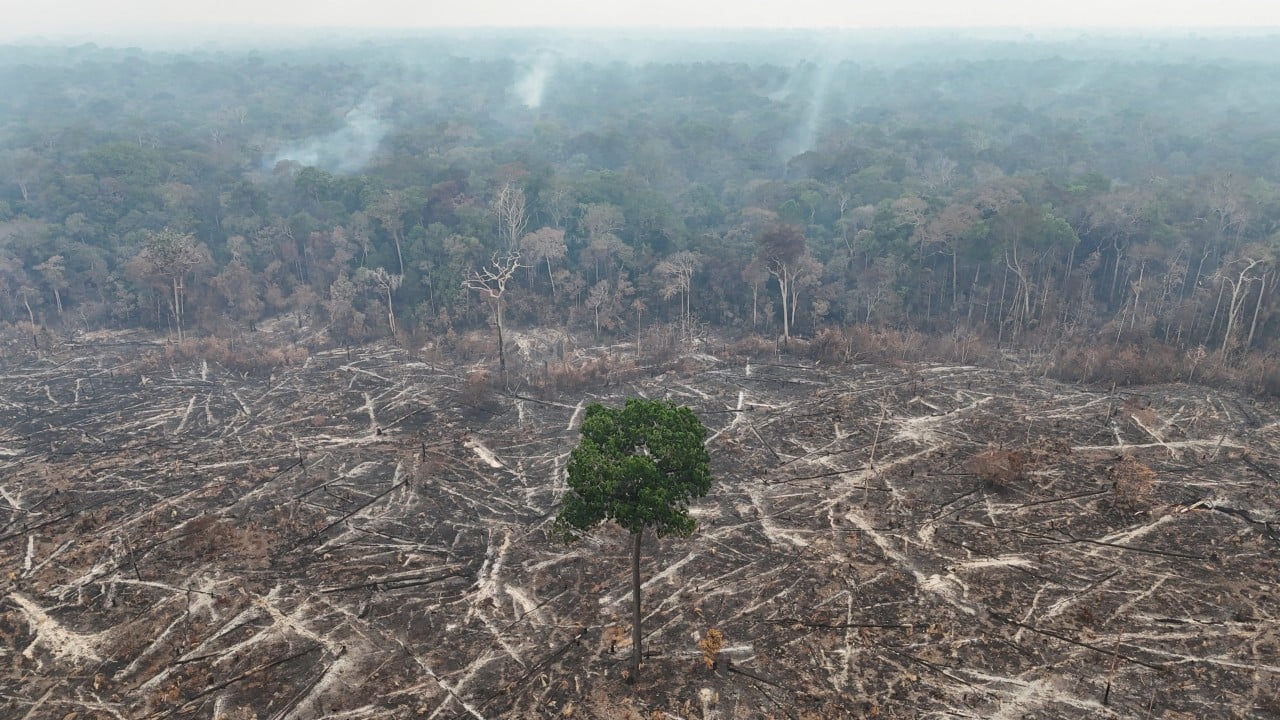
The headlines looked promising at first glance. Global deforestation dropped by 15 percent in 2025, bringing the total loss down to roughly seven million hectares—an area about the size of the Republic of Ireland. Governments cheered. Environmental agencies acknowledged progress.
But anyone staring at the global aggregate total missed the forest for the trees.
Behind that apparent global improvement lies a troubling reality. While some regions managed to slow their losses through aggressive enforcement and policy shifts, destruction in the Congo Basin surged. The rainforest retreat in Central Africa is now approaching the scale of the Amazon for the first time in modern history.
The Trap of Global Averages
When a massive global dataset rolls out, the temptation is to look at the top-line number and celebrate. That approach fails to capture the local volatility of environmental destruction.
A 15 percent drop worldwide sounds great until you realize it is driven heavily by localized successes in specific nations, such as Brazil, where stronger political will and policy enforcement reined in parts of the Amazon. Meanwhile, other ecosystems are bleeding cover at an alarming rate.
The Forest Declaration Assessment, compiled by Climate Focus alongside dozens of civil society and research organizations, paints a stark picture. The world is nowhere near meeting the 2030 target to end deforestation completely. The global pledge is slipping through our fingers because improvements in one region cannot automatically compensate for unchecked devastation elsewhere.
Why the Congo Basin Is Bleeding Trees
The Congo Basin is the second-largest expanse of tropical rainforest on Earth. It acts as a critical planetary carbon sink, absorbing immense amounts of carbon dioxide every year. Yet, it remains deeply vulnerable.
Losses in the region spiked sharply in 2025, driven by a lethal mix of factors. Weak institutional governance, chronic poverty, expanding agriculture, and local resource extraction create an environment where illegal clearing happens with minimal resistance.
Unlike the high-profile satellite tracking and political spotlight that frequently protects parts of South America, the Congo Basin often flies under the global radar. Funding commitments fail to translate into boots on the ground. When local communities lack alternative livelihoods, clearing pristine forest for subsistence farming or small-scale mining becomes an immediate economic necessity rather than an environmental choice.
Furthermore, climate-driven stress is compounding the issue. Hotter and drier conditions make tropical canopies more flammable and vulnerable. Forest fragments inside national parks are disappearing as human pressures push deeper into protected sanctuaries.
Missing the 2030 Target
The international community promised to halt deforestation by the end of this decade. That goal is rapidly slipping out of reach.
Reaching a 2030 target requires a permanent transformation of how land-use policies are funded and enforced globally. Small token grants and distant summits won't cut it. When countries treat conservation as an optional diplomatic talking point rather than an emergency-level priority, the math simply doesn't work.
If you care about planetary stability, you cannot look at a 15 percent global drop and call it mission accomplished. The atmospheric carbon released by a hectare burned or cleared in Central Africa carries the exact same weight as one lost in South America or Southeast Asia.
What Actually Needs to Happen Now
Protecting the remaining high-integrity forests requires moving past feel-good global metrics and confronting local realities head-on.
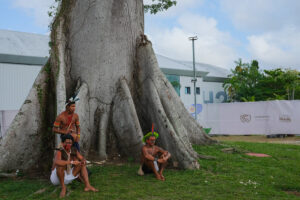
- Shift financial aid directly to local communities and Indigenous stewards who actually manage the land on a daily basis.
- Upgrade satellite monitoring and enforcement capabilities in neglected regions like Central Africa to match the oversight seen in the Amazon.
- Hold consumer nations accountable for supply chains that import commodities linked to illegal land clearing.
The 2025 data tells a clear story. Progress is fragile, uneven, and entirely reversible. Until the global community addresses the crisis unfolding in the Congo Basin, the planet's remaining lungs will continue to fade.