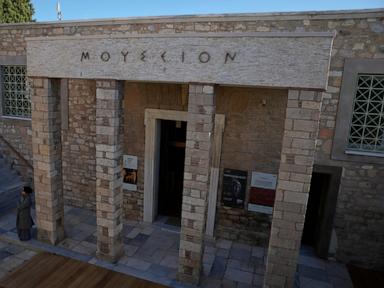
Most tourists walking past the Parthenon completely ignore the squat, stone building tucked quietly into the southeast corner of the Acropolis rock. For nearly two decades, this low-profile structure sat silent and locked, overshadowed by the gleaming glass galleries of the modern Acropolis Museum down the street. But that era of abandonment is over. Greece's oldest modern-era museum, built way back in 1874, has officially reopened its doors after a major €6.2 million restoration project.
If you've spent any time tracking heritage projects in Athens, you know how easily historic buildings stall out in endless bureaucratic limbo. Proposals to turn this historic site into a cafe or even tear it down altogether dragged on for years. Fortunately, cooler heads prevailed, and the Greek Culture Ministry pulled off a stunning technical renovation that breathes new life into the historic stone walls without breaking the strict visual rules of the sacred rock. If you liked this post, you might want to read: this related article.
The Hidden History Behind the Old Acropolis Museum
When construction began in 1865, architects faced a massive constraint. They had to design a structure that would house precious antiquities without competing with the Parthenon. The solution was a low-slung stone building intentionally built below the sightlines of the temple columns. It became the very first building in the modern Greek state constructed specifically to function as a museum.
For generations, it held the primary treasures unearthed from the sacred rock. That chapter ended dramatically in October 2007, when workers used cranes to hoist priceless ancient artifacts out of the old building and transport them down to Dionysiou Areopagitou Street into the massive, contemporary Acropolis Museum designed by Bernard Tschumi and Michael Photiades. Since then, the historic 1874 structure has sat empty. Some spaces were temporarily used to store miscellaneous archaeological finds, but the public was locked out. For another look on this story, see the latest coverage from Travel + Leisure.
What Actually Changed in the Recent Renovation
The seven-year restoration wasn't just a simple coat of paint. Funded through a combination of public money and private donations overseen by Culture Minister Lina Mendoni, the revamped building has received a serious hi-tech upgrade.
Instead of competing with the new museum downtown, the historic building has been repurposed to host high-profile temporary archaeological exhibitions of international scope, alongside spaces dedicated to telling the untold stories of Athens beyond its golden age. The western wing now showcases inscriptions and archaeological materials that spent decades hidden away in dark storage rooms.
You won't find the famous marble statues here anymore—those rightfully belong in the main museum or across the sea where ongoing repatriation debates continue. Instead, you'll find an intimate look at the less-celebrated layers of Athenian history, featuring specialized exhibits like the inaugural display exploring Athens as an immortal city.
Why This Reopening Matters for Travelers
If you're planning a trip to Athens anytime soon, don't just tick off the Parthenon and head straight to the Plaka for souvlaki. The reopening of this 19th-century pioneer gives visitors a chance to appreciate 19th-century Greek architecture and explore rare artifacts that rarely see the light of day. It adds a crucial historical layer to the Acropolis complex, reminding us how archaeological curation has evolved over the last 150 years.
Take time to walk around the southeast side of the Parthenon and look closely at the stone walls that most tour groups skip right past. You're looking at a piece of modern Greek history that nearly vanished, now brought back into the active cultural circuit of Athens. Check the current schedule before you go, plan your ticket booking in advance, and make sure you experience both the ultra-modern galleries and this newly restored historic gem on your next climb up the sacred rock.