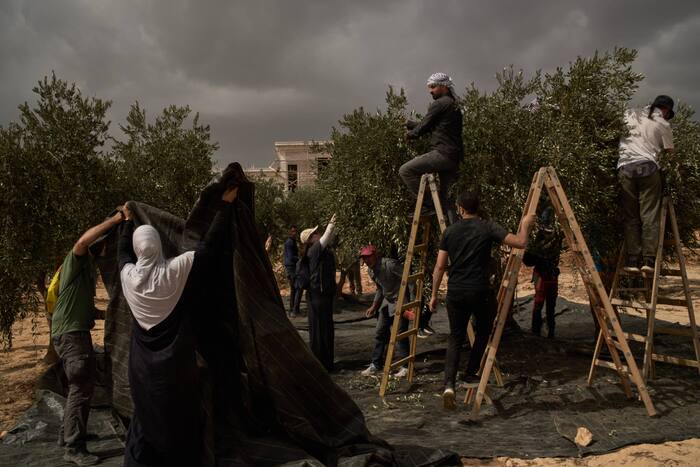
Every October, the hills of the occupied West Bank should smell like woodsmoke, crushed earth, and fresh fruit. Instead, this year's olive harvest smells like burning rubber and tear gas. Across multiple villages, masked Israeli settlers have torched privately owned vehicles, set fire to centuries-old groves, and assaulted local farmers and international observers. It is a calculated seasonal campaign that turns a vital economic lifeline into a zone of terror.
If you look closely at what's happening on the ground, you'll see a stark reality. Over 110,000 Palestinian families depend on these groves for their survival. When trees burn, livelihoods vanish in minutes. And as international journalists and peace activists step in to document the chaos, they're becoming targets too.
The Anatomy of a Harvest Under Siege
The violence isn't random. It peaks right as the annual olive harvest begins, transforming a peaceful agricultural tradition into a flashpoint. Human rights organizations like Yesh Din and the UN Office for the Coordination of Humanitarian Affairs have tracked thousands of incidents over the past year. Yet, accountability remains rare.
In villages like Abu Falah and Turmus Ayya, the pattern is brutally consistent:
- Masked vigilantes descend from nearby unauthorized outposts or settlements.
- They arrive armed with stones, bottles, and slingshots, targeting anyone in the fields.
- Cars are torched to trap families or destroy their only means of transport.
- Trees that have stood for generations are burned down to the roots.
When Washington Post photographer Heidi Levine arrived in Abu Falah to document the morning harvest, she was swarmed. Attackers kicked her repeatedly while she clung to her protective gear. Even with a vest clearly marked "PRESS," she sustained injuries that required hospitalization. The Foreign Press Association and major news outlets condemned the assault, noting a complete absence of law enforcement response to protect civilians and reporters.
Official Responses Versus Ground Realities
Prime Minister Benjamin Netanyahu's office has frequently downplayed these attacks, categorizing them as the work of isolated fringe youths and warning against generalizing the behavior to all settlers. But local council members and human rights monitors tell a different story entirely.
Witnesses on the ground report that Israeli military forces often stand by while the violence unfolds. In some instances, troops have actively intervened against the victims rather than the aggressors. Following the clashes in Abu Falah, soldiers fired live ammunition at an unarmed village council member, Abdel Jaber Hassan, who was carrying agricultural tools far from the front line. The military claimed an individual ran toward them with a sharp object, a claim sharply disputed by local officials.
The Palestinian Farmers' Union estimates that financial losses from damaged and destroyed trees run into millions of dollars annually. Abbas Milhem, head of the union, notes that this season is tracking as the worst on record. When you destroy an olive tree that takes decades to mature, you aren't just destroying a year's crop. You are erasing generational wealth and forcing families off ancestral land.
Why This Crisis Defies Easy Solutions
The international community is watching closely, but diplomatic pressure has done little to alter the daily reality on the ground. The British government and other European bodies have accused Israel of turning a blind eye to settler extremism, warning of a deliberate campaign to depopulate rural areas. Meanwhile, domestic political pressures within Israel—including upcoming elections—keep hardline policies entrenched.
For the families heading out to their fields at dawn, the calculation is grim. Do they abandon their land and forfeit their economic survival, or do they risk physical violence to gather what little fruit remains?
Don't expect the tensions to ease anytime soon. As long as impunity reigns in the hills, the annual harvest will remain less about agriculture and more about endurance against an escalating campaign of displacement.