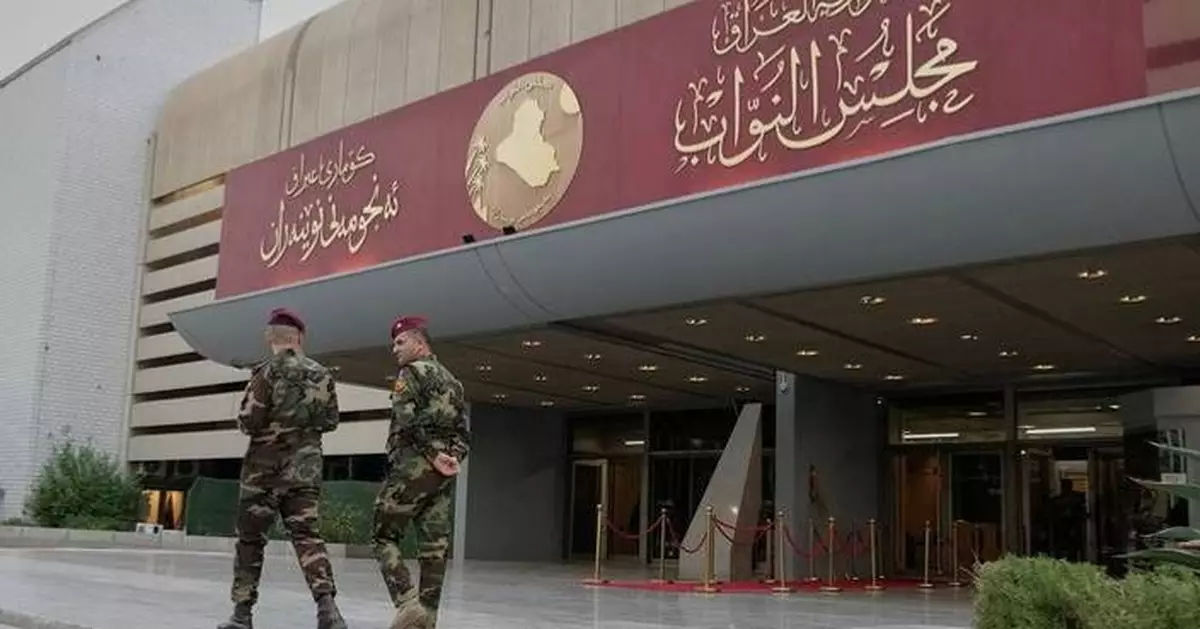
The final American soldier has packed up and left. Twenty-three years after the 2003 invasion that upended the Middle East, the United States has officially wrapped up its military footprint in Iraq. The last remaining troops cleared out from an air base in Erbil, bringing an official end to Operation Inherent Resolve. Baghdad celebrated the moment with military parades and declarations of full sovereignty.
Reality, however, is rarely as clean as a state-televised parade.
If you are wondering what happens to Iraq's security next, you aren't alone. The exit of American forces creates a massive vacuum. For over a decade, the U.S. presence acted as a stabilizing, if controversial, pillar against the Islamic State (IS) and a buffer against heavy external interference. Now, Iraq stands entirely on its own at a time when the region is gripped by direct conflict between the U.S., Israel, and Iran.
Let's look at the real security dynamics unfolding on the ground right now.
The Dual Pressure on Baghdad
Prime Minister Ali al-Zaidi faces an immediate test. The departure of U.S. forces arrives alongside a domestic ultimatum demanding that non-state armed groups disarm and integrate into the state apparatus.
Here is the catch: most of those powerful, Iran-backed militias have zero intention of laying down their weapons.
Tehran views Iraq as a vital strategic depth. With a wider war involving Iran burning across the region, Iran-backed armed factions in Iraq have previously used local bases to launch strikes against U.S. positions. Washington has retaliated with targeted air raids. With the U.S. military gone, those direct American-militia flashpoints on Iraqi soil might cool down, but the domestic friction inside Iraq is heating up.
Baghdad wants a monopoly on military force, but it lacks the leverage to force heavily armed, well-funded factions to disband overnight.
The Kurdish Region and the Fear of a Security Vacuum
Nowhere are the anxieties higher than in Iraq's semi-autonomous Kurdistan region.
Historically, Kurdish authorities relied heavily on the international coalition for intelligence sharing, air defense coordination, and a psychological deterrent against both IS remnants and external aggression. With U.S. troops vacating bases like Erbil, local leaders are scrambling to shore up their own defensive perimeters.
IS has been reduced to scattered sleeper cells operating in remote deserts and rugged mountain terrain, but they aren't dead. Without continuous U.S. surveillance drones and specialized tactical support, Iraqi and Kurdish security forces must work twice as hard to keep those cells from regrouping.
Secretary of State and other foreign policy observers have voiced concerns about a potential "Balkanisation" of the country if Baghdad fails to project unified strength across all provinces. The northern border requires delicate diplomatic balancing, especially with neighboring Turkey pursuing its own gradual handovers and cross-border security operations.
Can the Iraqi State Stand Alone?
Iraq’s security forces have come a long way since the chaotic collapse against IS back in 2014. They handled the heavy lifting in urban combat during the liberation campaigns, and they are fiercely proud of their growing institutional competence.
Yet, capability is only part of the equation. Politics dictate security in Iraq.
Many political movements are deeply tied to armed wings. A true revolution in the security sector requires stripping political parties of their private militias—a feat that has eluded every administration since the fall of Saddam Hussein.
Pentagon officials have noted that the U.S. will maintain some level of remote or targeted advisory support, but the physical shield is gone. Iraq must now police its own airspace, manage its own borders against smuggling and militant infiltration, and prevent regional proxy wars from turning Iraqi cities into battlegrounds.
The calendar has flipped to a post-American era in Mesopotamia. The parades in Baghdad will fade, leaving the actual hard work of state-building to an Iraqi government that must prove it can survive without foreign crutches.