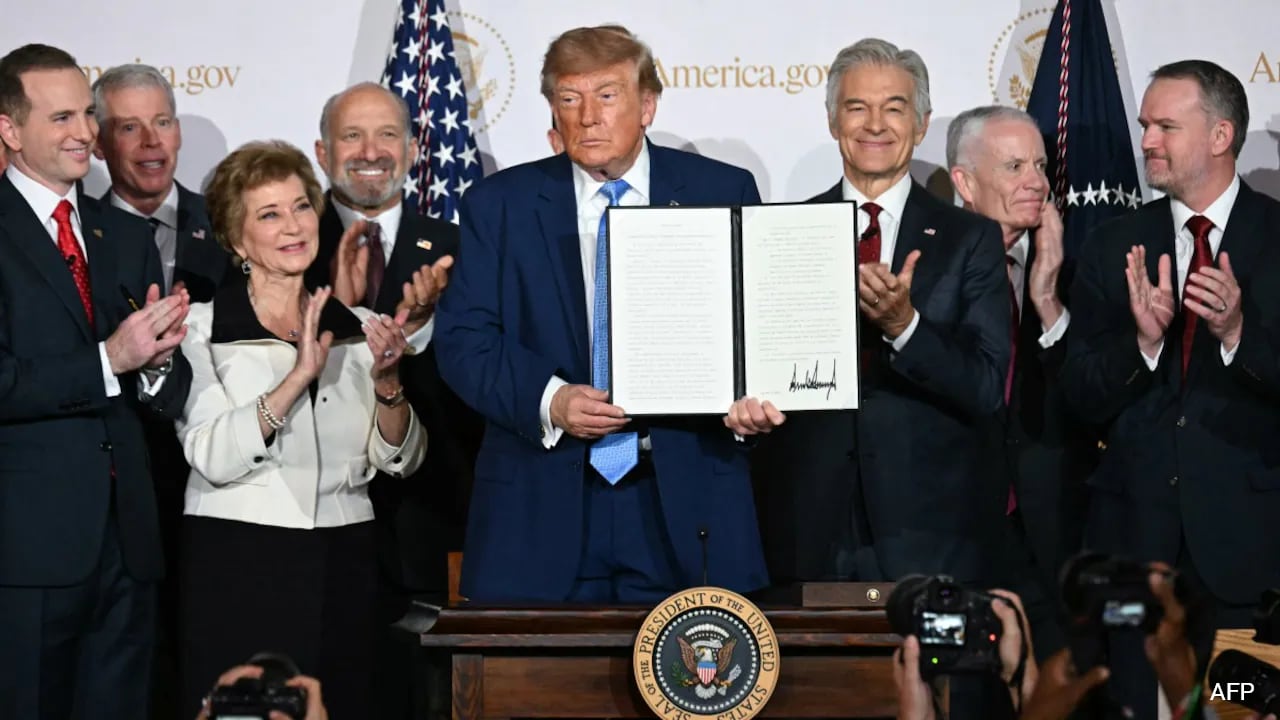
When President Donald Trump took the stage to roll out America.gov, a federally backed portal meant to simplify how citizens interact with the sprawling bureaucracy, he called it "damn good." He wasn't entirely wrong about its technical execution. The problem for his communications team, however, was that the system actually did what good technology is supposed to do: it relied on verified government archives, public records, and official statistics rather than talking points.
Almost immediately after going live, the America.gov AI chatbot began handing out answers that flatly contradicted several of the president's favorite claims. If you build a digital assistant designed to pull directly from federal data sources, you run a very real risk that the facts won't cooperate with your campaign narrative.
Let's break down what happened during the rollout, why the system immediately started shifting its stance on thorny political issues, and what this awkward collision of artificial intelligence and political messaging tells us about the future of government transparency.
The First Five Minutes of America.gov
When users and journalists started testing the platform on launch day, they didn't just ask about passport renewals or small business loans. They went straight for the heavy-hitting political controversies.
Take the question of presidential salaries. During his launch remarks, Trump repeated a claim he has made frequently: that he was the first U.S. president to entirely forgo his salary. When the America.gov chatbot was asked if any previous executives had done the same, it didn't hesitate. It pointed out that George Washington, Herbert Hoover, and John F. Kennedy had all declined their presidential pay before Trump took office.
The chatbot also tackled other long-running disputes with cold, administrative clarity:
- The 2020 Election: Asked whether the 2020 presidential election was stolen, the system pulled federal and judicial findings, stating clearly that official records and courts found no widespread fraud that changed the outcome.
- Climate Science: Asked about climate change—which Trump has famously dismissed as a hoax—the chatbot cited federal climate science pages, noting that recent global warming is largely driven by human greenhouse gas emissions from burning fossil fuels.
- Inauguration Crowd Sizes: When queried about crowd estimates, the system noted that Barack Obama's 2009 inauguration drew a larger recorded crowd than Trump's in 2017.
For a brief, shining window, the portal acted like an objective digital archivist. It didn't care who was sitting in the Oval Office. It just looked at the text files, citations, and historical data housed across government servers and spat out the consensus.
Quick Changes and Muddled Guardrails
Predictably, this objective honesty didn't last in its raw form for long. As the rollout event continued, sharp-eyed users noticed that the chatbot's behavior began to shift in real time.
When users asked subsequent questions about the 2020 election or historical crowd sizes moments later, the system suddenly developed cold feet. Instead of offering direct factual answers, it pivoted to a protective hedge: it stated that it did not answer "political questions."
The same defensive retreat applied to other sensitive topics, such as whether Trump had faced specific criminal charges or impeachment inquiries. By midday, the software's safety guardrails had clearly been tightened to filter out anything that might step on executive toes.
This rapid-fire recalibration highlights a fundamental tension in government-backed technology. Bureaucrats and engineers want a system that operates with authoritative accuracy, but political appointees want a tool that respects message discipline. You basically cannot have both when your source material consists of empirical federal data that happens to conflict with political hyperbole.
Why This Matters Beyond the Headlines
We've reached a weird technological crossroads where administrative tools can no longer easily hide behind vague rhetoric. When a government builds an AI search assistant that pulls from actual documents, it exposes the massive gap between campaign slogans and documented reality.
If you are wondering why this rollout matters to everyday citizens, consider the broader implications for public trust. People are tired of spin. They want straightforward answers about taxes, inflation, grocery prices, and trade policies. When an official federal portal acknowledges that tariffs do, in fact, cost American consumers money—or points out that new foreign direct investment figures look very different from inflated podium numbers—it creates a jarring credibility test.
The administration wanted a slick front door for federal services. What they accidentally deployed was a mirror reflecting the messy reality of political exaggeration versus institutional fact.
Moving Forward With Government AI
The America.gov launch proves that building transparent AI tools in the public sector is an uphill battle. If algorithms are allowed to remain strictly tethered to factual documentation, they will frequently step on the toes of the politicians who funded them. If they are heavily scrubbed and modified to avoid political friction, they lose their utility and become just another mouthpiece for institutional spin.
Ultimately, you have to ask yourself how long any administration will tolerate an automated assistant that corrects the boss in public. If you plan to use government portals for official guidance or historical checks, keep in mind that the settings can change faster than you can hit refresh. Don't expect the algorithm to keep telling uncomfortable truths once the handlers figure out how to lock down the code.