Planes stay grounded when nature throws a tantrum. Indonesia's capital of Jakarta recently faced a massive transportation freeze after Mount Anak Krakatau woke up, sending choking clouds of volcanic ash high into the atmosphere and forcing a brutal two-day shutdown across major regional hubs.
Nearly 3,000 flights were cancelled or delayed. Over 340,000 passengers found their travel plans shattered. Recently making waves in this space: Why Vladimir Putin Wants To Talk Peace Now And What It Actually Means.
If you're wondering how an island nation prone to seismic activity handles a crisis of this scale, the reality involves strict aviation protocols, massive scheduling backlogs, and a ticking clock for stranded travelers. Let's look at what actually happened on the ground and why volcanic ash remains one of the most terrifying threats to modern commercial aviation.
Why Volcanic Ash Terrifies Pilots
Volcanic ash isn't like normal campfire debris. It is pulverized rock, glass, and mineral crystals. Further details on this are explored by The New York Times.
When a jet engine sucks this abrasive grit into its core at 500 miles per hour, disaster strikes quickly. The high operating temperatures inside a turbine melt the rock particles. The molten glass then coats the turbine blades, cooling and solidifying instantly.
This cuts off airflow, stalls the engine, and can flame out every turbine on the aircraft. That is why Indonesian transportation officials didn't hesitate to pull the plug on operations at Soekarno-Hatta International Airport, Halim Perdanakusuma Airport, and surrounding facilities. Safety margins in aviation leave zero room for guessing.
The Scale of the Disruption
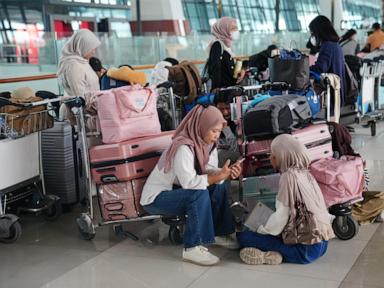
The numbers tell a staggering story. During the two-day closure on Sunday and Monday, exactly 2,961 flights got scrapped, including 622 international routes. Around 341,000 travelers were left stranded in terminals or scrambling for hotel rooms across Java and Sumatra.
Transportation Minister Dudy Purwagandhi noted that officials took a deeply conservative approach because wind directions change constantly. Even when skies cleared overhead, runways, taxiways, and parked aircraft required extensive cleaning and technical inspections to clear away microscopic abrasive grit before wheels could leave the tarmac again.
Local infrastructure took a hit too. The government authorized schools in ash-heavy zones to pivot to online learning so kids wouldn't breathe in the dangerous particulate matter.
Living on the Ring of Fire
Anak Krakatau translates to the "child of Krakatau". It is the notorious offspring of the 1883 eruption that famously triggered global cooling.
Indonesia sits directly on the Pacific Ring of Fire, hosting over 120 active volcanoes. Eruptions happen frequently. Yet, a closure affecting the capital's primary gateways on this scale tests the resilience of local carriers like Garuda Indonesia and international operators alike.
While Anak Krakatau transitioned back to milder strombolian activity—featuring intermittent explosions rather than continuous continuous spewing—authorities kept the volcano at its second-highest alert level. Anyone visiting the Sunda Strait region must respect the mandatory 3-kilometer exclusion zone around the active crater.
What Travelers Must Know
If you are flying through Southeast Asia right now, expect lingering schedule ripples. Airlines need days to reposition aircraft and clear the immense passenger backlog.
Always check your flight status before heading to the airport. Keep flexible booking options handy. Mother Nature dictates the timeline here, and no airline will risk a hull loss just to keep to a strict timetable.
Check your carrier's app, monitor local meteorological updates, and build extra buffer days into any itinerary touching the region.
Airlines race to clear backlog as Indonesia's airports reopen
This video provides an on-the-ground look at how Indonesian airports managed the massive passenger backlog and resumed normal flight operations after the volcanic disruption.