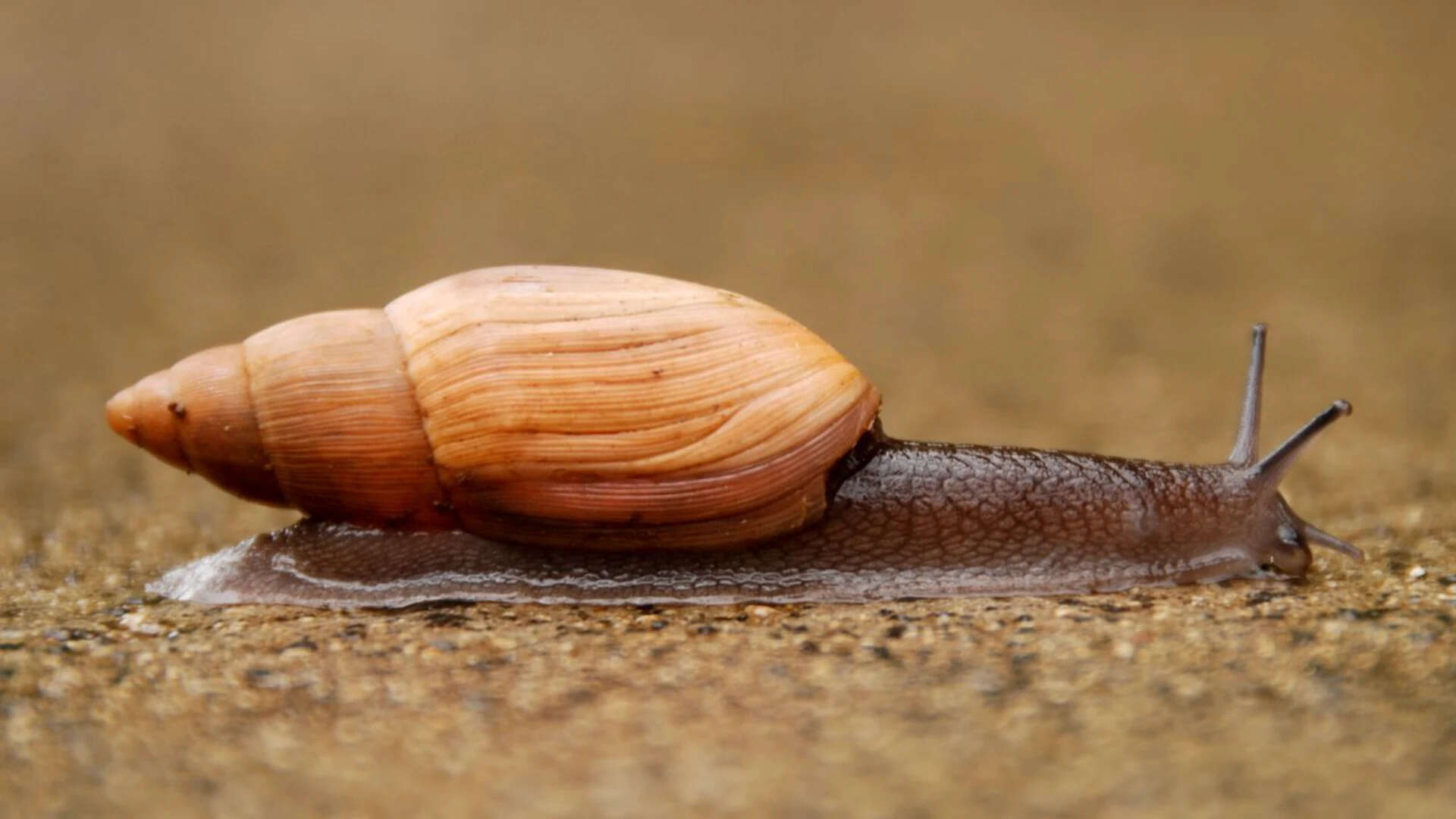
In 1955, wildlife officials in Hawaii made a decision that turned into one of the worst ecological missteps in modern history. Farmers were struggling with the giant African land snail, an invasive plant-eater that arrived in the 1930s and began destroying crops across the islands. Looking for a quick fix, agricultural managers shipped in a predatory mollusk from Florida: the rosy wolfsnail (Euglandina rosea). They hoped this carnivorous creature, often nicknamed the cannibal snail, would hunt down and wipe out the crop-eating pest.
It didn't work.
Instead of hunting the massive African land snails, the rosy wolfsnail turned its attention to Hawaii's native tree snails. The result was a quiet, slow-motion disaster that drove dozens of unique island species into extinction.
The Fatal Flaw in Hawaii's Pest Control Plan
Biological control sounds great on paper. You introduce a natural predator to eat an invasive pest, saving crops without using synthetic chemicals. But introducing a generalist predator into an isolated island ecosystem is always risky.
The giant African land snail (Lissachatina fulica) is huge. Full-grown adults can grow longer than a human hand. The imported rosy wolfsnail is much smaller, usually measuring two to three inches long. When released into the Hawaiian wilderness, the predator quickly realized that tackling a giant African land snail was hard work.
Why struggle with a tough, massive opponent when the trees were full of small, soft-shelled targets that couldn't defend themselves?
Hawaii's native tree snails, known locally as kāhuli, evolved over millions of years without any major predators. They didn't have hard shells designed to withstand aggressive attacks, nor did they have instincts to flee or hide from hunting mollusks. The rosy wolfsnail tracks prey by following chemical slime trails left on leaf surfaces. Once it catches up to a native snail, it extends its long mouthparts directly inside the prey's shell, eating the soft tissue alive and leaving behind an empty, pristine shell.
The Jewels of the Forest Wiped Out in a Few Decades
Before human settlement, Hawaii was home to an astonishing variety of land snails. Over 750 distinct species lived across the islands, occupying almost every forest niche from coastal valleys to mountain ridges. Early visitors and Native Hawaiian stories noted that these colorful snails hung from leaves like tiny ornaments. They came in striking geometric patterns, bright yellows, deep browns, and spiraled greens.
Unlike typical garden snails, native Hawaiian tree snails aren't agricultural pests. They don't eat living farm crops or garden vegetables. Instead, they scrape microscopic algae, fungi, and soot mold off the surfaces of native tree leaves, acting as essential forest cleaners.
These native snails also reproduce at a incredibly slow rate:
- They take up to five years to reach sexual maturity.
- They give live birth to just one to five offspring per year.
- They spend almost their entire lives on a single tree or small cluster of plants.
Compare that to the invasive rosy wolfsnail. A single rosy wolfsnail reaches maturity within a year, lays 25 to 40 eggs annually, moves rapidly across the forest floor, and lives for up to two years. The native species never stood a chance against such an aggressive reproductive imbalance.
Biologists estimate that more than 60 percent of Hawaii's native snail species are now completely extinct. In some groups, like the Oahu tree snail genus Achatinella, over 80 percent of species have disappeared forever. While habitat loss from agriculture and egg predation by introduced rats contributed to the decline, researchers point to the rosy wolfsnail as the primary driver behind this wave of extinctions.
Inside the High-Tech Rescue Mission
Conservationists realized they couldn't stop the rosy wolfsnail in open, unmanaged forests. Traditional traps and chemical baits either failed or posed risks to the remaining native wildlife. To prevent total extinction, Hawaii's Department of Land and Natural Resources (DLNR) established the Snail Extinction Prevention Program.
Part of this operation runs inside climate-controlled facilities on Oahu. Researchers keep dozens of rare native species inside sealed, sterile plastic terrariums. Workers gather wild tree leaves daily, washing every single leaf thoroughly to ensure no microscopic predators, parasites, or rosy wolfsnail eggs hitch a ride into the clean breeding tanks.
In the field, scientists rely on custom predator-proof enclosures. These aren't standard fences. To keep out a predator that can slide through tiny gaps, conservation teams build special barriers featuring:
- Galvanized sheet metal walls embedded deep into the ground to block burrowing.
- An electric wire loop powered by solar batteries to shock climbing predators.
- Angle-iron overhangs coated with slick grease or salt troughs that snails cannot cross.
Inside these protected pens, small populations of endangered kāhuli can feed on native leaves and reproduce without constant attack. But these enclosures require non-stop maintenance. Fallen branches, severe storms, or invasive chameleons jumping over the fence can ruin years of progress in a single night.
The Lonely Story of George
The severity of this crisis is best represented by a single snail named George.
George belonged to the species Achatinella apexfulva, the very first Hawaiian tree snail species ever described by Western science in the late 1700s. By the late 1990s, every known wild individual of Achatinella apexfulva had died off, largely due to rosy wolfsnail predation. Biologists managed to rescue the last ten remaining individuals and brought them into a lab for captive breeding.
One by one, those captive snails died off until only a single individual remained. Scientists named him George, after the famous Lonesome George, the last Pinta Island tortoise.
For over fourteen years, George lived inside a glass enclosure at the University of Hawaii. Scientists searched high and low across the mountain forests of Oahu, hoping to find just one more living companion so George could mate. They never found one. On New Year's Day in 2019, George died at approximately 14 years old, marking the official, absolute extinction of Achatinella apexfulva.
Before George died, tissue samples were collected and placed in deep freeze at the San Diego Zoo's Frozen Zoo, preserving his DNA in case cloning technology can one day bring the species back. But for now, his loss serves as a stark reminder of what happens when introduced predators run wild.
Lessons Learned from Unchecked Invasive Introductions
The 1955 release of the rosy wolfsnail wasn't an isolated mistake. During the 1950s and 1960s, agricultural agencies introduced Euglandina rosea to more than 20 oceanic islands across the Pacific and Indian Oceans, including French Polynesia, Guam, American Samoa, and Mauritius.
Every single time, the outcome was the same:
- The rosy wolfsnail largely ignored the target agricultural pests.
- It rapidly adapted to local conditions and spread into upland forests.
- It wiped out endemic native snail species that had no natural defenses.
In French Polynesia, the introduction of the rosy wolfsnail wiped out dozens of species of Partula tree snails within two decades. Today, international conservation bodies list the rosy wolfsnail as one of the 100 worst invasive species on Earth.
Modern ecology treats biocontrol with far more caution than managers did seven decades ago. Rigorous multi-year laboratory trials are now required before releasing any non-native species to ensure it eats only the targeted pest and cannot survive on native flora or fauna. Still, managing historical mistakes remains an expensive, uphill battle.
What You Should Do If You Spot Invasive Snails
Stopping the spread of invasive species requires help from hikers, gardeners, and travelers. If you live in or visit tropical regions where native mollusks are threatened, take these immediate, practical steps:
- Learn identification: Learn how to spot the rosy wolfsnail. It has an elongated, pinkish-brown shell about two inches long, with distinct lower mouth tentacles that sweep the ground as it moves.
- Clean your gear: Seeds, mud, and tiny snail eggs stick to boot treads, camping gear, and garden equipment. Scrub your footwear clean before hiking into native forest areas.
- Never transport wild snails: Transporting wild animals between islands or states is illegal and spreads pests to untouched habitats.
- Support native habitat restoration: Native tree snails require native plants like ʻŌhiʻa and Lama to feed and thrive. Supporting local conservation groups that plant native vegetation gives remaining populations a chance to recover.
- Report sightings: If you spot rosy wolfsnails near protected forest reserves or native habitats, take a clear photo, note your GPS coordinates, and notify local wildlife management agencies immediately.