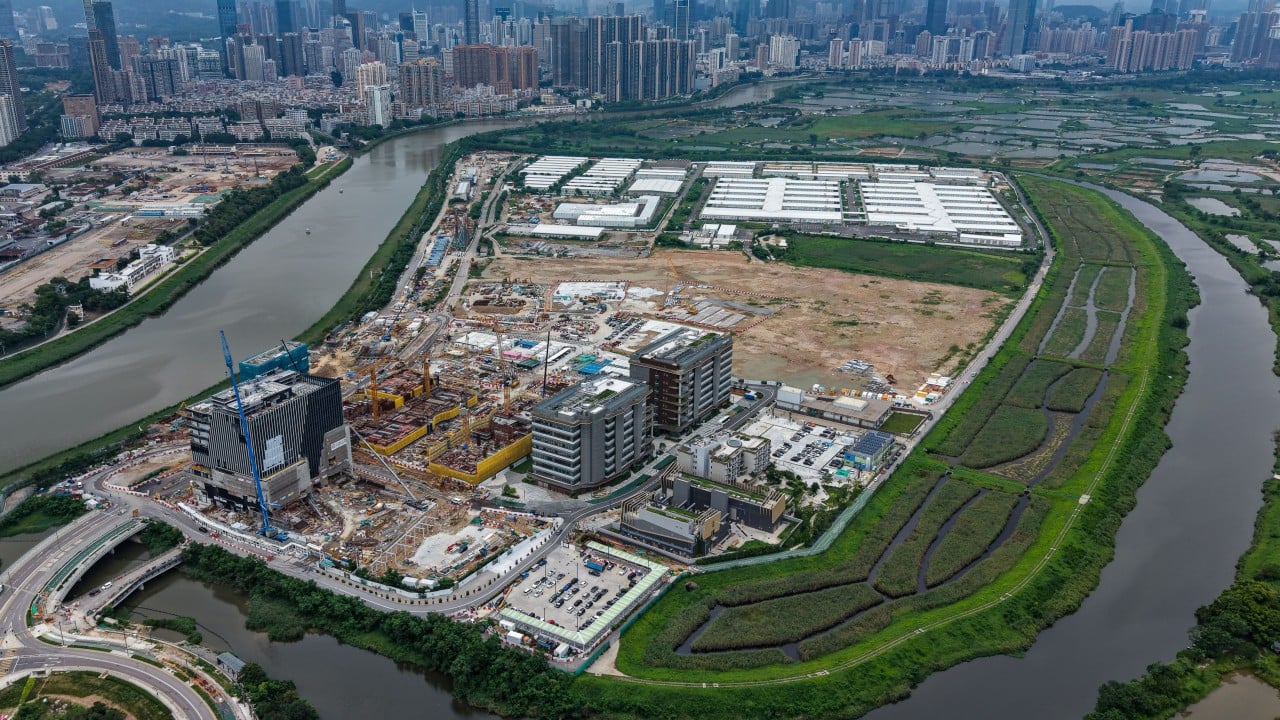
Hong Kong just proved its tech ambitions aren't just empty press releases. The immediate sell-out of the first two wet lab buildings at the Hetao innovation hub shows real, physical momentum. Critics love to talk down the city's tech prospects. They point at property prices or talent brain drains. But when life science and tech companies scramble to snap up lab space before the concrete is even dry, you have to look at the hard data.
Kevin Choi, the Permanent Secretary for Innovation, Technology and Industry, dropped the numbers recently. The first two wet laboratory facilities in the Hong Kong-Shenzhen Innovation and Technology Park are completely full. Not mostly full. Fully leased. For a project that officially opened its doors in December 2025, reaching maximum capacity this quickly indicates massive underlying demand.
You should care because this isn't just another real estate play. It represents a fundamental shift in how the city anchors its economy.
The Reality of the Hetao Demand Split
People often assume these projects are just front organizations for mainland firms looking to park money. The actual numbers tell a more nuanced story.
Mainland Chinese enterprises make up about 50 percent of the tenants. Local Hong Kong firms occupy roughly 30 percent. The remaining portion comes from international players representing countries like Switzerland, South Korea, and Finland.
This layout matters. It shows that Hong Kong is executing its intended role as a bridge between the mainland and the rest of the world.
Think about it. Global giants like AstraZeneca and tech mainstays like Lenovo are already anchored into the ecosystem. Out of the 90-plus companies that have committed to the broader park development, ten are publicly listed corporations. These aren't speculative mom-and-pop shops. They are heavily capitalized businesses that need highly specialized infrastructure.
What Actually Constitutes a Wet Lab
Most people don't understand why these specific buildings are such a big deal. They confuse them with standard corporate office blocks.
A standard office building requires basic power, air conditioning, and internet cables. A wet lab requires massive capital expenditure. We are talking about heavy-duty floor loading capacities and elevated ceiling heights to accommodate complex machinery.
These buildings feature heavy-duty fume exhaust ducts. They need dedicated pipelines for laboratory gases, deionized water, and vacuum lines. The electrical grid requirements are exponentially higher than a standard office. You also need dedicated hazardous waste and wastewater treatment facilities built directly into the plumbing.
Building these spaces is incredibly expensive. If the government had built them and they sat empty, it would have been a public relations disaster. The rapid leasing shows that biotech firms were actively waiting for this specific infrastructure to become available.
Breaking Down the Next Phase of Construction
The park isn't stopping with these initial buildings. The flagship ten-story Building 1 has already topped out.
It's actually ahead of schedule. Workers will likely hand it over by the end of this year, beating initial estimates by up to two quarters.
The market response has been intensely aggressive. Even though the building isn't open yet, 70 percent of its floor space is already pre-leased.
Building 1 will serve as a massive research headquarters. It will bring together life and health researchers from three local Hong Kong universities. It will also connect them with global research powerhouses like Cambridge and MIT through the established InnoHK platform.
This structure aims to fix the classic Hong Kong tech problem. The city has always excelled at basic academic research. Its universities consistently rank high globally. But it historically failed at turning that research into actual commercial products. By putting academics, global institutions, and commercial firms in the same physical space, the government wants to compress the time it takes to move a molecule from a university lab to a clinical trial.
Avoiding the Property Speculation Trap
Hong Kong has a bad habit of turning every piece of available land into a luxury housing play. The government seems hyper-aware of this risk at Hetao.
To stop property developers from buying up the park and flipping it for quick cash, officials introduced a strict two-envelope tendering system for the remaining phase-one plots.
When developers bid on these upcoming land parcels, the financial aspect—how much money they offer for the land premium—only accounts for 30 percent of their total score. The other 70 percent relies entirely on their operational proposal, their technical execution plan, and the specific types of technology companies they promise to bring into the park.
Private developers cannot just buy their way in. They must prove they can actually build and run a functional innovation ecosystem.
The Logistical Friction that Still Needs Fixing
Let's be realistic. The project isn't perfect yet. The biggest hurdle right now revolves around the day-to-day logistics of running a border-straddling tech hub.
The park relies on a concept called "one zone, two parks" across the Shenzhen River. The Hong Kong side covers 87 hectares. The Shenzhen side covers 300 hectares.
For this setup to thrive, researchers need to move back and forth easily. If a scientist has to spend two hours clearing traditional immigration checkpoints just to check on a cell culture across the river, the system breaks down.
The governments are working on specialized cross-boundary flows for personnel, research materials, capital, and data. They are currently testing systems that allow pre-approved researchers to clear checkpoints using simplified biometric scans. They are also working out how to safely transfer sensitive genetic data across the border without violating data privacy laws.
It is a delicate balancing act. If they make the border too rigid, companies will leave. If they make it too loose, they risk complicating the legal distinctions that make Hong Kong attractive to international firms in the first place.
The Housing Element
You can't build a world-class research hub without giving people a place to sleep. The first talent accommodation building opened alongside the labs, offering around 100 apartment units for researchers.
The initial cohort of scientists has already moved in. They like the short commutes and the shared lecture spaces. But 100 units is a drop in the bucket when you have dozens of companies moving in.
To handle the incoming wave of staff, the government is putting two additional talent apartment plots out for tender. They are also building out basic retail, dining options, and short-term visitor lodges. A tech hub can't just be an isolated cluster of sterile labs. It needs to look and feel like a functioning neighborhood if it wants to keep international talent long-term.
Your Next Strategic Moves
If you run a business in the life sciences, data analytics, or advanced manufacturing space, you can't ignore what is happening at the border.
First, look closely at the upcoming public-private partnership tenders if you are a developer or an institutional investor. The Hong Kong-Shenzhen Innovation and Technology Park Limited is actively releasing remaining land parcels. The shift toward non-financial criteria means you need strong operational tech partnerships to win these bids.
Second, if you are an early-stage startup, evaluate the newly launched Hetao-Hong Kong Youth Innovation Hub located at the Science Park's Shenzhen branch in Futian. It offers immediate co-working setups and dry lab spaces that let you anchor your business in the ecosystem without paying the higher premiums of the main wet lab buildings.
Third, monitor the integration of the clinical trial pipelines. The collaborative framework focuses on doing research in Hong Kong, manufacturing across the mainland, and running clinical applications throughout the Greater Bay Area. Position your corporate structure to utilize this specific pipeline.
The initial phase at Hetao proved that the physical demand for high-spec laboratory infrastructure is real. The space is gone. Your move now is to figure out how to leverage the surrounding ecosystem before the next phase opens up.