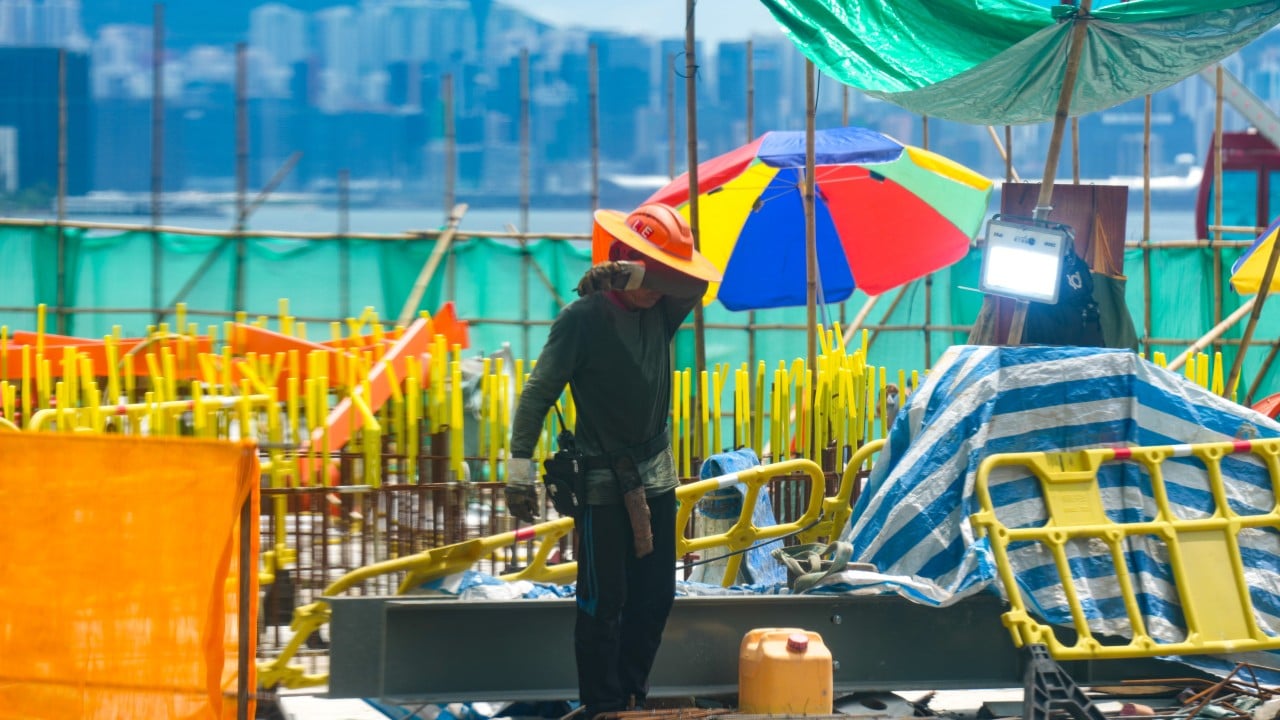
Working under a blistering sun shouldn't feel like a death sentence. Yet, for thousands of construction hands, sanitation workers, and outdoor couriers across the city, extreme summer temperatures regularly turn routine shifts into dangerous survival tests.
Hong Kong's labor chief recently opened the door to a major policy shift: officially classifying heatstroke as an occupdational disease. It sounds like a bureaucratic tweak, but it carries massive legal and practical consequences for local employers and employees alike.
The Problem with Current Workplace Heat Rules
For years, labor groups have argued that the city’s safety frameworks lag behind reality. Summers are getting longer, hotter, and brutally humid. The Labour Department relies heavily on guidance notes and a tiered Heat Stress at Work Warning system.
These measures sound fine on paper. When an amber, red, or black heat warning flashes, employers are expected to adjust shifts and mandate rest breaks.
The catch? Compliance is messy.
Many frontline workers report that bosses ignore the warnings entirely. Surveys from local labor unions consistently show that a large percentage of outdoor staff receive zero extra rest periods during peak heat spikes. Voluntary guidelines lack the teeth needed to force compliance from cost-cutting contractors. When a worker collapses on a asphalt road or inside a poorly ventilated warehouse, proving liability under current compensation laws becomes an uphill battle.
What Classifying Heatstroke Actually Changes
Right now, if an employee suffers severe heat exhaustion or a fatal stroke on the job, filing a claim under the Employees' Compensation Ordinance requires navigating strict legal definitions of an "accident". Victims or their families must jump through hoops to prove that the injury stemmed from a distinct, sudden external event rather than just natural physiological failure under warm conditions.
Moving heatstroke onto the official list of prescribed occupational diseases changes the burden of proof. It streamlines the compensation process. It sends an unmistakable message to businesses that failing to manage thermal risk carries heavy financial penalties.
Commissioner for Labour Sam Hui noted that revamped monitoring systems would have triggered much stronger warnings during the worst heatwaves. Officials are beginning to acknowledge that rising global temperatures demand stricter legal protections rather than polite requests.
Real Protection Requires More Than Red Tape
Labels matter, but they don't cool down a stifling construction site. If Hong Kong moves forward with this classification, enforcement must follow.
Employers need to overhaul how they schedule grueling outdoor labor. Shifting heavy physical tasks to early morning hours, providing reliable cooling gear, and ensuring mandatory, uninterrupted rest breaks are non-negotiable steps. Workers shouldn't have to choose between keeping their paycheck and staying out of the emergency room.
The conversation at the top is shifting. Now it's time for real action on the ground.