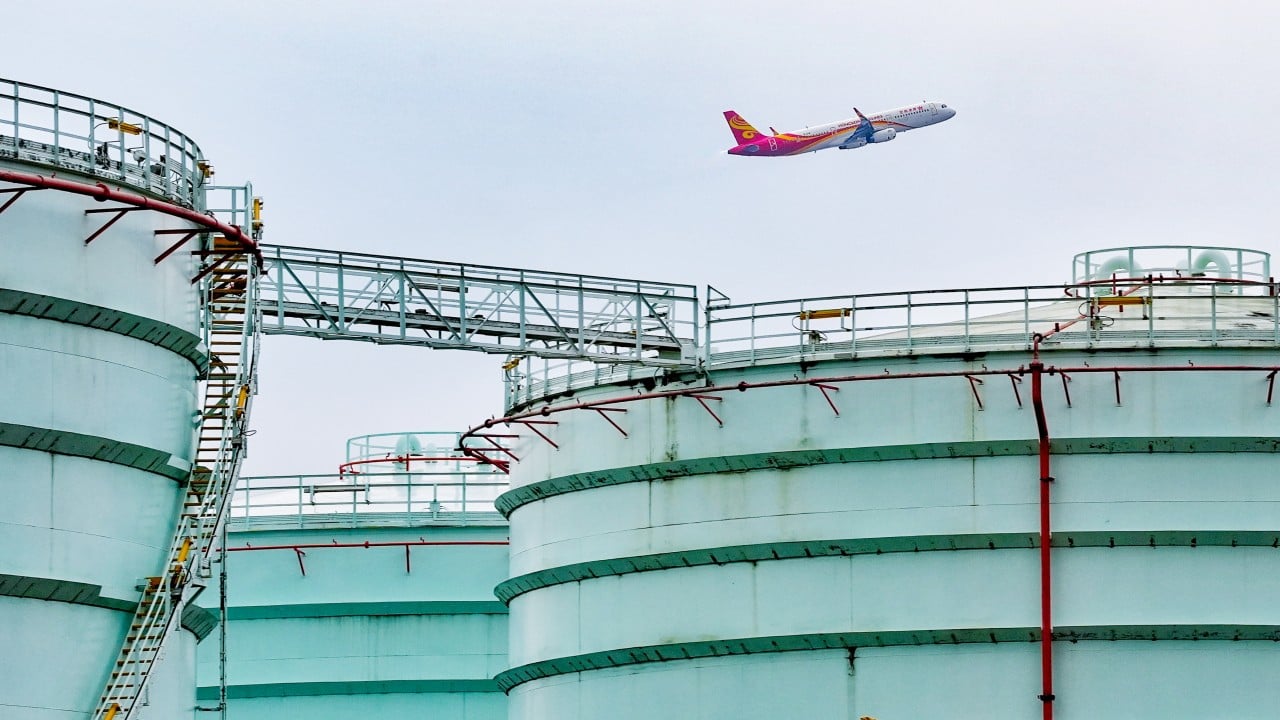
If you want to understand why global aviation is sweating bullets, look no further than Hong Kong International Airport. As one of the world's busiest cargo hubs and a premier passenger gateway, it runs on velocity. But velocity without green credentials is a dead end. International regulators are tightening emissions caps, and passengers are increasingly voting with their carbon-conscious wallets. If Hong Kong fails to secure a dependable supply of green fuel, its status as an elite aviation hub isn't just threatened—it's obsolete.
The city isn't sitting on its hands anymore. With the release of Hong Kong's First Five-Year Plan and the 2026 Policy Address, sustainable aviation fuel has jumped from a vague corporate talking point to a hard government priority. The objective is clear: set a consumption ratio of 1 to 3 percent for flights departing from the airport by 2030, build a dedicated blending facility, and study a mandatory consumption mechanism by 2028. It’s an aggressive pivot, and honestly, it's long overdue. If you enjoyed this post, you should read: this related article.
Moving Past Fossil Fuels Without Rewriting the Engine
Let's clear up a common misconception right away. Transitioning to green jet fuel doesn't mean grounding fleets or redesigning commercial aircraft from scratch. Sustainable aviation fuel, or SAF, is a drop-in fuel. It is chemically almost identical to conventional jet fuel. You can mix it directly into existing tanks, feed it into standard engines, and pump it through current airport infrastructure without skipping a beat.
When produced from waste feedstocks like used cooking oil, SAF can slash lifecycle carbon emissions by more than 80 percent compared with standard fossil-based jet fuel. That makes it the single most realistic bridge technology we have between today's heavy carbon footprint and net-zero goals by 2050. For another angle on this development, check out the latest coverage from MarketWatch.
Major local players are already testing the waters. Cathay Pacific has committed to raising SAF to 10 percent of its total fuel consumption by 2030. Their corporate SAF program has drawn massive participation from global logistics giants like DHL Express, proving that corporate demand for green shipping is real, active, and growing.
The Greater Bay Area Connection
Importing green fuel across long-distance maritime routes defeats the point if the supply chain itself burns a fortune in bunker fuel. That's why the real genius of Hong Kong's strategy lies in regional integration.
Enter the Greater Bay Area. Local waste-to-energy pioneers like EcoCeres are leveraging a "local-to-local" model. By collecting waste cooking oil across the region and processing it at specialized manufacturing bases—such as their plant in Dongguan capable of producing 450,000 tonnes of SAF and renewable diesel annually—they are building an end-to-end value chain right on Hong Kong's doorstep.
This regional synergy minimizes shipping vulnerabilities and locks in supply visibility. Hong Kong provides the financial expertise, research backing, and aviation network, while the mainland handles large-scale refining. It's practical industrial design at its finest.
The Cost Hurdle and Regulatory Realities
Let’s be honest about the roadblocks. SAF currently costs two to three times more than conventional jet fuel. Why? Because the feedstock market is still in its infancy, and scaling up production requires billions in capital investment globally.
If airlines are forced to absorb these costs entirely, ticket prices will spike, hurting passenger volume and carrier competitiveness. That is precisely why government mandates and blending facilities matter. Without top-down policy backing, airlines have little financial incentive to choose an expensive green alternative over cheap fossil fuel.
Competitors across Asia—from Singapore to Japan—are racing to establish their own mandates and green corridors. If Hong Kong drags its feet, international carriers might start rerouting long-haul connections to more accommodating hubs. Setting a mandatory consumption framework by 2028 gives investors and suppliers the regulatory certainty they crave. Capital goes where it is welcome, and clarity creates confidence.
What Comes Next for the Hub
Building a resilient green aviation ecosystem requires looking past 2030. Waste oils and fats can kick-start the market, but they won't sustain future global aviation volumes forever. The industry needs to diversify its feedstock portfolio by embracing agricultural residues, municipal solid waste, alcohol-to-jet technology, and e-fuels.
Hong Kong has the geographical advantage, the financial muscle, and the political will to make this transition work. By pairing ambitious consumption targets with regional manufacturing power, the city isn't just protecting an economic label—it's defining the future of modern transit. The roadmap is drawn. Now it's time to execute.